What matters when choosing
For an oat milk latte, decide how much milk texturing you want to do yourself before comparing grinder and espresso-preparation features. An integrated grinder and an automatic milk system solve different parts of the routine; neither tells you by itself how a particular oat drink will foam.
| Concern |
What to check |
Who this matters to |
| Repeatable milk handling |
Check the exact model’s plant-milk guidance, adjustable milk settings and cleaning steps. |
If I want an oat latte without practising steam-wand technique each time, I need a milk process I can readily repeat. Around 36% of consumers put low-effort milk handling first. |
| Manual microfoam control |
Look for a manual steam wand and check whether a milk jug is included. |
When I want to practise aeration and pouring, I am prepared to spend time learning the wand. For around 29% of consumers, hands-on texture control is the primary need. |
| Fresh-bean workflow |
Compare integrated grinding and assisted dosing or tamping on the exact model. |
I want to prepare espresso from beans without assembling a separate grinder-and-machine setup. That guided coffee workflow comes first for around 21% of consumers. |
| Simple manual setup |
Measure the machine and check its basket requirements against the grounds or grinder you plan to use. |
If I already have a suitable grinder or prefer to manage the coffee preparation myself, I may not need integrated grinding. Around 14% of consumers prioritise this simpler setup. |
Joybuy product choices
These machines offer either manual milk texturing alongside espresso preparation or an automatic milk route. For an oat latte, compare each exact model’s plant-milk instructions as well as the amount of coffee preparation and cleaning you want to do.
 No image available
HiBREW H20 all-in-one coffee machine
Consider this machine if you want to grind beans in the machine and texture milk yourself with a steam wand.
Its listed features include hot and cold extraction, 20 grind-adjustment levels and a 1.8 L water tank.
Check the instructions for your oat drink and confirm the supplied plug is suitable for your socket.
View on Joybuy
 No image available
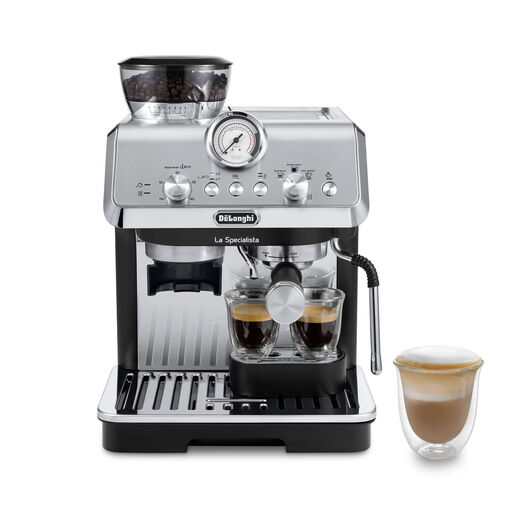
De’Longhi La Specialista Arte EC9155.MB, silver and black
This is a hands-on option if you want an integrated grinder but prefer to steam milk yourself.
The model is identified as a manual bean-to-cup espresso machine with a milk-frothing function. Check its exact oat-milk guidance and confirm the supplied plug before buying.
View on Joybuy
 No image available
De’Longhi Magnifica Start ECAM220.22.GB, black and grey
Choose this route if you want bean-to-cup coffee preparation while keeping control of milk texturing at the nozzle.
The listed variant has four one-touch recipes and a milk nozzle. Check its oat-milk instructions, voltage and supplied plug for your intended use.
View on Joybuy
 No image available
IAGREEA CM3050-2 semi-automatic espresso machine
This model suits a routine in which you prepare the coffee and use a manual wand for milk.
Its name specifies a 20-bar pressure rating and 1.5 L water capacity; that pressure figure alone does not establish how an oat latte will taste or foam. Check the oat-milk instructions, voltage and supplied plug.
View on Joybuy
 No image available
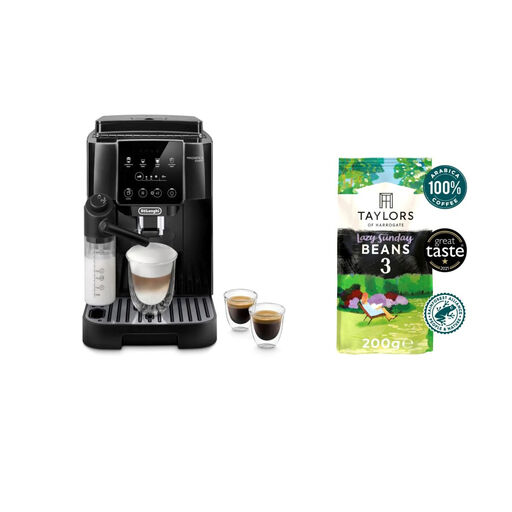
De’Longhi Magnifica Start ECAM220.60.B with Taylors of Harrogate Lazy Sunday beans, 200 g
Consider this automatic-milk variant if reducing hands-on frothing is your priority, provided its milk system suits the oat drink you plan to use.
The listed bundle includes the ECAM220.60.B with auto milk, four one-touch recipes and 200 g of Taylors of Harrogate Lazy Sunday coffee beans. Check the exact model’s plant-milk and cleaning instructions, voltage and supplied plug.
View on Joybuy
Frequently asked questions
Do I need a steam wand for an oat milk latte?
No: a steam wand is the hands-on way to texture the milk, but an automatic milk system may suit you if its maker explicitly supports plant-based milk on the exact model. Sage describes a wand and milk jug for manual latte preparation; Philips describes plant-milk use on its Café Aromis Series 8000 EP8757/20 milk system.
How hot should I make the oat milk?
Sage’s non-dairy recipe guidance advises keeping the milk below 55°C because it can begin to separate or curdle. Use the instructions for your oat drink and machine rather than treating that recipe limit as a guarantee for every combination.
Can I brew espresso while steaming oat milk?
That depends on the machine’s heating system. Sage advises brewing first and steaming afterwards with a single heating element, while its dual-boiler guidance allows steaming during extraction; check the arrangement of the model you are considering.
What cleaning routine should I expect?
Clean milk-contact parts after use and follow the exact machine’s instructions for its wand or automatic milk system. Sage’s general guidance for making two to five coffees a day calls for weekly cleaning of most parts, with other tasks, including water care, on their applicable schedules.
What electrical details should I check before buying?
Check the exact machine’s stated voltage, supplied plug and instructions against the socket where you intend to use it. Do not infer plug suitability from a model name or a similar machine’s specifications.


