Shared-office self-service buyers
You need colleagues with different levels of coffee-making experience to prepare espresso with few steps, especially when several people take a break together.


Choose around break-time demand and who will make and clean the drinks, not espresso controls alone. A semi-automatic machine suits colleagues willing to manage a portafilter, while a compact bean-to-cup model reduces preparation steps; for regular shared demand, consider a workplace-oriented automatic machine and check its stated daily use against your busiest period.
You need colleagues with different levels of coffee-making experience to prepare espresso with few steps, especially when several people take a break together.
You want to adjust the espresso shot before combining it with tonic water and ice. Grinder and shot controls matter more if someone is willing to learn and maintain the preparation routine.
You need to account for refilling, cleaning responsibility, electrical upkeep and counter space as well as the drinks the machine can make.
For a shared office making espresso tonic, start with the busiest break and who will operate and clean the machine. Then decide how much control over each espresso shot the team needs.
Choose when: Colleagues want to adjust espresso preparation and someone will take responsibility for the portafilter routine.
Accept: Grinding, dosing, extraction and cleaning require more hands-on work than pressing an automatic espresso control.
Choose when: A smaller team wants straightforward self-service espresso without preparing a portafilter for each drink.
Accept: There is less direct shot-by-shot control; check workplace-use and servicing terms before relying on a home-oriented model.
Choose when: Several colleagues use the machine regularly and an office-oriented daily-use specification fits expected demand.
Accept: Check the counter space and ongoing refill and cleaning responsibilities; tonic water and ice still need to be supplied separately.
| Concern | What to check | Who this matters to |
|---|---|---|
| Break-time capacity | Estimate drinks during the busiest break, then compare the water tank, bean hopper and grounds container. | When several colleagues want a drink at once, refilling or emptying the machine could interrupt the queue. Around 29% of consumers would put peak-time capacity first. |
| Simple self-service | Look for a dedicated espresso programme, clear controls and a cleaning routine colleagues can manage. | If different colleagues will make their own drinks, I need an espresso workflow that does not depend on a trained operator. Roughly 29% of consumers would prioritise straightforward self-service. |
| Espresso-shot control | Check grinder adjustment and double-shot controls, alongside the preparation and cleaning steps they require. | When the espresso itself is the part of the tonic drink I want to adjust, I can accept a more involved routine. About 24% of consumers would make shot control their primary concern. |
| Counter fit and upkeep | Measure the space needed to use and refill the machine; check its electrical rating and assign cleaning responsibility. | At a crowded office tea point, the machine needs to fit without making everyday access awkward. Around 18% of consumers would put space and practical upkeep first. |
An occasional drink and several near-simultaneous drinks place different demands on refilling and grounds disposal. Headcount alone does not tell you how many colleagues will use the machine.
Estimate use during the busiest 30–60 minutes, then compare tank, hopper and grounds-container capacity with the person available to refill and empty them.
A domestic bean-to-cup machine can offer convenient espresso controls, but those features do not establish its workplace-use terms or servicing arrangements.
Before choosing one for shared use, ask the retailer or manufacturer about permitted workplace use, warranty terms, service support and expected daily volume.
The espresso-tonic recipe published by NESCAFÉ UK & IE uses espresso, tonic water and ice, not milk. Milk capability matters if colleagues also want milk drinks.
Set the office drink menu before comparing machines, and include any milk-system cleaning in the assigned routine.
A milk system that is rarely used can still add cleaning work.
The Health and Safety Executive says annual portable appliance testing is not universally required for equipment in low-risk offices. Electrical equipment still needs to be maintained to prevent danger.
Use workplace procedures suited to the machine and its location, including user checks and competent inspection or testing where appropriate.
A reference for a hands-on espresso route with an integrated grinder. The following details concern the Barista Express Impress, not every Sage machine.
A reference for compact bean-to-cup espresso. These specifications concern the Magnifica Start ECAM222.20.B, rather than every Magnifica Start variant.
A reference for an automatic machine positioned for recurring workplace use, specifically the WE8.
A reference when comparing traditional espresso preparation with domestic automatic formats.
These choices cover bean-to-cup self-service and hands-on espresso machines with integrated grinders for preparing the espresso base. Compare their workflow with your break-time demand and confirm workplace-use terms for the model you choose.
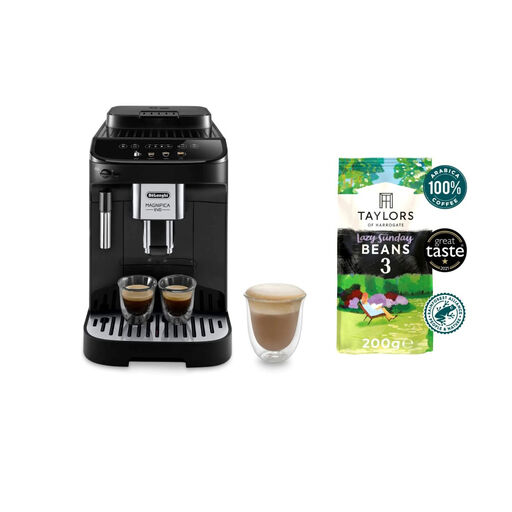 No image available
Consider this fully automatic bean-to-cup model if colleagues prefer self-service espresso to a portafilter routine.
The black machine includes a milk frother and comes with the named coffee-bean bundle. Check its workplace-use terms and whether its cleaning and grounds-emptying routine suits busy breaks.
 No image available
This bean-to-cup model suits colleagues who want an automatic preparation route for their espresso base.
The named variant has four one-touch recipes and a milk nozzle. For a double espresso, check whether its described second espresso cycle works for your busiest break, along with workplace-use and servicing terms.
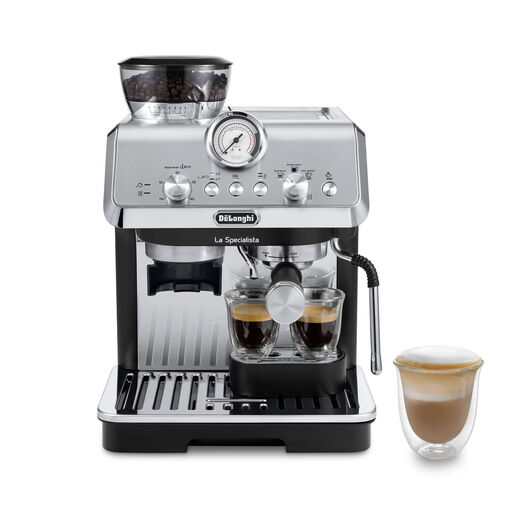 No image available
Choose this semi-automatic route only if someone is willing to handle espresso preparation for the shared office.
Its named configuration includes an integrated grinder and milk frother. The manual grinding, dosing and tamping routine needs an assigned operator; confirm cleaning, servicing and workplace-use terms.
 No image available
This is a hands-on option for an office with someone prepared to manage the portafilter workflow.
The named configuration has 20 grind levels, a 1.8 L water tank, hot and cold extraction controls and a steam wand. Touch controls do not remove the need to manage preparation; check counter fit, cleaning and workplace-use terms.
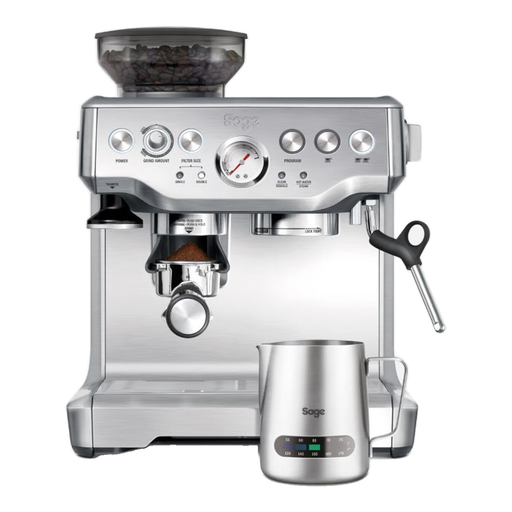 No image available
Consider this manual espresso route when a designated colleague wants to adjust shots for the tonic drink.
The named variant has 16 grind settings and PID temperature control. Its portafilter workflow requires an operator; measure the available space and confirm workplace-use and servicing terms before choosing it.
No. The espresso-tonic recipe from NESCAFÉ UK & IE uses a double espresso, tonic water and ice, with lime also included. Consider a milk system if colleagues want other drinks, and account for its cleaning.
Prepare a double espresso, let it cool slightly and add it to tonic water and ice. Before choosing a machine, check how its double-shot workflow works and whether you can dispense into a suitable cup or jug for transferring the espresso.
Not as a universal annual rule. The Health and Safety Executive says portable appliances in low-risk offices do not all need yearly PAT testing; electrical equipment must still be maintained to prevent danger, with checks and any testing suited to the equipment and environment.
Check that the machine suits the available electrical supply and can be used safely in its intended location. Follow its manual and workplace procedures for condition checks, cleaning and, where appropriate, inspection or testing by a competent person.
Follow the exact model's manual and assign responsibility according to how often colleagues use it. The routine may include cleaning coffee-contact parts, caring for a milk system if fitted, and descaling or changing water filters; do not assume a home-use schedule fits a busier office.