Home espresso diallers
If you change beans, baskets or recipes, you may want fine grind adjustment and a dosing routine you can repeat. Fellow Products notes that bean freshness and ambient humidity can affect the espresso setting needed.


Choose a grinder that explicitly covers espresso and offers adjustment you can use to dial in your beans and machine; a small footprint alone is not enough. Stepped settings suit a straightforward routine, while stepless adjustment offers finer control for frequent changes. Whichever workflow appeals, measure the space and check the exact model’s electrical configuration and dosing arrangement before buying.
If you change beans, baskets or recipes, you may want fine grind adjustment and a dosing routine you can repeat. Fellow Products notes that bean freshness and ambient humidity can affect the espresso setting needed.
Width is only part of the fit: check depth, height beneath cupboards and room to handle the hopper, grounds cup or portafilter. Consider the exact model’s stated approach to static or noise without assuming it will eliminate either.
If you occasionally make filter coffee, French press or cold brew, check that the same grinder documents both espresso-fine and the coarser settings you need. Baratza, for example, assigns separate espresso and coarser ranges to its Encore ESP.
Start with documented espresso adjustment, then check whether the grinder and its daily dosing routine fit your available space.
| Concern | What to check | Who this matters to |
|---|---|---|
| Espresso adjustment | Check that the exact model covers espresso and whether adjustment is stepped or stepless. | If I change beans or recipes often, I want room to adjust the grind for my machine rather than rely on one setting. Around 42% of consumers would put espresso control first. |
| Worktop fit and routine | Measure width, depth, height and operating clearance; check the dosing arrangement. | With little room beneath my cupboards, I need to be able to fill the grinder and collect grounds comfortably. Worktop fit and routine would come first for around 33% of consumers. |
| Mixed-brew range | Confirm that the model documents espresso and your other brewing methods, with settings you can revisit. | If I also make filter coffee or French press, I need one grinder with a usable range and accept that returning to espresso may take adjustment. Around 25% of consumers would prioritise that flexibility. |
A general coffee-grinder label does not tell you whether the exact model offers espresso-fine adjustment.
Check the manufacturer’s stated brewing methods and adjustment controls before choosing a model.
Fellow Products notes that beans, freshness and humidity can change the setting needed; your basket and machine matter too.
Use a published setting as a starting point, then adjust for your own equipment and record a setting that works for repeat use.
A narrow body may still be too tall for a cupboard or awkward to use if there is no room to handle the hopper.
Compare the exact variant’s width, depth and height with your space, including clearance for filling and grounds collection.
Electrical configuration and seller support can depend on the version delivered.
Confirm the voltage, plug, seller support and conformity information applicable to the delivered product and destination before ordering.
Baratza’s Encore ESP and Encore ESP Pro illustrate different adjustment approaches for home espresso.
Eureka’s Mignon models are relevant if you want to assess a narrow grinder with stepless espresso adjustment.
The DF54 is a route to consider if you prefer to weigh individual doses and adjust the grind between coffees.
These espresso-described grinders include portable electric, manual and countertop options. Compare their adjustment, operating space and daily routine rather than assuming that a compact body or a stated espresso setting will suit every machine.
 No image available
Consider this rechargeable grinder if you want stated settings for espresso and occasional French press brewing.
The product name specifies 30 grind settings, automatic stop and clog protection. Check its clearance where you plan to use it; for extended espresso grinding, follow the listing’s advice to let it cool between batches.
 No image available
Consider this portable option if you make espresso but also want to adjust the grind for pour-over or French press.
Its product name specifies adjustable settings, one-touch operation, Type-C charging and a 1000 mAh battery. Check whether the adjustment offers enough control for your espresso setup; follow the listing’s dry-brush cleaning advice for the burr.
 No image available
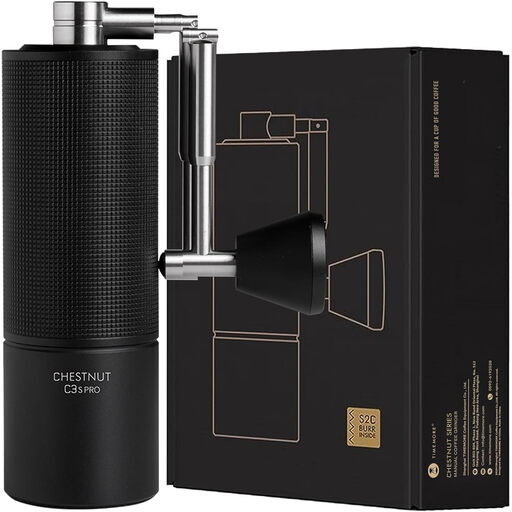
Consider a manual grinder if you prefer a non-electric routine and have room to turn the handle when preparing espresso.
The product name specifies a folding handle, conical grinding mechanism and 25 g bean container. Check the full dimensions and working space, not just how it stores.
 No image available
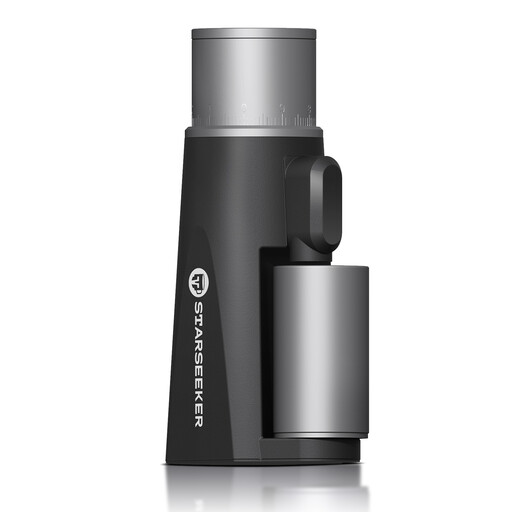
Consider this portable electric model if you want a grinder described for both espresso and pour-over in a limited space.
Its product name specifies a conical burr. Confirm how its grind adjustment works before choosing it for frequent espresso dialling; the listing also cautions that light-roast beans may jam at fine settings and that static or clumping may occur.
 No image available
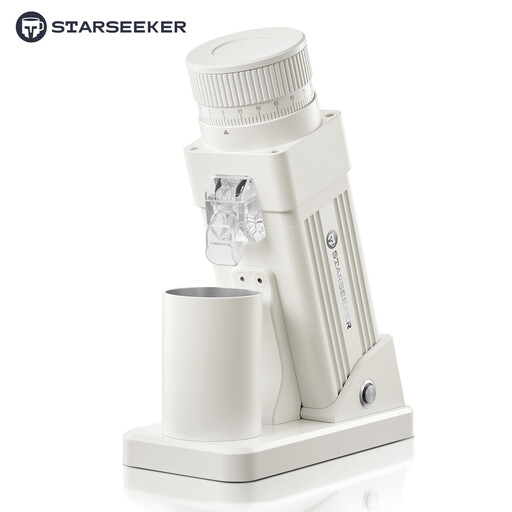
Consider this countertop model if you expect to adjust an espresso grind frequently and have measured space for the grinder.
The product name specifies stepless adjustment, a 55 mm titanium-alloy conical burr and a 72 W AC motor. Check its dimensions, operating clearance, voltage and plug for the version you would receive.
For this purchase, choose a grinder whose exact model documentation covers espresso and explains its fine-grind adjustment. Do not assume that a general coffee-grinder label establishes how it will work with your beans, basket and machine.
Stepped adjustment gives you defined positions to revisit; stepless adjustment offers finer changes when you dial in espresso often. Neither removes the need to adjust for your coffee and equipment, and a single-dose workflow can be considered separately from the type of adjustment.
Measure your available width, depth and height, then allow room to fill or remove the hopper and handle the grounds cup or portafilter. Eureka lists the Mignon Specialità SMART at 120 mm wide, 191 mm deep and 348 mm high; use those figures only for that variant.
A previous setting is a starting point, not a setting that works for every coffee. Fellow Products notes that bean type, freshness and ambient humidity can affect adjustment; check the result with your own basket and machine.