Shared-kitchen convenience seekers
You want different people to make cappuccinos without learning a manual espresso routine, and you need milk parts that everyone can clean promptly afterwards.


Choose a one-touch bean-to-cup machine if several people want cappuccinos with little preparation, provided everyone agrees to clean its milk system after use. Choose a manual or assisted-manual machine if control over espresso and milk texture matters more than a one-button routine. Add cinnamon to the cup; the deciding machine features are its coffee and milk workflow, counter fit and cleaning requirements.
You want different people to make cappuccinos without learning a manual espresso routine, and you need milk parts that everyone can clean promptly afterwards.
You want to prepare espresso and texture milk yourself, then add cinnamon to the cup rather than depend on a machine recipe.
You need to establish whether a grinder-equipped machine fits the communal counter before committing to a more involved preparation routine.
Decide whether the shared kitchen needs a one-touch cappuccino routine or whether its users will prepare espresso and milk separately. Then check the cleaning work and available counter space for the exact model.
Choose it when: Several users want a cappuccino programme and adjustable drinks without preparing the milk manually; Philips lists those features for its Series 2300 EP2339/40.
Allow for: One-touch operation does not remove milk-part and regular machine cleaning. Philips says to rinse or dishwasher-clean LatteGo after each use.
Choose it when: Users want to make espresso and froth milk separately; De'Longhi documents ground-coffee, E.S.E.-pod and milk-foam preparation for the Dedica EC685.
Allow for: Each user takes responsibility for preparing the drink and cleaning the milk-frothing equipment.
Choose it when: Regular users want an integrated grinder and help with tamping but still want to texture milk themselves, as on the Sage Barista Express Impress.
Allow for: The workflow remains hands-on, and its footprint needs checking: Sage lists that model at 42.2 × 36.7 × 31 cm.
| Concern | What to check | Who this matters to |
|---|---|---|
| Milk-system cleaning | Check the after-use steps for milk-contact parts and agree who empties the drip tray and cleans the machine. | If several of us use the machine, I need everyone to be able to deal with milk residue after their drink. Around 40% of consumers put clear, manageable cleaning duties first. |
| Repeatable cappuccinos | Confirm that the exact model has a cappuccino programme and check which drink and froth settings users can adjust. | When different people make coffee, I would rather have a familiar routine than prepare each cup manually; around 30% of consumers prioritise that convenience. |
| Manual control and fit | Check the espresso and milk-frothing workflow, then measure the usable counter space for the exact machine. | I want to control the coffee and milk myself, but the machine still has to fit our shared worktop. Around 30% of consumers put that hands-on choice and space check first. |
Even with its removable LatteGo system, Philips calls for cleaning the milk parts after each use, alongside regular attention to the brew group, tank and drip tray.
Read the exact model’s care instructions before buying and agree which tasks each user will do after a drink and during routine cleaning.
Milk residue can remain on or inside a wand after frothing. Sage advises purging and wiping the wand after use as part of a wider maintenance routine.
Choose a steam-wand machine only if its users will clean the wand promptly and follow that model’s maintenance instructions.
A grinder-equipped machine also needs a suitable position for filling and everyday use. Sage lists the Barista Express Impress at 42.2 × 36.7 × 31 cm.
Measure the intended space and check access to the water tank and bean hopper before committing part of a shared worktop.
Cinnamon does not need to be a machine feature to make a cinnamon cappuccino. Adding it to the cup keeps the flavouring step separate from espresso preparation and milk-system cleaning.
Finish the drink with cinnamon in the cup unless the exact machine instructions expressly permit another method.
The Series 2300 EP2339/40 is a reference point for a one-touch cappuccino route with a removable LatteGo milk system.
The Dedica EC685 illustrates a manual route for people who want to prepare espresso and cappuccino milk foam separately.
The Barista Express Impress illustrates assisted manual preparation with an integrated grinder and manual milk texturing.
These choices include a pod machine with a milk frother and machines for more hands-on espresso or milk preparation. Check each model’s milk workflow rather than assuming it offers a one-touch cappuccino.
 No image available
Consider this if users are happy to prepare pod coffee and froth milk as separate steps. The named variant has a hot-and-cold milk frother and a 1.0 L capacity; check capsule compatibility and the model’s cleaning instructions for shared use.
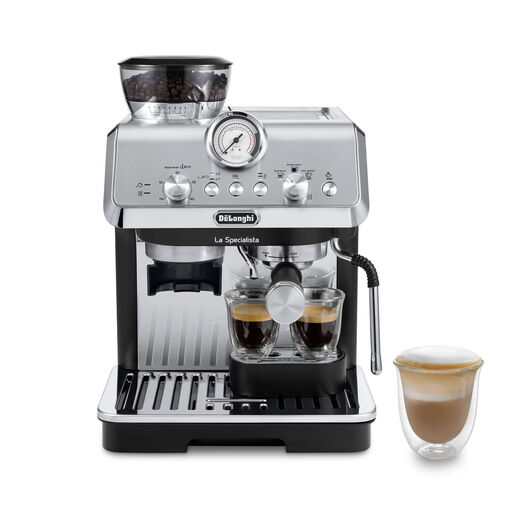 No image available
Suited to users willing to prepare espresso and froth milk themselves rather than share a one-touch routine. This manual bean-to-cup model is named with a milk frother; check its dimensions and cleaning instructions before allocating communal counter space.
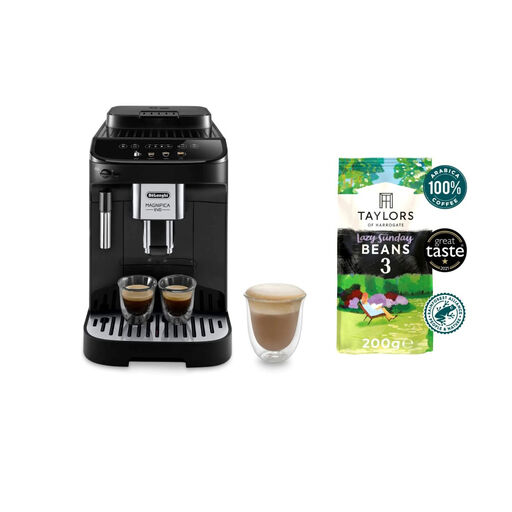 No image available
Consider this if shared users want a bean-to-cup coffee machine but can froth cappuccino milk separately. The black machine is listed with a milk frother and a 200 g coffee-bean bundle; confirm the milk steps, cleaning routine and counter fit for this variant.
 No image available
For users who want to make espresso and texture milk separately, this pump espresso machine has a steam wand and is also named with a cold-brew function. Check its full footprint and agree on wand cleaning before using it in a shared kitchen.
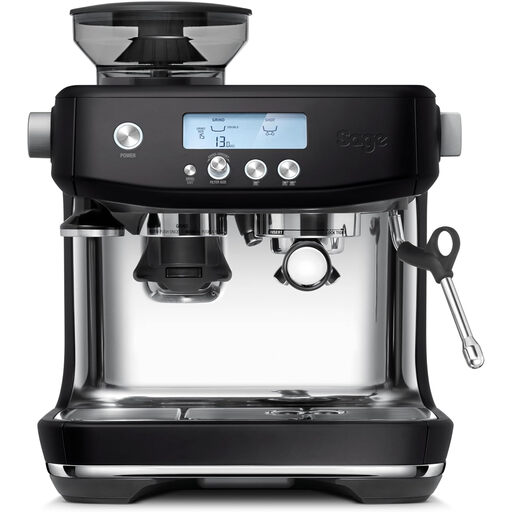 No image available
Consider this when regular users want a hands-on espresso and milk-texturing routine. The named variant has 30 grind settings and a steam wand; check its dimensions and care instructions before choosing it for a communal worktop.
Yes. Make espresso and frothed milk, then add cinnamon to the cup or finished drink. Keep the spice out of the machine’s coffee and milk paths unless its instructions expressly permit that use.
Clean the milk-contact equipment according to the exact model’s instructions after use. Sage advises purging and wiping a steam wand after milk texturing; Philips advises rinsing or dishwasher-cleaning LatteGo’s two parts after each use and specifies further routine machine care.
Do not assume one fixed testing interval applies to every workplace coffee machine. The Health and Safety Executive’s guidance on maintaining portable electrical equipment describes an approach that includes user checks, visual inspection and testing to prevent danger; the responsible organisation should determine suitable maintenance for its equipment and setting.
A food-business setting calls for attention to allergen information and cross-contamination practices, not just a convenient cappuccino workflow. The Food Standards Agency advises food businesses on allergen information and kitchen hygiene; choose milk-contact equipment that staff can clean reliably and establish a clear routine.