
24/7 Customer Support

Free returns

Same-day & Next-day Delivery

Quality Guaranteed

Unlock Your Welcome Offers: FREE Delivery | Up to 80% OFF | Free 30-day JoyPlus trial
Download the APP
Navigating the world of skincare can feel like a full-time job, especially when it comes to products like the exfoliating toner. With promises of brighter, smoother skin, it's easy to be drawn in by compelling marketing. However, many of us in the UK have spent good money on bottles that either did nothing or, worse, left our skin feeling irritated and sensitised. The path to a clearer complexion is often paved with a few common and costly pitfalls.
As the Joybuy Product Recommendation Officer, my role is to help you see past the hype. Before you add another toner to your basket, let's look at the frequent missteps that lead to disappointment.
To avoid these traps, you need to look beyond the front label. Here are the essential parameters to analyse before you buy.
The type of acid determines how the toner will work on your skin. Understanding this is the first step to finding your match.
An acid's effectiveness is heavily dependent on the product's overall formulation.
A good exfoliating toner doesn't just take away; it also gives back. Look for these ingredients to ensure your skin stays balanced and calm.
Instead of a one-size-fits-all approach, we've matched some standout options to specific skin needs and concerns.
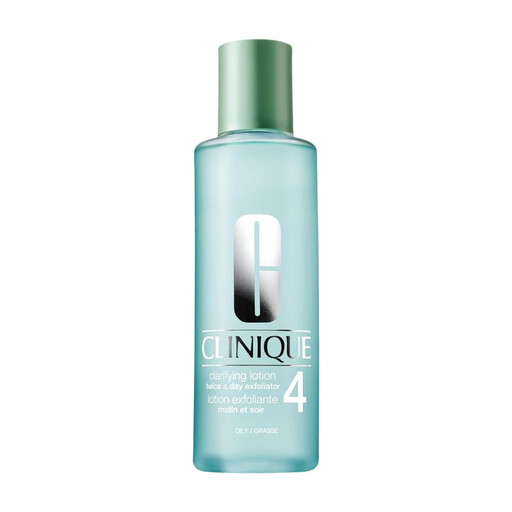
Why This Fits Their Persona: This is a no-nonsense clarifying lotion for those with very oily skin who need effective, deep pore-clearing action. It's designed as a targeted step to control excess oil and prevent the build-up that leads to blemishes.
It avoids the "wrong acid" trap by focusing squarely on Salicylic Acid (BHA), the most effective choice for dissolving oil and debris inside the pores, which is the primary concern for this skin type.
Its formula is dermatologist-developed and fragrance-free. It contains Witch Hazel to help refine pores and provides immediate oil-control benefits.
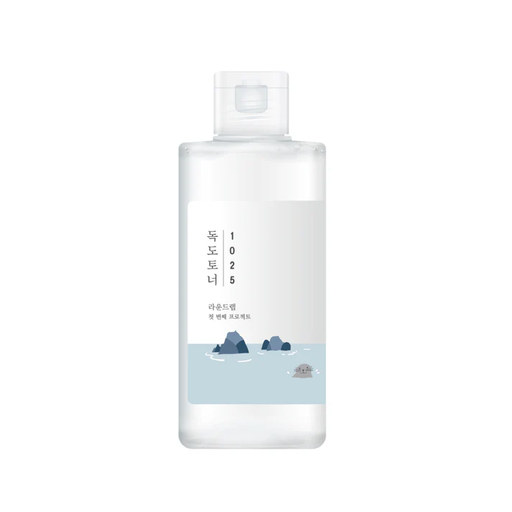
Why This Fits Their Persona: For those in the UK who are cautious about acids or have reactive skin, this Korean toner is an ideal starting point. It prioritises hydration and soothing while offering extremely gentle exfoliation.
It masterfully avoids the "stronger is better" trap. Instead of traditional acids, it uses a patented enzyme exfoliant (Protease) that works very gently. It also counters the "ignoring supporting ingredients" pitfall with a formula rich in Panthenol, Allantoin and Betaine to calm and moisturise.
The lightweight, watery texture absorbs instantly without stickiness. Its base of mineral-rich deep-sea water provides profound hydration, making it suitable for even the most sensitive skin types.
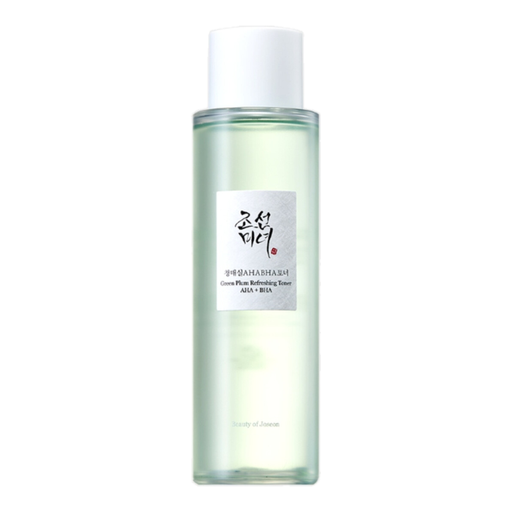
Why This Fits Their Persona: This is for the user whose main goals are achieving a smoother, more radiant complexion. It's a balanced daily toner that addresses both surface texture (with AHA) and minor congestion (with BHA).
This formula is a prime example of not ignoring the supporting cast. It combines low concentrations of Glycolic Acid (2%) and Salicylic Acid (0.5%) with a high percentage of Green Plum Water and Mung Bean Extract, which are known for providing moisture and smoothing texture.
The water-light texture is refreshing and non-irritating, making it suitable for daily use. It effectively clears away dead skin cells to reveal a brighter, more even-toned complexion over time.
We have compiled a complete, real-time list of products that fully satisfy these strict selection criteria and UK safety regulations.
This depends entirely on the product's strength and your skin's tolerance. For potent formulas with higher acid concentrations, it's wise to start by using it just 2-3 times per week in the evening. If your skin responds well without dryness or irritation, you can consider increasing the frequency. For a gentle daily exfoliator like the Round Lab Dokdo Toner, it is formulated for use up to twice a day. Always read the product's directions.
Yes, but with caution to avoid overwhelming your skin. A common approach is to use them at different times. For example, you could use your Vitamin C serum in the morning (followed by sunscreen) and your AHA BHA toner or retinol product at night. Using them on alternate nights is another safe way to incorporate them all into your routine without compromising your skin barrier.
Absolutely. This is a critical step that should never be skipped. Exfoliating acids, even in a toner for oily skin, can disrupt the skin's moisture balance. Failing to apply a moisturiser afterwards can signal your skin to produce even more oil to compensate for the dryness, potentially making matters worse. Always follow up with a suitable, non-comedogenic moisturiser to lock in hydration and support a healthy skin barrier.