Desk-based visual explorers
If most sessions take place at a home-office monitor or TV, compare each game’s supported display modes with your screen before choosing a console for its headline output capability.


Choose a PS5 Disc Console if you mainly play at a desk and want physical games and its controller features; consider Xbox Series X if a disc-capable console and access to a changing Game Pass library matter more. Nintendo Switch 2 suits play that moves between a home-office display and handheld mode. Check your intended games and editions before choosing, then match the console to your display, preferred game format and storage needs.
If most sessions take place at a home-office monitor or TV, compare each game’s supported display modes with your screen before choosing a console for its headline output capability.
If you like trying different games, a changing subscription library may appeal. Check that your intended titles are included in the plan you would use, rather than assuming access to every game.
If you want to leave the desk without stopping play, a console with both handheld and docked modes gives you that choice, provided your intended games support the modes you need.
Start with the exploration games you want to play. Then decide whether the desk display, access to games or handheld play is your main priority.
Consider it when: You play mainly at a desk or TV and want the option to use physical PS5 and PS4 game discs alongside supported DualSense controller features.
Trade-off: It stays at the display; online multiplayer requires paid PlayStation Plus.
Consider it when: You want a stationary disc-drive console and expect to try eligible games through Game Pass.
Trade-off: Game Pass is an ongoing subscription, and its catalogue and plan benefits can change.
Consider it when: Moving the same supported game between handheld play and a home-office display matters more than a fixed-location setup.
Trade-off: Docked output depends on the game and display; expanding game storage requires microSD Express.
| Concern | What to check | Who this matters to |
|---|---|---|
| Desk-display experience | Check your monitor or TV’s resolution, refresh rate, HDR and VRR support, then the output modes of each intended game. A console’s supported output is not a promise that every game will use it. | I plan to explore mainly on my office screen, so I want game modes that suit the display I already use. Around 42% of consumers would put the desk-display experience first. |
| Access to games | Check each intended game’s platform and edition, whether you want discs or downloads, and any current subscription inclusion. For games shared with children, check their PEGI ratings too. | I want my chosen exploration games in a format I will actually use, without relying on a subscription catalogue that may change. For around 33% of consumers, access to games would be the primary concern. |
| Handheld flexibility | Decide whether play away from the desk is essential. For Switch 2, check game-mode support and use microSD Express if you need to expand game storage. | I want to continue playing when the office screen is needed for something else. Handheld flexibility would come first for around 25% of consumers. |
A console’s features cannot make an unavailable game edition work on that platform. Disc, download and subscription options also differ.
List the games you expect to play first, then check their platform editions, formats and current subscription inclusion. If children will use the console, check each game’s PEGI rating and content descriptors.
Changing platforms later may mean buying a game again or taking out a subscription to access an eligible title.
Output depends on the game’s supported mode and the connected display. Nintendo states that Switch 2 docked 4K output is limited to a maximum of 60fps.
Check the game’s modes and your display’s HDMI, refresh-rate, HDR and VRR specifications before choosing around a particular output feature.
Nintendo specifies microSD Express for expanding Switch 2 game storage; an ordinary microSD card is not the supported route for that purpose.
Estimate how many digital games you want installed, then check for microSD Express compatibility if you need additional game storage.
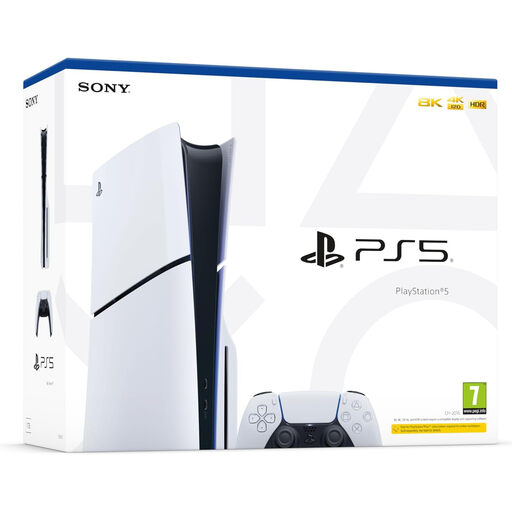
Sony’s PS5 Disc Console is a fixed-location option for a home-office monitor or TV when physical games and PS5 controller features matter.
Microsoft’s Xbox Series X combines a stationary 1TB disc-drive console with the option to use an eligible Game Pass plan.
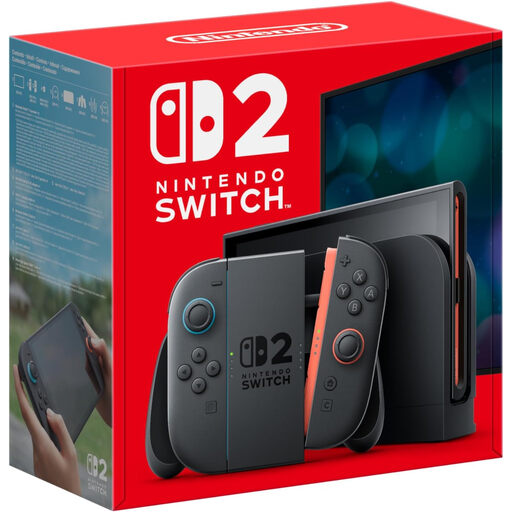
Nintendo Switch 2 combines handheld play with docked output for a compatible home-office monitor or TV.
These options include Nintendo Switch 2 for handheld and docked play, plus stationary PS5 Disc, PS5 Digital Edition and Xbox Series S models. Xbox Series S is a different model from the disc-drive Series X discussed above.
 No image available
Consider this console if you want to move supported games between handheld play and a home-office display.
Nintendo specifies a 7.9-inch 1080p handheld screen and 256GB internal storage for Switch 2. Docked 4K output needs a compatible game and display; expanding game storage requires microSD Express. Check your intended game editions before choosing.
 No image available
Consider this stationary PS5 variant if you want the option to use physical games at your desk or TV.
The Disc Edition has a built-in disc drive. PlayStation describes SSD loading and supported haptic feedback and adaptive triggers for PS5; check your intended games and display modes individually. If you plan to stand the console vertically, check whether the stand is included.
No image available
Consider this fixed-display PS5 variant if you intend to get your games as downloads rather than use discs.
PlayStation identifies the PS5 Digital Edition as an all-digital console with no disc drive. Check that your intended exploration games have suitable digital editions before choosing this variant.
 No image available
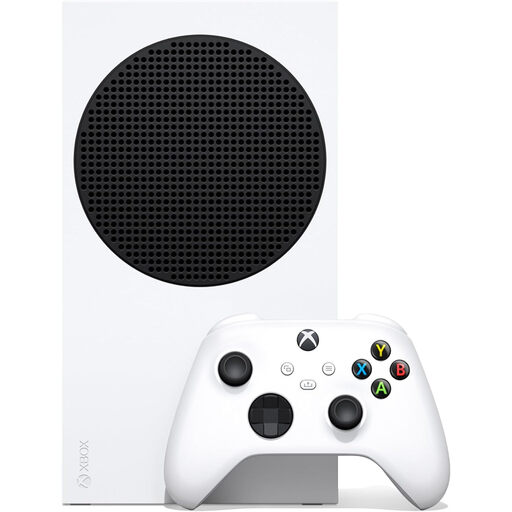
Consider this stationary, digital-only Xbox if you do not need physical game discs.
This is a 1TB Series S, not the disc-drive Series X. If you plan to use Game Pass, check the current plan and whether your intended games are included; confirm each game’s display modes separately.
No; choose a compatible display for the modes you actually intend to use. PlayStation says PS5 supports 4K 120Hz video output, while Nintendo says Switch 2 docked 4K output reaches a maximum of 60fps. In either case, check the game’s supported mode and your display before expecting a particular result.
Choose a disc-capable model if using physical games is important to you. The PS5 Disc Console plays physical PS5 and PS4 game discs, while PlayStation describes the PS5 Digital Edition as having no disc drive. Check the exact variant rather than assuming every console in a range accepts discs.
Only if those games are in your chosen plan’s current catalogue. Xbox offers changing Game Pass libraries, so check each title and the plan’s console benefits before relying on a subscription instead of buying the game separately.
Check the PEGI age rating and content descriptors for each game. PEGI says its ratings guide age suitability based on content, not how difficult a game is to play.