Active animation-project editors
If you regularly open, save or move projects on the external drive, check both the drive and your computer’s connection before choosing on the basis of advertised speed.


Choose a portable USB 3.2 Gen 2 SSD if you regularly work from or transfer active animation projects; choose a portable HDD if retaining a larger local archive matters more than working speed. Thunderbolt SSDs and multi-bay RAID storage suit more specialised workflows, but none of these drives replaces a separate, verified backup that can be disconnected when not in use.
If you regularly open, save or move projects on the external drive, check both the drive and your computer’s connection before choosing on the basis of advertised speed.
If you mainly retain completed projects, allow room for source assets, exports and versions. Organising those files and keeping a separate backup matter alongside drive capacity.
If projects travel between locations, consider the drive’s size, physical-protection claims and the cables your computers require. Client files containing personal information may also call for appropriate access controls and encryption.
Start with how often you will work from the drive rather than simply store files. Then size the local archive and plan how you will protect a second copy.
Choose when: You frequently edit from the drive or move active project folders between computers.
Bear in mind: Quoted maximum transfer speeds depend on the computer, cable and connection mode.
Choose when: Completed projects need a portable local archive and are opened only occasionally.
Bear in mind: This capacity-led route is less suited to demanding work directly from the drive than the cited USB SSD options.
Choose when: A Thunderbolt-capable workstation and an unusually demanding active workload justify this specialist connection.
Bear in mind: SanDisk Professional lists its G-DRIVE PRO SSD at up to 2 TB in the cited range; a computer with only ordinary USB connectivity cannot use its Thunderbolt connection.
Choose when: A professional workflow requires several drive bays and a planned RAID configuration.
Bear in mind: The cited G-RAID Shuttle SSD requires mains power and more setup; RAID does not replace a separate backup.
| Concern | What to check | Who this matters to |
|---|---|---|
| Active-project speed | Match the drive’s USB or Thunderbolt mode to the computer port and cable. Treat quoted sequential speeds as conditional maximums. | When I open and save projects on the drive throughout the day, I want transfers to fit that workflow; around 36% of consumers put active-project speed first. |
| Archive capacity | Measure existing project folders and allow for retained source assets, exports and versions. Check the file system before loading files. | If completed projects stay with me locally, I need room for the files I retain rather than speed I rarely use; roughly 29% of consumers prioritise archive capacity. |
| Portability and protection | Check the exact model’s drop and ingress claims, their conditions, cable options and warranty exclusions. | Taking projects between work locations makes physical protection and a usable connection my primary concern; around 21% of consumers put portability and protection first. |
| Backup and privacy | Plan another verified copy that can be disconnected. Assess encryption and password handling if files contain personal information. | Without cloud storage, I want to reduce the risk of losing the only project copy or exposing client files; approximately 14% of consumers prioritise backup and privacy safeguards. |
Samsung’s stated T7 Shield maximums require a compatible USB 3.2 Gen 2 host and cable, plus UASP support. A drive’s quoted sequential speed is not a promise for every project workload.
Identify your computer’s ports and check the required cable and protocol before choosing a faster USB or Thunderbolt drive.
The National Cyber Security Centre warns that connected backup storage can be affected alongside original files during a ransomware incident. A recovery service is a contingency, not another project copy.
Keep more than one verified copy and disconnect at least one backup when it is not in use.
Western Digital says the cited My Passport drives are supplied as NTFS and need reformatting for macOS. Reformatting a drive containing the only copy puts those files at risk.
Decide which operating systems must use the drive before loading it, and preserve a separate copy before reformatting.
Samsung says the T7 Shield’s IP65 and drop claims reflect controlled tests; liquid, dust and drop damage are not covered under its warranty.
Check the rating’s conditions, protect the drive in transit and keep a separate backup.
The T7 Shield line is a compact portable SSD option for active projects, with 1 TB, 2 TB and 4 TB variants in the cited UK range.
Its cited range spans portable USB SSDs, a Thunderbolt 3 SSD and multi-bay RAID storage for different professional workflows.
My Passport portable HDDs are relevant when retaining a local project archive takes priority over working directly from the drive.
For a local-storage workflow, check whether the exact Seagate drive under consideration includes a recovery service.
These portable drives cover two uses in this decision: SSDs for considering active-project work and an HDD for a capacity-led local archive. Check your computer’s connections and the size of your project folders before choosing a variant.
 No image available
Consider this 1 TB portable SSD for active projects that fit its capacity. Its title specifies USB 3.2 Gen 2; Samsung’s stated T7 Shield speed and ruggedness claims have connection and test conditions, so check your computer’s port and keep a separate project copy.
 No image available
Consider this variant if active files and retained projects call for a 4 TB portable SSD. The title specifies USB Type-C and USB 3.2 Gen 2; confirm your computer’s connection and maintain another verified copy.
 No image available
Consider this 2 TB SSD for moving active project files when its stated USB 3.2 Gen 2 connection suits your computer. The product title quotes maximum read/write speeds of 1,050/1,000 MB/s; check the connection needed for your workflow rather than treating those figures as guaranteed transfer rates.
 No image available
Consider this 2 TB portable SSD if its capacity fits the projects you need to carry. Confirm its connection requirements against your computer before choosing it for work directly from the drive, and check any protection or encryption features you require.
 No image available
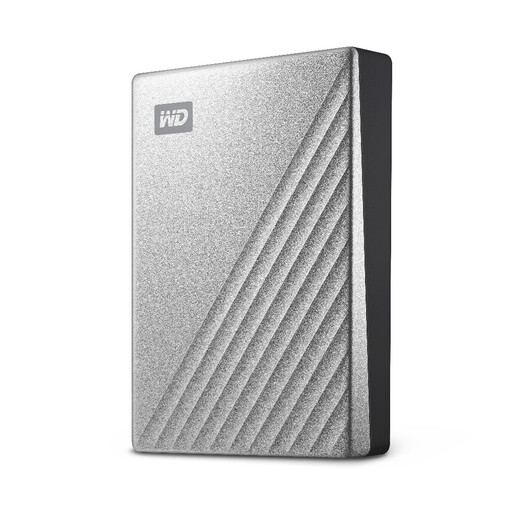
Consider this 4 TB portable HDD for retaining completed projects locally rather than making it the default drive for demanding active work. If you use a Mac or move files between operating systems, confirm the required file system before loading the archive.
One external drive can hold projects locally, but it should not be their only copy. The National Cyber Security Centre advises keeping backup storage safe and disconnected when it is not in use; verify another copy before removing original files.
Use a compatible portable SSD if you regularly edit from the drive or transfer active project folders; consider a portable HDD if the main task is retaining a larger archive. Check actual folder sizes and your computer’s connection before deciding.
Plan its file system before relying on it across both systems. Western Digital says the cited My Passport drives are supplied as NTFS and need reformatting for macOS; copy any existing files elsewhere before reformatting.
Check that the copied folders and project files are present before deleting the originals. Microsoft also advises Windows users to select Eject before disconnecting external storage.
Choose access and storage safeguards appropriate to the information and the risks involved. The Information Commissioner’s Office identifies encryption as a measure that may be appropriate depending on the processing; consider password handling, access controls and backups alongside it.