Keepers of irreplaceable files
If you have photos or records that would be hard to recreate, you need a separate copy that you can restore. The UK National Cyber Security Centre advises keeping important data backed up.


For household files, an external drive gives you a local copy, while cloud storage can provide an off-site route when the right folders and account settings are in place. If the files would be difficult to replace, consider using both, then check that you can restore a sample file; a synchronised folder may also carry changes or deletions across devices.
If you have photos or records that would be hard to recreate, you need a separate copy that you can restore. The UK National Cyber Security Centre advises keeping important data backed up.
If you want photos or documents available on more than one computer, check which files are included and whether synchronisation gives you a recoverable copy as well as convenient access.
If you prefer a copy stored locally, consider whether you can keep the drive compatible, update it regularly and store it separately from the computer.
UK National Cyber Security Centre guidance recommends keeping a separate copy and warns that connected backup drives can also be affected by an incident. Choose a setup you can maintain and test, rather than relying on storage capacity alone.
| Concern | What to check when buying | Who this matters to |
|---|---|---|
| Recoverability | Check which folders are covered, whether earlier versions are available and how to restore a sample file. | If losing, damaging or accidentally deleting family files would be difficult to recover from, you will want a copy you can restore. Around 33% of consumers put recoverability first. |
| Capacity and ongoing cost | Compare your current files and expected growth with the drive capacity or cloud allowance, and check plan renewal terms. | If your photo collection is growing, you will want enough space without overlooking a continuing subscription. Around 25% of consumers prioritise capacity and ongoing cost. |
| Access across computers | List the Windows and Mac folders you need to protect, then check cloud folder selection or the drive’s connection and backup setup. | If you use more than one computer, you will want the intended files accessible and protected on each. Around 17% of consumers prioritise cross-device access. |
| Offline control and account access | Decide where a drive will be stored between updates; for cloud storage, check account recovery and version controls. | If you want a copy you can disconnect, you will need a routine for updating it and a safe place to store it. Around 17% of consumers prioritise offline control. |
| Portability and transfer time | Check the exact drive’s capacity and connection against your computers; treat rated speeds as conditional on compatible equipment. | If you regularly move large folders between computers, you may value a portable drive that fits your transfer routine. Around 8% of consumers put portable transfers first. |
Changes to synced files can appear in other locations too, and deletion recovery may be limited by the service.
Check which folders are included and what version or deletion recovery is available. Restore a sample file, and keep a separately managed copy for files you cannot replace.
The UK National Cyber Security Centre warns that an incident can affect connected USB backup storage as well as the original files.
Plan when to update and disconnect the drive, and where to store it separately. Consider an additional off-site copy for important files.
Time Machine needs to be configured with suitable storage, and some drives may need reformatting for that use.
Check the drive, connection, available space and formatting requirements before setting it up, especially if it already contains files.
Samsung’s rated speed for the cited T7 variant depends on a compatible host and cable, with UASP enabled; a speed rating does not make a single drive an independent backup.
Check the exact computer connection and prioritise having a usable second copy over a speed figure you may not achieve.
My Passport portable HDDs and My Book desktop HDDs offer different local-storage formats to consider.
The Expansion line is a local-copy option to examine for Windows or Mac computers.
The Portable SSD T7 is a local-storage option to consider when a compact drive and frequent transfers matter.
OneDrive is a cloud route to consider if its file synchronisation and personal-account recovery features suit your needs.
Time Machine supports a Mac local-backup workflow, while iCloud Photos and iCloud+ address online photo and storage needs.
Google Drive for desktop offers streaming or mirroring options for cloud-connected files on Windows and Mac.
These Joybuy options focus on local storage for household photos and files, with portable drives and desktop storage represented.
 No image available
This portable SSD may suit a household looking for local storage that can be carried between compatible devices.
Capacity: 4 TB.
Connection: USB Type-C, USB 3.2 Gen 2 (3.1 Gen 2).
 No image available
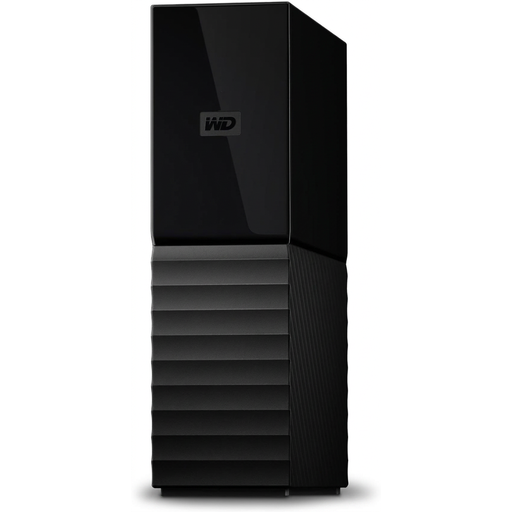
This desktop drive may suit a large household collection kept near the computer rather than carried regularly.
Capacity: 22 TB.
Connection: USB 3.0.
The product name also specifies password protection and hardware encryption.
 No image available
This portable SSD may suit someone who wants local storage that can be moved between locations.
Capacity: 2 TB.
 No image available
This portable hard drive may suit a household that wants a local copy for a sizeable collection and can keep to a regular backup routine.
Capacity: 4 TB.
 No image available
This portable drive may suit someone seeking a local copy for household photos and documents.
Capacity: 4 TB.
Connection: USB 3.0.
Reformatting may be required for Mac or other operating systems.
Not necessarily. Google says changes to streamed or mirrored Drive files reflect everywhere. Check which folders are included, whether the service retains a usable earlier version and whether you can restore a sample file independently.
On a Mac, Apple describes connecting suitable external storage and configuring it as a Time Machine backup disk; its guidance recommends at least twice the Mac’s storage capacity. On Windows, Microsoft describes File History for personal-file versions on an external drive or network location. Check that the intended folders are included.
No; the cited services do not offer indefinite recovery for these deleted items. Microsoft states that deleted files in personal OneDrive accounts can be restored within 30 days, Google states that files remain in Drive Trash for 30 days, and Apple gives a 30-day recovery window for deleted iCloud Photos items.
Check the selected cloud tier’s storage allowance and renewal terms, or the exact drive’s capacity, warranty and computer compatibility. Seagate lists a limited warranty for its cited Expansion variant, but a warranty is not a promise to restore every lost file.
For processing carried out by an individual purely for personal or household activities, the Information Commissioner’s Office says the UK GDPR does not apply. This does not determine obligations for uses outside that condition, such as an organisation’s processing.