Small-desk photo keepers
If the drive will sit beside a laptop or desktop, its size, cables and power arrangement affect how easily it fits into the space you have.


For a small desk, consider a portable SSD when a small footprint and frequent large photo transfers matter most; a portable hard drive suits a capacity-led local copy. A bus-powered desktop-style drive is another capacity-focused option, but only if its connection and power requirements fit your setup. Whichever drive you choose, keep another backup elsewhere: CISA advises keeping three copies of important files, including the primary copy and two backups.
If the drive will sit beside a laptop or desktop, its size, cables and power arrangement affect how easily it fits into the space you have.
If your collection includes video or keeps expanding, measure the library before choosing between a smaller portable drive and a capacity-focused option.
If you regularly copy large batches of images, check the computer port and cable as well as the drive. Samsung UK notes that the T7’s maximum transfer ratings depend on a compatible connection.
Start with the size of the photo library and the space and connections available at the desk. Then decide whether transfer frequency or an easy-to-maintain backup routine changes the type of drive you need.
Consider it when: A compact drive and frequent large transfers matter more than choosing by capacity alone.
Bear in mind: Rated peak speeds depend on the host and cable; Samsung UK specifies USB 3.2 Gen 2 and UASP conditions for its cited T7 models.
Consider it when: Your growing library calls for substantial capacity in a drive you can move.
Bear in mind: Confirm the exact model’s connection, formatting and backup workflow rather than relying on its capacity alone.
Consider it when: Capacity is the priority and the drive will usually stay at the desk.
Bear in mind: Seagate UK specifies a USB-C port supplying at least 15 W and a USB-C data cable for its cited One Touch desktop model.
| Concern | What to check | Who this matters to |
|---|---|---|
| Capacity headroom | Measure the photo library, including video and exports, and allow room for new files and retained backup versions. Check the exact drive variant’s capacity. | If my photo library keeps growing, I do not want a drive that fills before the next batches can be backed up. Around 31% of consumers put capacity headroom first. |
| Desk space and connections | Check the available ports, cable arrangement and any model-specific power requirement. For Seagate’s cited One Touch desktop model, the USB-C port must supply at least 15 W. | With little room beside my computer, I want the drive and its connection to fit without an unsuitable power setup; around 31% of consumers chiefly need that simplicity. |
| Backup routine | Choose how files will be copied, check that any backup software works with your computer, and test restoring a few photos. | When imports pile up, I need a routine I will keep using rather than a drive that stays empty. Maintaining the backup is the primary need for around 23% of consumers. |
| Transfers and portability | Check the computer’s USB transfer mode and the supplied cable against the exact drive’s requirements. Treat peak speed ratings as conditional. | If I move the drive or copy large batches often, waiting for transfers becomes more important to me; around 15% of consumers place transfers and portability first. |
An attached drive is useful for local restores, but it does not provide a separate copy if the drive and computer are affected together. CISA advises keeping three copies of important files and testing backups.
Keep another copy separate from the desk drive, disconnect or isolate a backup when it is not being updated, and try restoring sample photos.
The connector alone does not establish the required power or transfer mode. Seagate UK specifies at least 15 W of USB-C power delivery for its cited One Touch desktop model; Samsung UK places connection conditions on the cited T7 speed ratings.
Compare the exact drive’s requirements with the computer or dock and its cable before buying.
Samsung UK describes its T7 Shield IP65 and 3-metre-drop claims as controlled-test results, while stating that liquid, dust and drop damage are excluded from warranty cover.
Use those claims only within their stated test conditions, handle the drive carefully and retain a separate photo copy.
A drive sized to the current library may have little room for future imports, video or retained versions.
Measure the files you plan to back up, allow for growth and confirm the capacity of the precise variant.
Relevant to compact portable SSDs for desks where drive size or frequent transfers influence the choice.
Relevant to portable hard drives and a capacity-focused, bus-powered desktop-style route.
Relevant to shoppers comparing portable and desktop external-drive families, including Mac-centred backup setups.
These portable hard drives and SSDs are options for keeping a local photo copy where desk space matters. Choose a capacity from your own library size, then check the connection and backup workflow for the exact drive.
 No image available
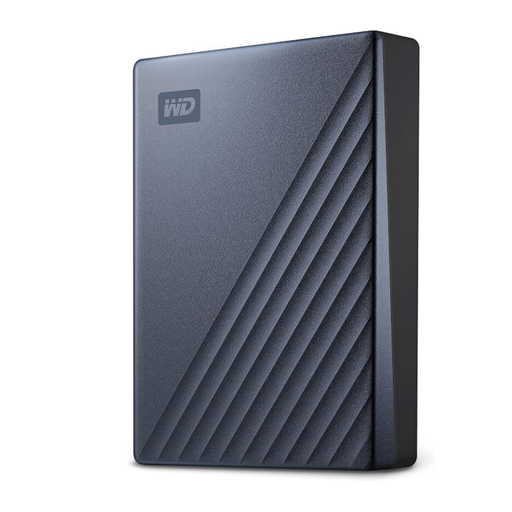
A portable hard-drive option to consider when a growing photo library calls for 5 TB of local storage.
Check the stated reformatting requirement before using it for a macOS backup, and measure your library to decide whether 5 TB provides enough room.
 No image available
This 2 TB portable hard drive suits a local photo copy if your library and planned growth fit that capacity.
For a Mac-centred setup, check the stated downloadable-driver requirement against your computer and intended backup software.
 No image available
Consider this compact 4 TB SSD if a small desk footprint and a larger local photo library are both priorities.
The named variant specifies USB Type-C and USB 3.2 Gen 2x2. Check whether your computer or dock supports the required mode if transfer performance is important; the stated drop resistance does not make the drive waterproof or dustproof.
 No image available
This portable 2 TB SSD is an option when a small photo-backup drive matters more than choosing by capacity alone.
The named variant specifies USB Type-C and USB 3.2 Gen 2. Samsung UK says the T7’s maximum transfer ratings require a compatible host and cable with UASP enabled; check your setup rather than assuming a particular copy speed.
 No image available
Consider this 5 TB portable hard drive for a Mac-centred local photo library if its capacity fits your expected growth.
Check its stated HFS+ formatting against the backup software you intend to use. If you also need Windows access, confirm the stated downloadable-driver requirement for your computer.
No: an attached local drive is useful for restoring files, but it should not be your only copy of irreplaceable photos. CISA advises keeping three copies of important files, including two backups, and recommends offline backups and regular restore tests.
It may, but a matching connector does not settle the formatting or backup-software question. Samsung UK notes that some systems may require T7 reformatting, while Western Digital Support says macOS Time Machine works with external drives formatted as APFS. Check the exact drive and your intended workflow before putting the only local photo copy on it.
Seagate UK specifies a USB-C port supplying at least 15 W and a USB-C data cable for its cited One Touch desktop model. That is a requirement for the named model, not a rule for every desktop drive, so compare the exact product with your computer or dock.
Use an appropriate electrical-waste collection or take-back route and remove your personal files before handing the drive over. UK government guidance identifies the Waste Electrical and Electronic Equipment Regulations 2013, as amended, as the framework for electrical and electronic waste; check with your local council or retailer for the route available to you.