Volunteer archive custodians
For groups managing scans over time, the drive is only one part of the job. The National Archives advises keeping copies in different physical locations and checking that files remain intact.


Choose a portable hard drive for a straightforward working copy, a desktop hard drive when storage will stay in one place, or a portable SSD when volunteers regularly move large batches of scans. If letters contain personal data, make protection and authorised access part of the choice. Whichever drive you buy, The National Archives advises keeping several copies in different locations rather than relying on one device.
For groups managing scans over time, the drive is only one part of the job. The National Archives advises keeping copies in different physical locations and checking that files remain intact.
Letters containing personal data call for controlled access and protection suited to the risk, particularly when a removable drive leaves the group’s premises. The Information Commissioner’s Office identifies encryption as a relevant safeguard.
Volunteers working at several venues need a copy that is practical to carry and connect. Check the computers and cables they actually use before choosing a drive for its stated transfer speed.
Choose when: A USB-powered working copy will usually connect to the same Windows computer.
Consider: Toshiba says its Canvio Basics drives require reformatting for macOS; arrange separate protection if sensitive scans will travel.
Choose when: A removable copy may contain personal correspondence and password-controlled access suits the group’s security plan.
Consider: Confirm the exact model’s features and keep a documented way for authorised custodians to regain access.
Choose when: The archive normally stays at one location and measured storage growth is the main reason for a larger drive.
Consider: A mains-powered drive is less convenient to rotate off-site and still cannot be the only copy.
Choose when: Volunteers frequently carry a working copy or transfer large scan batches.
Consider: Stated maximum speeds depend on the drive, cable and computer working together; portability does not replace independent copies.
| Concern | What to check | Who this matters to |
|---|---|---|
| Preservation and file integrity | Plan an independent copy in another location and a repeatable way to check copied files. | If I am responsible for keeping the scans accessible, I need more than one device and a record of file checks. Around 36% of consumers put preservation first. |
| Personal-data protection | Establish who can access the letters; if protection is needed, check the exact drive’s encryption setup and recovery arrangements. | When letters identify living people, I need a removable copy that authorised volunteers can access without leaving it open to everyone. Roughly 29% of consumers make confidentiality their primary concern. |
| Capacity and simple setup | Measure the archive and planned additions, then check capacity, power needs and the computers’ file-system workflow. | If scans mostly stay at one venue, I want enough room for future batches without complicating routine copying. Around 21% of consumers prioritise capacity and simplicity. |
| Carrying and batch transfers | Check the computer’s port and cable against any stated SSD speed, and read physical-resistance claims with their limits. | Moving between scanning venues makes carrying a copy and transferring batches efficiently more important to me. Approximately 14% of consumers put mobile use first. |
A failed drive or corrupted file can leave the group without a usable copy. The National Archives advises several copies in different physical locations and checks that can reveal file changes.
Assign custodians, keep an independently stored copy, record integrity checks and plan to review the storage over time.
If the sole copy is lost, recovering or re-scanning letters can disrupt the group’s work.
The space needed depends on the scans and any additional versions the group retains, not simply the count of paper letters.
Measure the existing archive, allow for planned batches and choose capacity with room for growth.
A drive advertised with password protection may require setup before files are protected. That protection also needs to fit the group’s wider access arrangements.
Check the exact model’s instructions, configure protection before adding sensitive scans and document access and recovery for authorised custodians.
Managing credentials takes volunteer time; without a recovery arrangement, a change of custodian could make files difficult to access.
Samsung’s stated maximum T7 Shield speeds depend on compatible USB 3.2 Gen 2 equipment and UASP support.
Check the archive computer and cable before making transfer speed the deciding factor.
The Canvio Basics line is a portable-HDD option for a USB-powered archive copy.
The One Touch line is relevant to groups considering a password-protected portable HDD.
The T7 Shield line is a portable-SSD option for groups that regularly move archive copies.
The My Passport portable-HDD and My Book desktop-HDD lines illustrate different ways to store an archive copy.
These portable SSDs and hard drives are choices for a managed working copy of scanned letters. Measure the archive, check the group’s computers and decide how sensitive files will be protected before selecting a variant; keep an independent copy elsewhere.
 No image available
A portable working-copy option for volunteers moving between venues. Its listed capacity is 1 TB and its interface is USB 3.2 Gen 2; check available space and the computer and cable before relying on a particular transfer speed.
 No image available
A portable option where volunteers move archive copies and want to assess faster batch transfers. The named variant has 2 TB capacity and a USB Type-C, USB 3.2 Gen 2x2 interface; check host support before making speed the reason to choose it.
 No image available
A portable-HDD choice if the measured archive fits within 2 TB with room for additions. If correspondence contains personal data, check and configure the exact variant’s protection features; confirm the group’s Windows and Mac file-system workflow before loading files.
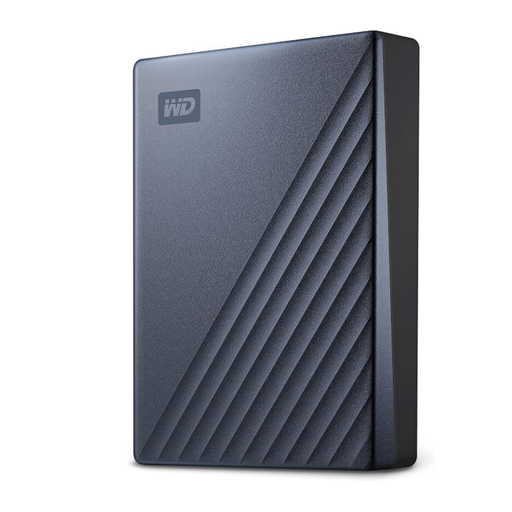 No image available
A 5 TB portable-HDD option if measuring the archive and its expected growth points to that capacity. Check the computers and file-system arrangement the custodians will use, and confirm the applicable warranty term before purchase.
 No image available
A portable 2 TB working-copy option for a group that carries scans between locations. Confirm its connection and operating-system compatibility with the group’s devices; if the letters contain personal data, check how the files will be protected.
No: treat it as one managed copy, not the only place the scans exist. The National Archives advises creating several copies in different physical locations and checking file integrity; assign someone to keep records of those checks.
If the scans contain personal data, assess who can access them and use protection appropriate to the risk, particularly for a removable copy. The Information Commissioner’s Office advises using encryption when storing or transmitting personal data; check how the chosen protection is enabled and how authorised custodians will retain access.
Check the exact drive and decide the group’s file-system workflow before copying the archive. Toshiba says Canvio Basics is NTFS-formatted for Windows and requires reformatting for macOS; reformatting can erase files already on the drive.
An SSD may suit frequent carrying, but its speed is not a substitute for separate copies and integrity checks. Samsung’s stated maximum T7 Shield speeds also depend on a compatible USB 3.2 Gen 2 computer, cable and UASP support.
Make storage review an ongoing responsibility rather than waiting for a drive to fail. The National Archives recommends reviewing storage every three to five years and moving content to new storage when needed; retain records of migrations and integrity checks.