Who is each drive for?

Growing-project archivists

If completed projects seldom need reopening and the drive can stay at one workstation, capacity is the main consideration. Seagate UK describes desktop HDDs in its Expansion range with capacities up to 30 TB; that figure applies to the range, not every desktop drive.

Portable project custodians

Moving an archive between locations calls for a drive that is practical to carry. A portable HDD or SSD can serve that need, but the copy being carried should not be the only recoverable copy.

Fast-retrieval editors

If archived projects are frequently copied or reopened, consider an SSD alongside capacity and portability. Check the workstation's actual connection before relying on a manufacturer's maximum transfer-speed figure.

What matters when choosing?

Desktop HDD

Consider it when: completed projects mainly stay beside one workstation and the archive is growing.

Accept: a mains-powered drive is less convenient to move and still needs a separate backup.

Portable HDD

Consider it when: the archive needs to move between locations without making frequent file retrieval the deciding factor.

Accept: capacity still needs planning as completed projects accumulate.

Portable SSD

Consider it when: you regularly transport, copy or reopen large project files.

Accept: quoted maximum speeds depend on the particular drive and workstation connection.

Concern What to check Who this matters to
Archive capacity Total the space used by completed projects and allow for planned growth; compare that with the chosen drive's capacity. If my finished projects keep accumulating at one workstation, I need room for the archive to grow. Around 42% of consumers put capacity first.
Separate backups Decide where additional copies will live and how one copy will be kept offline in another location. I need to recover completed work even if something happens to both the workstation and the nearby drive; roughly 33% of consumers prioritise separated copies.
Transfer and portability Check the drive's interface against the workstation's supported protocol and cable, as well as the capacity needed for projects in transit. When I carry projects or reopen large files often, waiting for transfers affects my workflow. About 25% of consumers make access and portability their primary concern.

Mistakes to avoid

  • Treating the archive drive as the only copy

    A drive beside the workstation can be affected by the same theft or local incident. The NI Cyber Security Centre advises keeping at least three copies on two devices, with one offline in a different location.

    Plan those separate copies before moving completed projects off the workstation.

    Losing the only copy can mean losing completed work and spending time rebuilding or reacquiring media.

  • Choosing an SSD by its headline speed alone

    SanDisk's quoted maximum for the PRO-G40 applies via Thunderbolt 3, while its Extreme PRO USB4 figures relate to that product's USB4 connection. A USB-C-shaped socket does not establish either capability.

    Check the workstation's supported protocol and the cable before selecting a drive for its stated speed.

  • Assuming a rugged rating prevents damage

    Samsung says the T7 Shield's IP65 and drop claims come from controlled testing; its warranty does not cover liquid or dust damage.

    Handle a drive carefully in transit and retain separate project copies regardless of its protection rating.

  • Using an unverified replacement power adapter

    An externally powered desktop drive needs appropriate power equipment. A UK Office for Product Safety and Standards report identified a particular unsafe USB power adapter; it does not establish a fault with archive drives generally.

    Confirm that the supplied equipment suits UK use, and check compatibility and current product-safety information before replacing an adapter.

Relevant brands to consider

Seagate

Its desktop and portable HDD ranges illustrate different archive needs.

  • Seagate UK specifies Expansion Desktop capacities up to 30 TB; its Backup Plus Portable range is described with capacities up to 5 TB and Windows, macOS and ChromeOS compatibility.
  • Those range figures do not establish the capacity, compatibility or availability of a particular drive. Check the exact variant before buying.

Samsung

The T7 Shield range is relevant when a portable SSD will travel or be used for frequent file transfers.

  • Samsung specifies T7 Shield maximum read and write speeds of 1,050 MB/s and 1,000 MB/s for its USB 3.2 Gen 2 range.
  • Samsung bases its IP65 rating on controlled testing and says liquid and dust damage are not covered by warranty. T7 Shield claims should not be assumed for a different T7 model.

SanDisk Professional

The PRO-G40 SSD is relevant to file-movement workflows where the workstation supports Thunderbolt 3.

  • SanDisk specifies up to 3,000 MB/s read speed for the PRO-G40 via Thunderbolt 3.
  • That manufacturer maximum is tied to the stated interface; it is not a speed to assume on every workstation or on other SanDisk SSD models.

Joybuy products for these archive routes

These drives cover a stationary desktop HDD archive, portable HDD storage and portable SSD storage for projects that may be moved or reopened. Compare each variant's capacity and connection with your own workstation and backup plan.
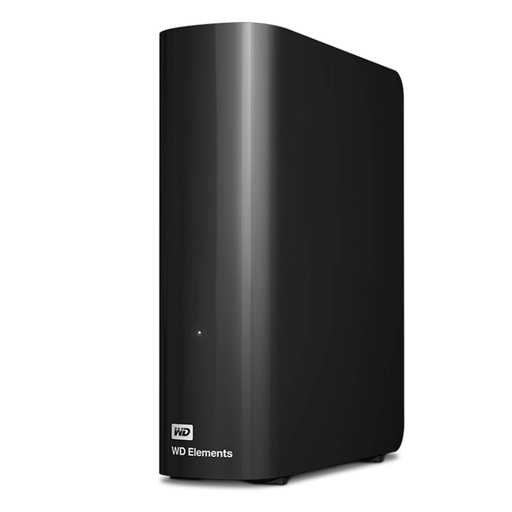
Western Digital Elements Desktop External Hard Drive, 10 TB

Western Digital Elements Desktop External Hard Drive, 10 TB

Consider this desktop HDD when completed projects will stay beside a workstation and you need a stated 10 TB of archive capacity.

Confirm that its power adapter and plug suit UK use. If using a Mac, check formatting requirements before transferring existing project files.

View on Joybuy

Samsung Portable SSD T7, 4 TB, grey

Samsung Portable SSD T7, 4 TB, USB 3.2 Gen 2, grey

This portable SSD suits an archive whose projects also need to be carried or reopened regularly. Its stated capacity is 4 TB.

Check that your workstation supports the stated USB 3.2 Gen 2 interface. This T7 is not the T7 Shield, so do not assume the Shield's protection rating applies.

View on Joybuy

Western Digital Elements Portable External Hard Drive, 4 TB, black

Western Digital Elements Portable External Hard Drive, 4 TB, black

Consider this portable HDD if you need to move a video-project archive and 4 TB accommodates its expected growth.

The product name specifies USB 3.0. Check file-system requirements before using it with a Mac or another operating system that may require reformatting, and protect the drive from shocks and liquids.

View on Joybuy

Western Digital My Passport Ultra for Mac, 5 TB, silver

Western Digital My Passport Ultra for Mac, 5 TB, silver

This 5 TB portable HDD is a choice for moving an archive used with a Mac.

Check the required file system before transferring existing projects. Windows use is described as requiring a downloadable driver; confirm that requirement for your setup and check the applicable warranty terms before buying.

View on Joybuy

SanDisk Portable SSD, 2 TB

SanDisk Portable SSD, 2 TB

This portable SSD offers a stated 2 TB for an archive that needs to travel or have project files copied regularly.

Check whether 2 TB allows for future projects, and confirm the drive's USB protocol and your workstation's connection before making transfer speed a deciding factor.

View on Joybuy

Frequently asked questions

Is one external drive enough to archive video projects?

No: one external drive should not be your entire recovery plan. The NI Cyber Security Centre advises keeping at least three copies on two devices, with one copy offline in a different location.

Should a backup drive stay connected to the workstation?

Disconnect it when it is not being used for backups if you can do so without disrupting your backup routine. The NI Cyber Security Centre recommends this to reduce its exposure to an incident affecting the computer.

Will any USB-C SSD reach its advertised maximum speed?

No; the connector's shape alone does not establish the supported protocol. SanDisk ties its PRO-G40 maximum cited read speed to Thunderbolt 3 and its Extreme PRO USB4 maximum to USB4, so check the exact drive, workstation port and cable.

Can a Seagate Backup Plus Portable be used with Time Machine?

It may need reformatting for Time Machine, according to Seagate. Check the Mac's backup and file-system requirements, and safeguard any existing archive files before reformatting a drive.

What should I check when using or disposing of a powered desktop drive?

Use suitable power equipment rather than an unverified replacement adapter. When retiring a drive, erase project data and check an appropriate electrical-equipment recycling route; UK government guidance covers waste electrical and electronic equipment.