Choose a portable drive if you move records between locations, or a desktop drive if a larger archive usually stays at one desk; check each model’s capacity, connections and device compatibility before deciding. If sensitive files travel with you, consider access controls too. The UK’s National Cyber Security Centre advises keeping another backup and disconnecting an external backup drive when it is not in use, rather than relying on one drive or online account.
Who needs an external copy?
People gathering files from several places
If scans, PDFs and account exports sit across computers and online accounts, an organised local copy can form part of a repeatable backup routine. The National Cyber Security Centre recommends considering both online storage and an external device for separate backups.
People carrying an archive between locations
A portable drive may suit records that need to move, provided its connector, file system and supported devices match those you use. Check the computer and cable before relying on a manufacturer’s maximum speed figure.
People carrying sensitive personal files
Access controls matter if a drive could be lost or stolen. Plan a separately stored backup as well: encryption cannot restore files from a failed device or recover forgotten credentials.
What should you check before choosing?
Start with where the archive will live and how you will restore it, then check capacity, device access and protection for files you carry.
| Priority | What to check | Your needs |
|---|
| Separate backups | Decide where a second copy will be kept. Disconnect a removable backup drive after use and check that you can restore files. | I want my records accessible even if a computer, drive or online account becomes unavailable. The National Cyber Security Centre advises considering both online storage and an external device, and keeping the device disconnected when not in use. |
| Device access | Check ports, cables, operating systems and file systems on every device in the workflow. Apple identifies ExFAT as Windows-compatible and specifies it for Windows volumes over 32 GB; confirm that the format also suits your intended software. | Files need to move between my Windows and Mac computers without a formatting surprise. If I also use a mobile device, I’ll check that specific device’s support. |
| Capacity and location | Measure the archive and allow for growth. Compare individual capacities and whether the drive needs mains power; Seagate’s Expansion desktop range, for example, lists 4 TB to 30 TB models. | I need enough room for organised copies, but the choice changes if the archive travels with me rather than staying at a desk. |
| Access controls | Check how a drive is unlocked, how credentials are kept and what happens after failed attempts. Kingston says its IronKey Vault Privacy 80ES uses hardware encryption and can crypto-erase after repeated incorrect entries. | If I carry identity documents or account exports, I want to limit access if the drive goes missing without making my only copy dependent on one password. |
| Transfer speed | Compare speed claims only with the required host and cable conditions. Samsung says the T7 Shield’s stated maximum of 1,050 MB/s read and 1,000 MB/s write requires USB 3.2 Gen 2, a compatible cable and UASP. | Frequent large transfers make connection speed worth checking; for occasional document copies, I’ll focus on a backup routine I can maintain. |
What can go wrong with the setup?
Leaving the backup drive connected
The National Cyber Security Centre reports incidents in which ransomware encrypted original files and connected USB or network backups.
After backing up, check that a file can be restored, safely disconnect the drive and keep another copy separately.
Choosing an SSD by its headline speed alone
Samsung’s T7 Shield maximum speed claims depend on a USB 3.2 Gen 2 host, compatible cable and UASP; an older connection may not deliver those figures.
Check the actual ports and cable on the devices you will use, alongside the capacity you need.
Reformatting before protecting existing files
Western Digital says My Passport drives are supplied as NTFS and need reformatting for macOS use. Reformatting can erase files already on a drive.
Choose a format for the intended devices and copy existing contents elsewhere before changing it.
Confusing encryption with recovery
Kingston says the IronKey Vault Privacy 80ES can crypto-erase after 15 consecutive incorrect Admin and User password entries under its default setting. Encryption does not recover a lost password or a failed drive.
Keep permitted recovery information securely away from the device and maintain an independent backup.
Which product lines are relevant?
Samsung
The portable T7 SSD line is relevant when a compact drive and compatible USB connections matter.
- Samsung states maximum T7 Shield transfer speeds of 1,050 MB/s read and 1,000 MB/s write.
- Those maxima require a USB 3.2 Gen 2 host, compatible cable and UASP; Samsung’s resistance figures are manufacturer test claims, not a reason to omit another backup.
Western Digital
My Passport is a portable hard-drive line to assess for a carryable local archive.
- Western Digital states that My Passport models support 256-bit AES hardware encryption.
- Western Digital says they are NTFS-formatted out of the box and require reformatting for macOS use.
Seagate
Expansion desktop drives are relevant to an archive that normally remains at one desk.
- Seagate lists Expansion desktop capacities from 4 TB to 30 TB.
- Its cited 6 TB model requires an 18 W power adapter and USB cable, so it is not a travel-focused setup.
Kingston IronKey
Vault Privacy 80ES is a portable SSD line to consider when controlling access to carried records is the main concern.
- Kingston specifies a touchscreen, Admin and User credentials, and XTS-AES 256-bit hardware encryption.
- Kingston specifies crypto-erase after repeated failed password attempts under the default setting; credentials and a separate recovery copy need planning.
Joybuy storage options
These portable hard drives and SSDs offer local-storage options for a records archive. Choose by the capacity and devices you use, then arrange another backup rather than relying on any one drive.
 No image available
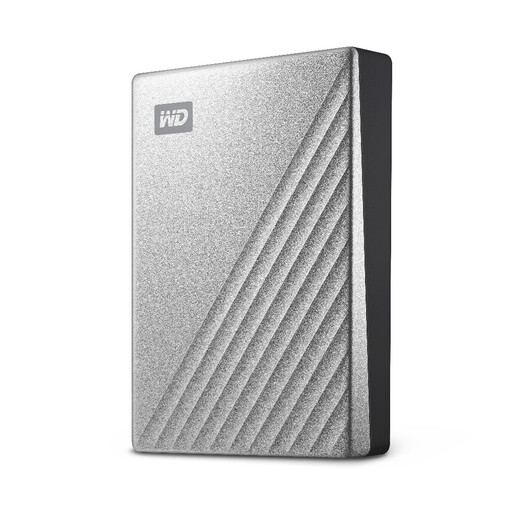
Western Digital My Passport Ultra 4TB portable hard drive, silver
A 4TB portable option for a larger local archive. If the records must move between Windows and macOS, confirm the file-system and software setup before copying them.
 No image available
Samsung T7 Shield 1TB portable SSD, blue
A compact 1TB option for carrying a local copy. Samsung’s stated maximum transfer speeds require a compatible USB 3.2 Gen 2 host, cable and UASP; check that 1TB accommodates your archive.
 No image available
Samsung T7 4TB portable SSD, grey
A 4TB portable SSD for an archive that needs more room than the 1TB option shown here. Check the file-system format and connections for every computer that will use it.
 No image available
SanDisk Portable SSD 2TB
A 2TB portable option for keeping a local copy between locations. Confirm its connection, operating-system support and file-system format against the devices in your workflow.
 No image available
Western Digital Elements Portable 4TB hard drive, black, USB 3.0
A portable 4TB hard drive for a sizeable local copy. Check its format before using it with a Mac or another non-Windows device, and protect the drive from knocks and liquids when carrying it.
Questions about storing digital records
Is one external drive enough for important records?
No: it gives you a local copy, but that drive can fail, be lost or be affected while connected to a compromised computer. The National Cyber Security Centre advises considering another backup, such as online storage, and disconnecting the external device when it is not in use.
What format should I check for a drive shared by Windows and Mac?
Assess ExFAT for a shared data drive: Apple identifies it as Windows-compatible and specifies it for Windows volumes over 32 GB. Check your software’s requirements before formatting, and copy existing files elsewhere first; APFS is a macOS format rather than a broadly cross-platform choice.
Can a removable USB drive be my live OneDrive sync location?
Do not assume it will work without configuration. Microsoft says an external USB drive may need reformatting to NTFS to meet OneDrive sync requirements. Check the intended setup before changing the drive’s format, and keep a separate backup of important records.
Does an encrypted drive replace a second backup?
No. Encryption controls access to files; it cannot restore a failed drive or files made inaccessible by lost credentials or crypto-erase. Keep an independently stored copy, especially if you carry sensitive records.


