What matters when choosing?
Start with where the backup will live and how often it must move, then check capacity, the computers' connections and who will be able to restore the records.
Desktop HDD
Choose when: A large archive normally stays beside one studio workstation.
Trade-off: A powered desktop drive is less convenient to take away for an off-site copy.
Portable HDD
Choose when: The backup must be carried between locations and a repeatable computer-based backup routine is the priority.
Trade-off: Backup software and password features vary by model and operating system; Seagate specifies Windows-only backup plans for its One Touch Toolkit.
Portable SSD
Choose when: The drive travels regularly or large folders are copied often.
Trade-off: Samsung and Crucial's stated peak speeds depend on compatible connections, while resistance ratings apply only under stated conditions.
| Concern |
What to check |
Who this matters to |
| Recovery and access |
Plan an isolated copy and a restore test. If records contain personal data, decide who controls access and recovery credentials. |
If I'm responsible for records used on a shared computer, I need to restore them without giving every user unrestricted access. Around 33% of consumers put recovery and controlled access first. |
| Archive capacity |
Measure the current archive and allow space for retained versions and growth; check whether a fixed drive needs mains power. |
With folders of historic records and media still growing, I need the backup routine to hold more than today's files. Archive capacity is the primary concern for around 42% of consumers. |
| Portability and transfers |
Check the computers' USB ports and cables, and read any resistance rating alongside its test conditions. |
When I carry the backup between locations and copy large folders, I want the drive and connection to suit that routine. Around 25% of consumers chiefly prioritise portable transfers and physical resilience. |
Joybuy drive choices
These portable SSDs, portable HDDs and a desktop HDD serve different club-backup routines. Check the archive size and the studio computers before choosing a capacity or connection, and arrange a separate backup copy regardless of drive type.
 No image available
Samsung T7 Portable SSD, 4 TB, Grey
Consider this portable SSD if the backup moves between locations and the club needs space for sizeable folders.
The listed variant is 4 TB with a USB Type-C 3.2 Gen 2 connection. Check the studio computers' ports and whether 4 TB leaves enough room for retained versions; keep this non-rugged model away from liquids.
View on Joybuy
 No image available
Western Digital My Passport Portable HDD, 2 TB, Black
This portable HDD suits a backup that needs to leave the studio, provided its capacity covers the records and retained versions.
Check how backup scheduling and password setup will work on each computer used by the club, particularly if both Windows and Mac systems are involved. Avoid moving the drive while files are transferring.
View on Joybuy
 No image available
Samsung T7 Shield Portable SSD, 1 TB, Blue
This model is worth considering when the backup travels regularly, but first check whether 1 TB can hold the full archive and its retained versions.
The listed variant uses USB 3.2 Gen 2. Samsung's T7 Shield speed and resistance claims have connection and test-condition limits; IP65 does not mean the drive can be submerged or replace a separate backup.
View on Joybuy
 No image available
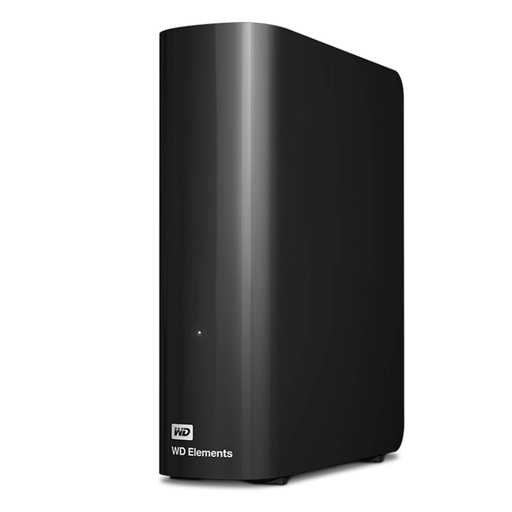
Western Digital Elements Desktop HDD, 10 TB
This desktop drive fits a large local archive that normally stays at one studio workstation, rather than a copy carried away after each backup.
The listed capacity is 10 TB. Plan a separate isolated copy, check the power and computer setup, and assess access protection before storing records that contain personal data.
View on Joybuy
 No image available
Western Digital Elements Portable HDD, 4 TB, Black
This portable HDD is an option for carrying an archive copy when the club needs more space than a smaller-capacity drive provides.
The listed variant is 4 TB with USB 3.0. Check file-format requirements before sharing it between computers, protect it from water and physical shocks, and arrange scheduling or access controls through a suitable backup workflow if needed.
View on Joybuy
Common questions
Do we need another backup if we already use an external drive?
Yes, if the drive remains connected to the studio computer, keep at least one other copy offline or otherwise isolated. The National Cyber Security Centre warns that ransomware can affect connected USB and network backups; testing a restore also helps establish whether the copies are usable.
Must we encrypt a drive containing members' details?
Encryption should be considered alongside the records and the risk of unauthorised access, rather than assumed to be the only necessary measure. For personal data, the Information Commissioner's Office says UK GDPR requires appropriate technical and organisational security measures; decide who may access and restore the backup as part of that assessment.
Can Windows and Mac users share one backup drive?
They may be able to, but check the exact drive, file format and backup software before relying on a shared routine. Seagate states that One Touch supports Windows and Mac, while Crucial says the X9 Pro ships formatted as exFAT; changing a drive's format can erase its contents.
Will a portable SSD reach the speed printed in its specifications?
Not necessarily: the computer, cable and connection setup affect transfer speed. Samsung says the T7 Shield's maximum speeds require USB 3.2 Gen 2 support, a suitable cable and UASP enabled; check the studio computers before making speed the deciding factor.
Should everyone who uses the studio know the backup password?
Give backup access to the people who need it for their roles, and make sure authorised custodians can recover the records. The National Cyber Security Centre advises controlling access to important data, while the Information Commissioner's Office calls for measures appropriate to the risk when personal data is involved.


