High-volume desk archive keepers
If completed projects stay mainly in one place, measure the folders you intend to retain and allow for new versions. Local capacity matters more to this group than frequent transfers.


Choose a capacity-led external HDD for occasional copies kept mainly at a desk, or a portable SSD if you regularly move large draft folders; a rugged SSD is worth considering when you carry the drive between locations. Whichever type you choose, keep another copy in a separate place and disconnect the offline copy between backup sessions. One drive alone is not a long-term archive strategy.
If completed projects stay mainly in one place, measure the folders you intend to retain and allow for new versions. Local capacity matters more to this group than frequent transfers.
Designers who repeatedly copy large project folders between compatible devices need to consider both the drive connection and the file system used to access their archive.
People carrying draft copies between locations have an additional reason to consider handling protection. A rugged design does not remove the need for a separate copy.
Consider when: You make occasional copies and keep the archive mainly at a desk.
Accept that: Capacity does not make a single drive a dependable long-term archive; maintain a separate copy.
Consider when: You regularly copy or retrieve large draft folders across compatible devices.
Accept that: Advertised maximum transfer rates depend on the computer, connection and cable.
Consider when: You often carry the archive between work locations and handling exposure matters.
Accept that: Manufacturer resistance ratings have test conditions and cannot guarantee protection from damage or data loss.
| Concern | What to check | Who this matters to |
|---|---|---|
| Archive resilience | Plan another copy in a separate location, and a routine for checking files and replacing ageing storage media. | If I cannot recreate older drafts, I need a disconnected copy without making one drive my only archive. Around 36% of consumers put archive resilience first. |
| Capacity | Measure retained project folders and allow for future versions; compare the capacity of the exact variant. | When completed projects and exported assets keep accumulating, I need room for the folders I intend to retain. Capacity is the primary concern for around 29% of consumers. |
| Transfer workflow | Check the drive, computer port and cable against the stated interface and speed conditions. | If I repeatedly move large draft sets, copying and retrieving them is part of my regular workflow. Around 21% of consumers prioritise that transfer workflow. |
| Access and handling | Decide which computers must read the files before formatting; consider a rugged model if the drive travels regularly. | Taking an archive between locations means I need it to work with my devices and withstand routine handling. Those access and handling needs come first for around 14% of consumers. |
Disconnecting a backup reduces its exposure to incidents affecting a live computer, but the drive can still fail or be lost. The National Cyber Security Centre advises keeping backups offline when they are not needed; the Library of Congress recommends copies on separate media in separate locations.
Keep another copy, disconnect the offline drive after backup or recovery, and check and migrate retained files over time.
Maintaining separate copies and locations takes storage space and regular attention.
Samsung states maximum sequential speeds for the T7 and T7 Shield under compatible USB 3.2 Gen 2 and UASP conditions. A different computer or cable may limit the transfer rate.
Check the port and cable you will actually use before deciding whether that transfer capability meets your needs.
A drive shared between Mac and Windows computers needs a deliberate file-system choice. Apple warns that erasing or reformatting deletes the contents of a storage device.
Decide which devices must read the archive before copying files, and preserve another copy before changing formats.
Changing formats after archiving may require somewhere else to hold the files while the drive is erased.
Samsung describes the T7 Shield’s IP65 rating and drop resistance using manufacturer test conditions; actual resistance can vary.
Protect the drive while carrying it and keep verified copies elsewhere, regardless of its resistance rating.
The Backup Plus Portable range provides a capacity-led portable HDD reference for desk-based archiving.
The T7 is a portable SSD route for regular transfers; the T7 Shield adds a stated rugged design for mobile work.
The Extreme Portable SSD range is another portable-storage reference for moving and backing up creative projects.
These drives cover portable SSDs for regular transfers or travel and external HDDs for an archive kept mainly at a desk. The 10 TB desktop model requires a fixed setup rather than a portable workflow; whichever drive you consider, check its capacity against your retained folders.
 No image available
Consider this portable SSD when you carry draft copies between locations. Its title specifies USB 3.2 Gen 2; check that your computer and cable suit your transfer workflow, and whether 1 TB accommodates your archive.
 No image available
This portable SSD is a choice for regularly moving large draft folders. It is a 4 TB USB 3.2 Gen 2 model; check your connection and allow for archive growth before choosing the capacity.
 No image available
This portable HDD is a capacity-led option for copies kept mainly at a desk. Check whether 5 TB fits the retained folders, confirm the intended Mac and Windows file-system workflow, and check the applicable warranty for this variant.
 No image available
Consider this portable SSD if draft copies travel with you. The title states IP65 protection and up to 2,000 MB/s read and write speeds; treat those as conditional claims, check for a compatible USB 3.2 Gen 2x2 connection, and measure whether 1 TB is sufficient.
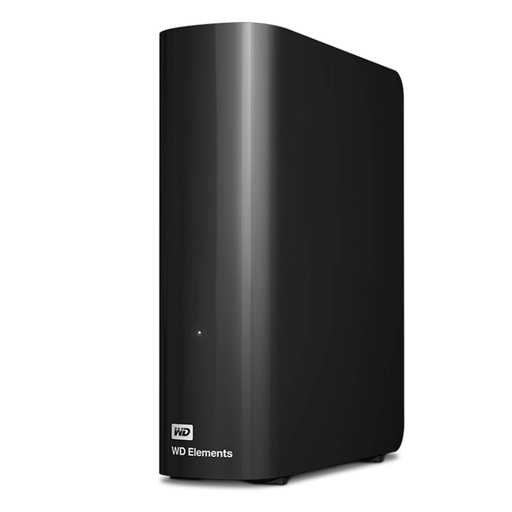 No image available
This desktop HDD suits a fixed-location archive if its 10 TB capacity matches your retained files and planned growth. Unlike a portable drive, it needs external power; confirm the file-system workflow before copying the archive.
One drive should not be the only copy of design drafts you need to keep. The Library of Congress recommends copies on separate media in separate physical locations; plan to check the files and move retained copies to current storage media over time.
Disconnect the copy intended to stay offline after necessary backup or recovery work. The National Cyber Security Centre explains that a digitally disconnected backup is less exposed to an incident affecting the live system.
Yes, if you choose a suitable file-system workflow before loading the archive. Apple lists ExFAT as compatible with Windows and provides guidance on formatting a disk for both platforms; erasing or reformatting a drive deletes its contents, so preserve another copy first.
Confirm that the folders transferred completely and open sample files rather than relying only on the copy-complete message, as the Library of Congress advises. For a more systematic check, The National Archives describes checksum-based lists that can help identify changed files.