What matters when choosing?
Desktop hard drive
Choose when: A large archive copy can stay at a controlled desk.
Trade-off: A desktop setup is less convenient for regular hand-offs or movement between stations.
Password-capable portable hard drive
Choose when: An authorised custodian needs to carry a substantial copy between locations.
Trade-off: Password protection needs deliberate setup and a custody process that does not leave authorised users locked out.
Portable SSD
Choose when: Frequent movement and active transfer of scan batches matter more than keeping the whole collection on the intake drive.
Trade-off: Quoted transfer speeds depend on the host and cable; a ruggedness claim does not replace a separate archive copy.
For a shared-studio genealogy collection, decide the drive's primary job before comparing models. The checks below address the different needs that can take priority in that decision.
| Concern | Buying checks | Who this matters to |
|---|
| Archive capacity and second copies |
Measure the collection and expected growth; plan another copy on different media in a separate location, as the Library of Congress advises. |
If I am keeping years of scans together, I need room to grow without treating one drive as the whole archive. Roughly 33% of consumers put capacity and preservation copies first. |
| Controlled access |
Check the exact model's password features, how to enable them and who will retain authorised access. |
When records about living relatives pass between studio users, I want a clear hand-off and password process. For roughly 27% of consumers, controlled access is the primary concern. |
| Portability and resilience |
Check the model's environmental claims, their conditions and warranty exclusions if the drive will travel. |
If I carry files between scanning stations, I need a drive suited to regular movement without assuming it is damage-proof. Around 20% of consumers prioritise mobile handling. |
| Transfer workflow |
Check workstation ports and cable support before relying on a quoted maximum speed. |
Large batches of scans can hold up my intake work, so I care about the connection used for transfers. Faster active intake comes first for around 20% of consumers. |
Joybuy products for this workflow
These desktop and portable drives represent different jobs in a shared-studio archive: keeping a copy at a desk, carrying a copy between authorised users, or moving files during intake. Choose capacity against the size and growth of your collection, and maintain separate preservation copies whichever drive you use.
 No image available
Samsung T7 Portable SSD, 4 TB, Grey
A portable option for moving studio files when the stated 4 TB capacity fits the intended copy.
USB Type-C and USB 3.2 Gen 2 are stated in the product name; check the studio's ports and cables. If shared records need password protection, confirm the setup and custody process for this model.
View on Joybuy
 No image available
Samsung T7 Shield Portable SSD, 1 TB, Blue
A portable choice for collecting files around the studio before they are copied into the archive; check whether 1 TB accommodates the intended batches.
The product name states USB 3.2 Gen 2. If physical resilience is central to your choice, check the environmental test conditions and warranty for this blue variant rather than assuming another variant's terms apply.
View on Joybuy
 No image available
Western Digital My Passport Ultra for Mac, 5 TB, Silver
A portable hard drive to consider when an authorised custodian needs to carry a substantial archive copy and 5 TB suits the collection.
Confirm compatibility with the studio's computers, the password setup and the warranty duration for this exact model before buying.
View on Joybuy
 No image available
Western Digital My Passport Portable Hard Drive, 2 TB, Black
A portable option for handing a managed copy between authorised studio users, provided 2 TB leaves enough room for its intended files.
Check host compatibility and how password protection is configured for this model; document who can access the copy.
View on Joybuy
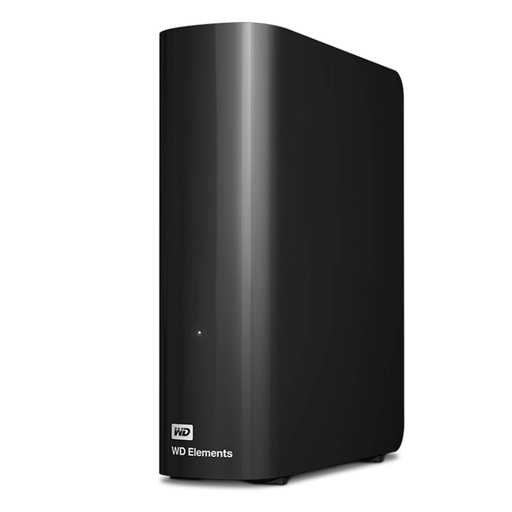 No image available
Western Digital Elements Desktop Hard Drive, 10 TB
A desktop option for a fixed archive copy when the stated 10 TB capacity leaves room for the collection and its expected growth.
Plan a suitable powered desk location, check compatibility with the archive computer and keep another preservation copy elsewhere.
View on Joybuy
Common questions
Can one external drive be my genealogy archive?
No single drive should be the only preservation copy. The Library of Congress advises copies on at least two different storage media in separate locations and migration to current media about every five years.
Does a shared-studio drive have to be encrypted in the UK?
UK GDPR does not specifically require encryption of all personal information, according to the Information Commissioner's Office. If the records include personal data about living people, assess the risks of shared access, loss and transport, then choose appropriate security measures; encryption may be appropriate.
Is a drive with hardware encryption ready for protected use?
Do not assume password protection is already enabled. Seagate says Toolkit is required to enable security on supported self-encrypting drives, while Western Digital distinguishes hardware encryption from adding a password on supported drives.
What if the shared-studio drive password is forgotten?
The consequence depends on the drive and its security software, so establish a custody process before storing records. For drives using WD Security, Western Digital says technical support cannot recover a forgotten password and the drive must be erased before reuse.
Can a Samsung T7 Shield be treated as waterproof?
No: Samsung's IP65 claim does not establish that the T7 Shield is waterproof in every condition. The rating is based on controlled testing, and Samsung says liquid, dust and drop damage are excluded from warranty coverage; check the terms for the exact variant.


