Active-session workstation users
If you regularly move sessions, edits, stems or sample-heavy projects, a compact portable drive may suit the way you work. Check the workstation connection before choosing an SSD for its advertised speed.


Choose a portable SSD for active recording projects and frequent transfers, provided your workstation can use the drive’s connection effectively; advertised maximum speeds are not guaranteed on every port. A mains-powered desktop HDD suits a larger, mostly stationary archive or local backup. Whichever you choose, keep a separate copy of valuable recordings and disconnect a backup drive when it is not in use, as the National Cyber Security Centre advises.
If you regularly move sessions, edits, stems or sample-heavy projects, a compact portable drive may suit the way you work. Check the workstation connection before choosing an SSD for its advertised speed.
If completed takes, exported mixes and older sessions mainly stay at home, a powered desktop drive can provide a stationary place for them. Seagate’s Expansion Desktop range is one example of this approach.
If recordings would be difficult to replace, plan how to restore them from a separate copy. Where recordings or associated files contain personal data, consider how access to that data is protected as well.
Choose it when: Active project folders move regularly between the workstation and other locations.
Accept that: The computer port and cable can limit the transfer speed you actually get.
Choose it when: Older recordings need a larger, mostly stationary archive or a separate local backup.
Accept that: A desktop model needs space and mains power, making it less convenient to move.
| Concern | What to check | Who this matters to |
|---|---|---|
| Active-project transfers | Compare the drive’s interface with the workstation port and cable; treat sequential speed figures as maximums. | If I move session folders and exports often, I want a connection my workstation can use effectively. Around 37% of consumers would put active-project transfer performance first. |
| Archive capacity | Allow for the current recording library and future projects, then decide whether a powered drive can stay at the desk. | As older takes and mixes accumulate, I need room to keep them locally without making my active drive the archive. Archive capacity would be the main concern for around 27% of consumers. |
| Backup and recovery | Plan a separate backup destination, check that files can be restored and disconnect backup media between updates. | If a recording cannot be recreated, I need another recoverable copy rather than one drive holding everything. Around 36% of consumers would prioritise that protection. |
A drive’s file format is a separate decision from its SSD or HDD technology: check whether projects must move between macOS and Windows before formatting it. Apple identifies ExFAT as a Windows-compatible format for volumes over 32 GB.
Samsung and Crucial qualify their advertised sequential speeds by the host connection or configuration. A higher figure on the drive does not establish what your workstation will achieve.
Identify the workstation’s port and compare its capabilities, along with the cable, against the exact drive model.
A permanently connected drive can be affected alongside the workstation. The National Cyber Security Centre advises that a backup device should not remain connected when it is not in use.
Keep a separate backup, practise restoring a project and disconnect the backup device after updating it.
Maintaining that copy takes time, but losing the only copy could leave takes and mixes that cannot be recreated.
Crucial notes that formatting and other purposes use some of a drive’s stated capacity. New sessions, alternate takes and exports also need room.
Compare available space with the existing library and leave headroom for upcoming projects.
A format chosen for a Mac-only workflow may not suit files that also need to move to Windows. Erasing or reformatting a drive can remove files already on it.
Decide whether it will hold projects, serve as a dedicated backup or move between systems, and safeguard existing files before formatting.
Changing format after copying projects onto the drive may require another place to hold those files temporarily.
Its portable SSD range includes T7 Shield capacities of 1TB, 2TB and 4TB; the standard T7 is a separate model.
The portable X10 SSD range extends to 8TB and offers an advertised higher sequential-read tier.
Expansion Desktop is a powered external-HDD option for a fixed workstation archive or local backup.
These portable SSD and portable hard-drive choices suit different ways of keeping projects close to a home workstation. For a drive that will stay at the desk as a powered archive, weigh the desktop-HDD approach described above separately.
 No image available
A portable option for keeping active session folders and moving them between workspaces.
The product name specifies USB Type-C 3.2 Gen 2. Check the workstation port, cable and intended file format before use.
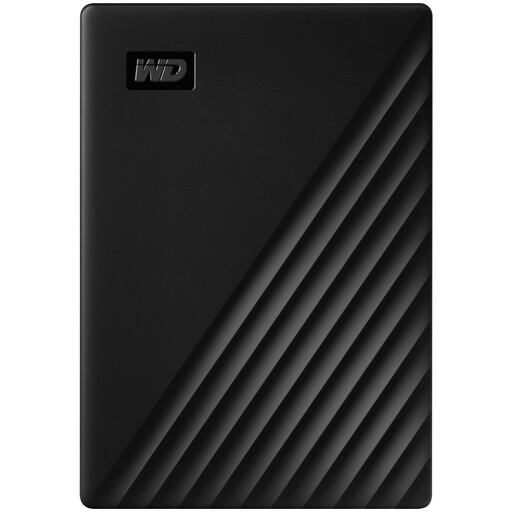 No image available
Consider this portable hard drive when keeping a larger local library matters more than choosing an SSD for active transfers.
Check the file format and any requirements for your intended Mac or Windows workflow. Keep a separate copy of recordings you cannot replace.
 No image available
A portable choice for active projects if its capacity fits your current files and expected growth.
The product name specifies USB 3.2 Gen 2x2. Confirm that the workstation supports that connection before choosing it for the higher interface tier.
 No image available
A portable SSD to consider for storing project files that need to move with you.
Check its connection against the workstation and choose a file format that suits the systems on which you will open the recordings.
 No image available
A compact option for active project storage when 1TB leaves enough room for your sessions and exports.
The product name specifies USB 3.2 Gen 2. Samsung’s published T7 Shield maximum speeds depend on a compatible host and cable; its IP65 rating does not make the drive suitable for submersion.
Choose a portable SSD for active sessions and frequent transfers if your workstation supports its connection; choose a desktop HDD for a larger stationary archive if mains power and desk space are practical. Neither should be the only copy of valuable recordings.
Yes, if you choose a suitable file format for both systems. Apple identifies ExFAT as a Windows-compatible format for volumes over 32 GB; copy any existing files elsewhere before erasing or reformatting the drive.
Apple says Time Machine can back up to an external storage device connected to a compatible Mac port. Decide how the drive will be formatted and used before allocating space to backups and projects, and do not rely on that drive as the sole copy of recordings.
No blanket encryption requirement applies to every recording drive. The Information Commissioner’s Office says UK GDPR does not specifically require encryption of all personal information; an organisation handling personal data in recordings or associated files must choose security measures appropriate to the risk, for which encryption may be relevant.