Choose a portable SSD if your research archive will travel between properties and you need to copy or check it promptly. A portable HDD is another option when fitting a large archive matters more than transfer speed. Whichever drive you choose, keep a separate backup copy, check that the drive works with your computer and plan how to protect confidential notes.
Who needs an archive drive?
People carrying an archive through a move
If the drive will move between homes, storage or temporary accommodation, you need to keep the notes accessible while protecting the device in transit. Keep another copy in a separate safe place, as the National Cyber Security Centre advises for important data.
People with large research libraries
Years of PDFs, scans, datasets and project folders can make capacity the deciding factor, particularly if the drive will mostly be stored after the move.
People responsible for confidential notes
Research containing participant information, client details or other confidential material calls for attention to both physical loss and unauthorised access. The Information Commissioner's Office identifies encryption as a measure to consider according to the risks of processing personal information.
What matters when choosing?
For an archive of research notes during a house move, check how much space the files need, how the drive will travel and whether the contents require access protection.
| Concern |
What to check |
Who this matters to |
| Transport and quick access |
Check the drive's stated resistance conditions and whether your computer and cable support its advertised transfer interface. |
If the archive will travel between properties, I want to carry it carefully and retrieve notes without a long wait; around 42% of consumers put transport and quick access first. |
| Archive capacity |
Measure the files you intend to keep and leave room for additional material. Check how the stated capacity appears on your computer. |
With years of scans and project folders to retain, I need space for the complete collection more than a faster connection; roughly 33% of consumers make capacity their primary concern. |
| Confidentiality |
Check your organisation's requirements and how you would encrypt the notes and store recovery credentials separately. |
If my notes contain personal or confidential information, a misplaced drive must not give someone easy access to them; about 25% of consumers prioritise confidentiality. |
Mistakes to avoid during a move
-
Making the external drive your only copy
A drive can be lost or damaged during the same move that puts your computer out of reach. The National Cyber Security Centre describes a backup as a copy kept in a separate safe location.
Keep another independently stored copy and check that you can open or restore files before packing the computer.
-
Choosing an SSD by its advertised speed alone
Samsung says the T7 Shield's stated maximum speeds depend on a compatible USB 3.2 Gen 2 host and cable, with UASP enabled. That figure is not a promise of the speed you will see on every computer.
Check the port and cable you will actually use to copy and inspect the archive.
-
Treating a resistance rating as complete protection
Samsung describes the T7 Shield's dust, water and drop results under controlled test conditions and says related damage is not covered by its warranty.
Pack the drive so it cannot move loose among heavy items, and retain a separate copy of the notes.
-
Protecting sensitive notes but losing the key
Encryption can limit access to a misplaced drive, but losing the password or decryption key can also prevent you from opening the archive. The Information Commissioner's Office advises keeping decryption keys secure.
Assess the sensitivity of the notes and keep any recovery credentials securely away from the drive.
Relevant brands to consider
Samsung
Samsung's T7 Shield portable SSD range is relevant when a compact archive will be carried frequently. Its UK product information lists 1 TB, 2 TB and 4 TB variants.
- Samsung states USB 3.2 Gen 2 read and write speeds of up to 1,050 and 1,000 MB/s, alongside IP65 testing and a stated 3-metre drop-test condition for the T7 Shield.
- Top speeds require compatible hardware, cable and UASP. Samsung says actual resistance can vary and related damage is excluded from its warranty.
Seagate
Seagate's One Touch lines illustrate two archive choices: a portable HDD when capacity leads the decision, and an SSD with folder-sync tools when copying workflow matters.
- Seagate's One Touch portable HDD data sheet lists capacities up to 5 TB and USB-powered operation. Its One Touch SSD information lists transfer rates up to 1,030 MB/s and capacities up to 2 TB.
- Seagate's UK pages showed both products as out of stock; check the particular model and retailer before planning a purchase. Folder syncing does not replace a separately stored backup.
Joybuy drives for different archive needs
These portable SSD and HDD choices cover different combinations of archive capacity and carrying needs. Compare each drive with the size of your notes, the computer you will use and any confidentiality requirements before choosing.
 No image available
Samsung Portable SSD T7 4 TB, grey
Consider this portable SSD if you need a 4 TB archive that will travel with you. The title specifies USB Type-C and USB 3.2 Gen 2; check your computer's connection, the space your files need and your encryption setup if the notes are sensitive.
Joybuy
 No image available
Samsung T7 Shield Portable SSD 1 TB, blue
This portable SSD suits a travelling archive if 1 TB leaves enough room for your files. Its title specifies USB 3.2 Gen 2; check your computer and cable. Samsung describes the T7 Shield range's resistance results as controlled-condition tests, so continue to protect the drive in transit.
Joybuy
 No image available
SANDISK Extreme 2 TB Portable SSD for PlayStation 5 and PC
The stated 2 TB capacity may suit a research archive that will be carried during the move. Because this variant is presented for PlayStation 5 and PC use, confirm its connection and formatting for the computer holding your notes, and check how you will encrypt sensitive files.
Joybuy
 No image available
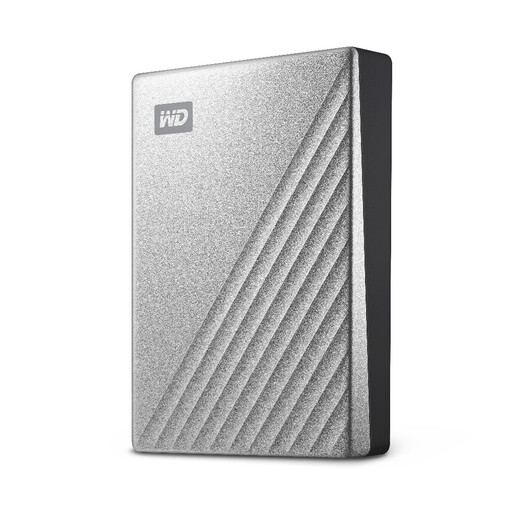
Western Digital My Passport Ultra 4 TB, silver
This portable hard drive is a capacity-focused option if your archive needs 4 TB and frequent transfers are less important. Check the drive's formatting and write-access requirements for your computer, then pack it carefully for transport.
Joybuy
 No image available
Lexar ES5 1 TB MagSafe Portable SSD
Consider this portable SSD for an archive that fits within 1 TB with room to spare. Its title specifies USB 3.2 Gen 2x2, IP65 and read and write speeds up to 2,000 MB/s; check the applicable test conditions and whether your computer supports that interface. Plan encryption separately if the notes require it.
Joybuy
Frequently asked questions
Is one external drive enough to archive research notes during a move?
No. Keep another independently stored copy of important notes: the National Cyber Security Centre describes a backup as a copy held in a separate safe location. Check that you can open or restore files before packing the original computer.
Should I leave the archive drive connected after copying?
Disconnect it after the backup and your file checks are complete, then store it safely apart from the computer. National Cyber Security Centre Cyber Essentials guidance says an external drive used for backup should be disconnected when a backup is not being performed.
Do research notes containing personal information need encryption?
Assess encryption against the sensitivity of the notes and the risks of losing the drive. For UK organisations processing personal information, the Information Commissioner's Office explains that appropriate security measures are required and that encryption can be an appropriate measure depending on the nature and risks of the processing.
Can I rely on a drive password without keeping recovery details?
No. A password or encryption key needs a secure recovery arrangement kept separately from the drive. The Information Commissioner's Office warns that losing a decryption key is likely to prevent access to the data.


