Compact archive keepers
If your notes, PDFs and reference files usually stay beside a laptop, a compact drive without a separate mains adapter may fit your desk routine. Seagate’s Basic portable HDD provides one example of this format.


For a mostly static archive of research notes on a small desk, start with a compact portable HDD if capacity matters more than transfer speed. Choose a portable SSD if you regularly carry the archive or move large files; consider a mains-powered desktop HDD when a growing archive needs more capacity and you can accommodate its power supply and footprint. Whichever drive you choose, keep a recoverable backup copy disconnected between backup sessions.
If your notes, PDFs and reference files usually stay beside a laptop, a compact drive without a separate mains adapter may fit your desk routine. Seagate’s Basic portable HDD provides one example of this format.
If you carry an archive between locations or regularly transfer larger files, a portable SSD is worth considering. Check its capacity and the connection your computer can use, rather than choosing on advertised speed alone.
If your archive includes substantial collections of images or media and stays at one desk, a desktop HDD offers a higher-capacity route. Allow space for the drive, its cables and its power supply.
Choose when: Your notes are mostly static and you want a compact, USB-powered archive drive.
Allow for: A mechanical drive is less suited to frequent movement during transfers or time-sensitive large transfers.
Choose when: You carry the archive often or regularly transfer large scans and media.
Allow for: Maximum advertised speeds depend on a compatible computer and cable; check whether you need that performance for your files.
Choose when: A growing archive needs substantial capacity and the drive will remain at one desk.
Allow for: Its separate power supply and cables take up more of a constrained workspace.
| Concern | What to check | Who this matters to |
|---|---|---|
| Recoverable offline copy | Make sure you can restore selected note folders, then safely disconnect the drive after backing up. | If losing research notes would disrupt my work, I need a copy I can restore rather than a drive that stays connected. Around 42% of consumers put a recoverable offline copy first. |
| Desk space and portability | Check the exact drive’s dimensions, connector, supplied cable and power requirements. | With little room beside my laptop, or an archive I carry between locations, I need a compact setup with manageable cabling. For around 33% of consumers, space and portability come first. |
| Capacity for growth | Measure your files and allow for future scans or attachments; compare that requirement with the exact drive’s capacity and footprint. | As my collection grows, I want enough room for new material without giving over more desk space than necessary. Capacity is the primary concern for around 25% of consumers. |
A connected drive can be affected alongside the computer during a malware or ransomware incident. The National Cyber Security Centre advises against keeping a backup device permanently connected.
Back up regularly, check that selected notes restore correctly and safely disconnect the drive afterwards. Keep another copy of irreplaceable research in a separate location.
Samsung says the T7 Shield’s stated maximum transfer speeds require a compatible USB 3.2 Gen 2 host, cable and UASP support.
Check your computer’s port and the cable before making transfer speed a deciding factor, particularly if you mainly store notes that seldom change.
A desktop HDD needs its own power supply as well as room for the drive and cables. That may matter more than its capacity range on a crowded desk.
Measure the available surface and plan the cable route before choosing a stationary drive.
It will also need access to a mains socket.
Western Digital says the cited My Passport variants are formatted as NTFS out of the box and require reformatting for macOS use. Reformatting can remove files already on the drive.
Check the exact model’s operating-system requirements. If you need to reformat a drive that contains research, copy its contents elsewhere and confirm the copy opens first.
Seagate offers both compact Basic portable HDDs and Expansion desktop HDDs, giving archive buyers a choice between a smaller USB-powered format and a stationary format.
Samsung’s T7 Shield is a portable SSD option for an archive that moves frequently or contains files you transfer often.
SanDisk’s Extreme Portable SSD line is relevant if you want to carry a research archive and compare portable-drive protection features.
Western Digital’s My Passport line is a portable HDD route for storing documents and other archive files.
These portable HDDs and SSDs offer compact-drive choices for a small-desk archive. Choose the capacity and format around your files, how often you move them and your computer’s connection.
 No image available
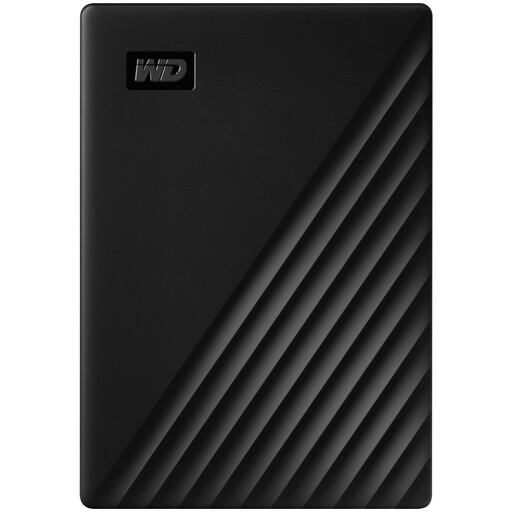
A portable HDD to consider when you want a 5TB archive beside a small desk and use a Mac. Confirm the drive’s format and your intended computer setup before buying.
 No image available
A portable HDD for a document archive when 4TB meets your current and expected storage needs. Check its format and compatibility with the computer you will use.
 No image available
A portable SSD to consider if you carry your research files and want 2TB of archive space. Check its connector and your computer’s compatibility before choosing it for frequent transfers.
 No image available
A portable HDD to compare for a 4TB archive that stays near your workspace. Its name specifies USB 3.0; check the connector, power requirement and operating-system setup for the exact drive.
 No image available
A compact archive option if you move research files regularly and 1TB will accommodate them. This model’s name specifies USB Type-C and USB 3.2 Gen 2; check your computer and cable before relying on maximum transfer speeds.
Choose a portable HDD if you mainly archive relatively static documents and want capacity in a compact format; consider a portable SSD if you carry the drive or regularly transfer large scans and media. Check the exact capacity and computer connection whichever format you choose.
No: the National Cyber Security Centre advises against leaving a backup device permanently connected. Connect it to back up your notes, check that you can restore selected files, then safely disconnect it.
Check the exact drive’s format before using it with a Mac. Western Digital says the cited My Passport variants are NTFS-formatted out of the box and require reformatting for macOS use; copy existing files elsewhere and confirm they open before reformatting.