What matters when choosing?
Decide whether the master archive stays at a desk or travels between workstations, then check capacity, recovery and access arrangements for that workflow.
Portable SSD
Consider when: Staff regularly move scan batches between computers or work areas.
Trade-off: Quoted transfer speeds depend on compatible ports and cables; Samsung’s T7 Shield resistance claims come from controlled tests and do not replace a backup.
Mains-powered desktop hard drive
Consider when: A growing master archive normally remains beside one workstation. Seagate’s Expansion Desktop EMEA range lists capacities from 4 TB to 24 TB.
Trade-off: This format needs a desk location and mains power, making regular movement between work areas less convenient.
| Concern |
What to check |
Who this matters to |
| Capacity and recovery |
Size the drive for current scans and growth; decide where a separate copy will live and test restoring it. |
If I keep the master archive, I need room for new scans and a way to recover them if the drive fails. Around 40% of consumers put capacity and recoverability first. |
| Moving scans between devices |
Check each computer’s ports, the supplied connection and file-system compatibility before relying on portability or quoted speed. |
Moving batches between workstations makes connection and transfer time important to my day-to-day work. For around 30% of consumers, that mobile workflow is the primary concern. |
| Access and personal-data security |
Determine who may open the archive, whether encryption is appropriate and who holds the password and recovery instructions. |
When letters contain personal information, I need authorised colleagues to get in without leaving the files unprotected or losing the password. Protecting access comes first for around 30% of consumers. |
Joybuy products for these workflows
These portable and desktop drives relate to moving scans between studio computers or keeping an archive at one workstation. Match capacity and connections to your own setup, and plan a separate backup whichever format you choose.
 No image available
Samsung MU-PG4T0B 4 TB, black
Consider this portable drive if staff need to move the archive between computers.
The product name specifies USB Type-C and USB 3.2 Gen 2x2. Check the studio computers’ ports before relying on that connection mode, and confirm how shared access and password custody will work.
View on Joybuy
 No image available
Samsung Portable SSD T7 4 TB, grey
This portable SSD is a choice to assess when scan batches travel between workstations.
The product name specifies USB Type-C and USB 3.2 Gen 2. Check the computers and connection you intend to use; do not assume this T7 has the T7 Shield’s resistance rating.
View on Joybuy
 No image available
Western Digital My Passport Ultra for Mac 5 TB, silver
Consider this portable hard drive for an archive moved among studio Macs.
Its product name identifies the for Mac variant. Check operating-system and file-system requirements on every computer that must open the scans, particularly if the studio also uses Windows.
View on Joybuy
 No image available
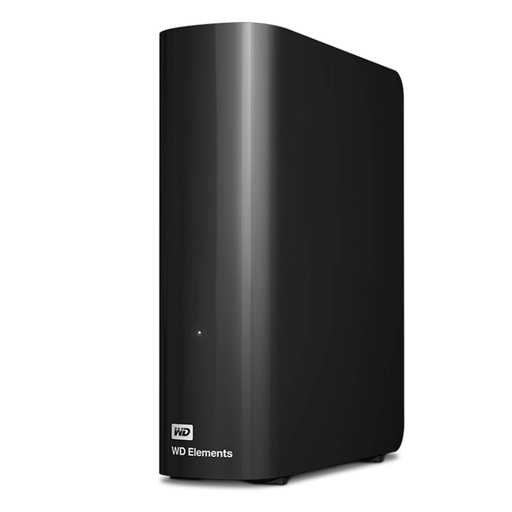
Western Digital Elements Desktop 10 TB
This desktop hard drive is relevant when the master archive stays at a fixed workstation.
Assess whether 10 TB leaves enough room for future scans. Allow a desk position and mains connection, and check the intended computer’s file-system setup and any required security controls.
View on Joybuy
 No image available
Western Digital Elements Port. 4 TB, black
Consider this portable hard drive if staff occasionally carry scans between computers.
The product name specifies USB 3.0. Check file-system compatibility across the studio and whether the exact drive meets any password-protection requirement before choosing it for personal correspondence.
View on Joybuy
Questions about studio archives
Is one external drive enough for the scanned letters?
No: treat the external drive as one archive copy, not the entire recovery plan. Seagate describes the 3-2-1 approach as three copies on at least two types of media, with one off-site. Test a restore from the separate copy rather than assuming the files can be recovered.
Must every UK scanned-letter archive be encrypted?
Not automatically, but an archive containing personal information needs security measures appropriate to its risks. The Information Commissioner’s Office advises using encryption when storing or transmitting personal information. Assess the contents, who can access them and the consequences of loss or theft, then document the studio’s controls.
What if we forget a WD Security drive password?
Western Digital says it cannot recover a forgotten WD Security password and that the drive must be erased before reuse. Assign responsibility for the password, keep recovery instructions separate from the drive and maintain a tested independent copy of the scans.
What should we do if a drive containing personal information is lost?
Treat the loss as a potential personal-data breach: contain it, assess the risk to individuals and document the decision. If it meets the reporting threshold, the Information Commissioner’s Office says to report it within 72 hours of becoming aware, where feasible; high-risk breaches may also require informing affected individuals without undue delay.


