Engineers moving active sessions
If projects pass between engineers, rooms or portable computers, a compact working drive makes them easier to carry. Check each computer’s connection before choosing a drive for its advertised transfer speed.


Choose a portable SSD if engineers regularly move active recording sessions between rooms, computers or locations. For a large archive that stays at one workstation, consider a desktop HDD instead. Whichever drive holds the files, keep a separate backup; check the studio computers and file format before setting it up, and control access when recordings contain personal information.
If projects pass between engineers, rooms or portable computers, a compact working drive makes them easier to carry. Check each computer’s connection before choosing a drive for its advertised transfer speed.
A growing collection of completed takes, stems and project folders calls for storage that can stay at a workstation. Choose capacity against the size of the library, while keeping an archive drive separate from its backup.
When files identify clients or artists, decide who can access the drive and how recordings can be recovered if it is lost or fails. The Information Commissioner’s Office advises using encryption when storing personal information, alongside appropriate procedures for managing access and keys.
For sessions that travel, start with the working drive; for files that stay put, start with archive capacity. Plan recoverable copies and shared access for either choice.
Choose when: Engineers carry active projects between rooms, computers or locations.
Allow for: Advertised transfer rates depend on the host connection and cable; a portable drive still needs a separate backup.
Choose when: A large collection of completed sessions needs a fixed archive or backup destination.
Allow for: Desk space and a mains connection rather than frequent carrying between sessions.
| Concern | What to check | Who this matters to |
|---|---|---|
| Active-session transfers | Check the drive’s stated read and write rates against each workstation’s USB port and cable. Consider how often the drive must travel. | If I pass large project folders between rooms, I want a drive I can carry without making every handover a long copy job; around 33% of consumers put active-session movement first. |
| Fixed archive capacity | Size the drive against the current project library and expected growth; check its power and connection requirements. | When completed takes and stems keep accumulating, I need room to retain them at the studio rather than carry them about. Around 25% of consumers make archive capacity their primary concern. |
| Recovery and controlled access | Arrange a separate backup and test restoration; decide who can access files and whether encryption is appropriate for personal information. | If recordings would be difficult to recreate or contain client details, I need recoverable copies and clear access rules; for around 42% of consumers, that is the deciding need. |
A working drive can be lost, damaged or corrupted along with the only copy of a session. CISA’s backup guidance describes keeping three copies on two media types, with one copy off-site.
Keep a separate backup, arrange a copy away from the studio and test that recordings can be restored.
Losing the working drive can also mean time spent recovering or recreating recordings.
Samsung and Crucial condition their stated maximum speeds on compatible host connections. A faster-rated drive will not necessarily reach its stated rate on every studio computer.
Check the USB specification of each workstation and the cable intended for use with the exact drive.
Formatting or erasing a drive deletes its existing files. A format chosen for one computer may also be unsuitable for another engineer’s workflow.
Agree which computers need access, copy required files elsewhere before formatting, and consider ExFAT when a shared data drive must work with both Windows and Mac. Apple identifies ExFAT as a Windows-compatible format for volumes over 32 GB.
Samsung’s T7 Shield protection ratings come from controlled tests, and Samsung excludes liquid, dust and drop damage from warranty coverage. Physical protection does not control who can open a client’s files.
Handle and store the drive carefully, restrict access, keep a separate backup and use appropriate encryption with securely managed passwords or recovery keys when files contain personal information.
The portable T7 Shield range is relevant to active sessions carried between workstations; Samsung lists 1 TB, 2 TB and 4 TB variants.
The Expansion Desktop HDD range is a desk-based option for a large session archive rather than a drive carried between recordings.
The portable X10 Pro SSD range is relevant when active projects move between locations and the studio has a compatible USB-C host.
These portable SSDs are options for moving active studio projects; the desktop HDD is an option for a fixed archive. Choose the capacity and connection for the intended work, then arrange a separate backup for important recordings.
 No image available
Consider this portable SSD for active project folders that move between studio workstations.
The product name specifies 1 TB and USB 3.2 Gen 2x2 with a USB Type-C connection. Check each computer and cable for the connection you intend to use, and confirm that 1 TB suits the working library.
 No image available
This portable drive is an option when engineers carry active recording projects between workstations.
The product name states 1 TB, USB 3.2 Gen 2x2, speeds of up to 2,000 MB/s for reading and writing, and an IP65 rating. Check host and cable support before relying on the stated speed; keep a separate copy of important sessions.
 No image available
Consider the 4 TB T7 when active projects need more room on a drive that still travels between rooms.
The product name specifies USB 3.2 Gen 2 and a USB Type-C connection. Check the studio’s computer ports and file-format needs before sharing it between systems; do not use it as the only copy of a session.
 No image available
This is an option for active sessions carried between rooms when additional handling protection matters.
Samsung specifies USB 3.2 Gen 2 speeds of up to 1,050 MB/s read and 1,000 MB/s write for the T7 Shield, subject to compatible host and cable support. Its IP65 and up-to-3 m drop claims are based on controlled tests, not a substitute for careful handling or backup.
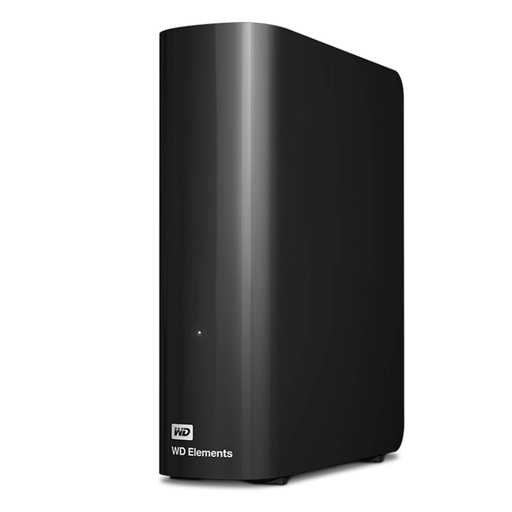 No image available
Consider this desktop drive for a large session archive that stays beside a studio workstation, rather than for carrying active projects.
The product name specifies 10 TB. Plan desk space and a suitable connection, and check how the studio will share and back up its archive before setting up the drive.
Choose a portable SSD for active sessions moved regularly between computers or locations, and a desktop HDD for a large archive kept at one workstation. Neither choice replaces a separate, recoverable backup.
ExFAT is an option for a shared data drive that must work with both systems; Apple identifies it as a Windows-compatible format for volumes over 32 GB. Confirm the studio’s software and computer requirements, and copy existing files elsewhere before formatting because erasing the drive deletes them.
Do not assume a drive set up for Time Machine can also hold ordinary project files. Apple says a storage device configured for Time Machine backups can be used only for those backups, so plan a separate destination for shared sessions.
Control access and use security measures appropriate to the information and its risks. The UK Information Commissioner’s Office advises using encryption when storing personal information; the studio also needs procedures for passwords or recovery keys and a separate backup.
Remove access to the recordings before sending the drive through an appropriate electrical-equipment collection or recycling route. GOV.UK describes the UK waste electrical and electronic equipment framework as promoting recovery, reuse and recycling; a drive that held client files also needs careful data handling before it leaves the studio.