For a mainly desk-based archive of completed video projects, consider a high-capacity desktop HDD. A portable SSD suits frequent project transfers, while a rugged portable HDD is worth considering when field transport and its stated physical protection matter more. With any route, check capacity, computer-port and formatting requirements, and keep a separate backup that you know how to restore.
Who needs which kind of archive?
Desk-based project archivists
If completed edits, source footage and exports stay near a workstation, allow room for the projects you intend to retain. Check the computer connection as well as capacity, and keep another copy separate from the archive drive, as the National Cyber Security Centre advises for backups.
Mobile editors and frequent file movers
If projects regularly travel between editing locations or shoots, consider the size of the drive, your computer’s connection and the physical conditions in which you carry it. A stated protection rating applies to a particular model, not to every portable drive.
Sensitive-project custodians
For footage containing personal or client material, plan who can access the archive, how long it should be retained and how it will be disposed of. The Information Commissioner’s Office advises organisations to document appropriate secure deletion and disposal methods.
What matters when choosing a drive?
High-capacity desktop HDD
Consider when: completed projects will mainly remain at one workstation and capacity in a single local drive is the priority.
Trade-off: check power requirements before committing to a desktop model. Seagate specifies at least 15W USB-C power delivery for its One Touch desktop drive.
Portable SSD
Consider when: you frequently carry or copy projects between editing locations and want a compact transfer drive.
Trade-off: check that the exact capacity holds the projects you intend to retain; Samsung’s cited T7 Shield variant is 4TB, not a capacity specification for every portable SSD.
Rugged portable HDD
Consider when: an HDD archive must travel to shoots or hand-offs and model-specific protection against field handling matters.
Trade-off: LaCie states drop, rain and crush resistance for its Rugged USB-C range, but those claims do not protect against deletion or replace a separate backup.
| Concern | What to check | Who this matters to |
|---|
| Capacity and room to grow |
Total the source media, project files and exports you intend to keep; choose the exact drive capacity with room for future projects. |
If I am retaining completed projects at my desk, I need enough space to keep the files together without an immediate move to another drive. Around 42% of consumers put archive capacity first. |
| Transfers and travel |
Check the computer’s port against the exact drive interface, then assess the size and stated physical protection needed for transport. |
When projects move between locations, I need a drive that fits my transfer routine and the conditions in which I carry it. For around 33% of consumers, that workflow is the primary concern. |
| Recovery and access |
Plan a separately stored copy, test a restore and check how access and eventual deletion will be managed. |
If footage cannot readily be replaced or contains sensitive material, I need to recover it and control who can access it. Those safeguards come first for around 25% of consumers. |
Archive-drive mistakes to avoid
-
Treating one external drive as a complete backup
A drive holding the only copy leaves a project exposed if it fails, goes missing or is affected by malware. The National Cyber Security Centre advises keeping backups separate and knowing how to restore files.
Keep another copy in a separate place or service, disconnect a backup drive after use and practise restoring a project before deleting original files.
-
Choosing a drive by its USB-C connector alone
The connector shape does not establish whether a computer meets a drive’s power needs. Seagate specifies a USB-C port supplying at least 15W for its cited One Touch desktop drive.
Compare the exact drive’s cable, data and power requirements with the computer’s documented port capabilities.
-
Assuming rugged protection replaces another copy
A model’s stated resistance to drops or water does not address accidental deletion, malware or a failed restore.
Choose physical protection for the conditions in which you carry the drive, while storing an independent backup separately.
-
Passing on an archive drive without secure deletion
Footage containing personal information may remain recoverable if an organisation disposes of the drive without an appropriate deletion process. The Information Commissioner’s Office advises documented secure disposal methods.
Decide what must be retained, use an appropriate secure deletion or destruction method, and arrange suitable electrical-equipment recycling when the drive is retired.
Relevant brands to consider
Seagate
Its One Touch desktop line is relevant to larger, mainly stationary archives; Seagate lists capacities from 8TB to 24TB in that range.
- Seagate lists Windows and macOS support for the cited desktop model.
- That model requires a USB-C port with at least 15W power delivery, and Seagate says Time Machine use requires reformatting.
LaCie
The Rugged USB-C portable HDD range is relevant when an archive travels between shoots and editing locations; the manufacturer lists capacities up to 5TB.
- The manufacturer specifies USB-C 5Gb/s connectivity and no external power requirement for the cited range.
- Its stated drop, rain and crush resistance is model-specific and cannot prevent every form of data loss.
Samsung
The T7 Shield portable SSD line is relevant to compact project transfers where the exact drive capacity and stated physical protection fit the journey.
- Samsung lists USB 3.2 Gen 2, password protection and an IP65 rating for the cited 4TB MU-PE4T0S/EU variant.
- Check the exact variant and computer configuration rather than applying that variant’s specifications to every T7 drive.
Joybuy drives for portable project archives
These portable SSD and HDD choices suit consumers considering an archive they can move between locations. Compare each drive’s stated capacity with the projects you intend to keep, and plan a separate backup regardless of the model.
 Image unavailable
Samsung Portable SSD T7 4 TB, grey
Consider this portable SSD for moving project files if 4 TB accommodates the collection you need to retain.
USB 3.2 Gen 2 is stated in the product name; check your computer’s port and the protection needed for travel.
View on Joybuy
 Image unavailable
Samsung T7 Shield Portable SSD 1 TB, blue
Consider this portable SSD for a project set that fits within 1 TB and needs to travel between locations.
Check the exact variant’s protection claims against your travel conditions; a protective design does not replace another copy.
View on Joybuy
 Image unavailable
Samsung MU-PG1T0B 1 TB, black
This 1 TB portable drive is an option for moving a smaller selection of project files rather than assuming it can hold a growing archive.
Its name specifies USB 3.2 Gen 2x2; check whether your computer supports that interface and what protection the journey requires.
View on Joybuy
 Image unavailable
Western Digital My Passport Ultra portable HDD 5TB, blue
Consider this portable HDD when a 5TB project collection needs to move between locations.
Confirm the file-system requirements before using it with a Mac, and check the exact enclosure details if physical durability affects your choice.
View on Joybuy
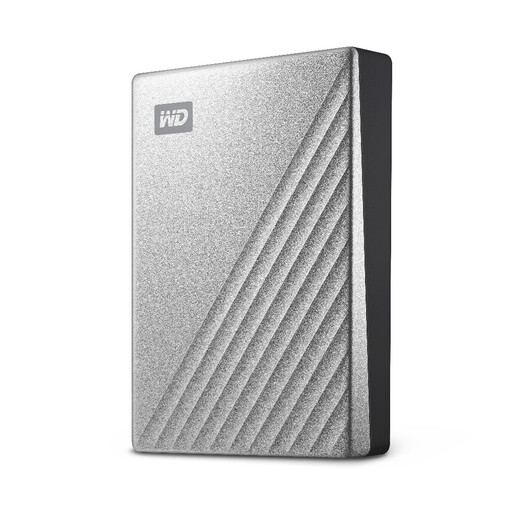 Image unavailable
Western Digital My Passport Ultra portable HDD 4TB, silver
Consider this portable HDD if 4TB meets the needs of the projects you intend to carry or retain.
Check read-and-write access and file-system requirements across your editing computers before relying on a shared archive.
View on Joybuy
Questions about video-project archives
Can one external drive be my only video archive?
A single external drive should not be your only copy of an important video project. The National Cyber Security Centre advises keeping backups separate, disconnecting external backup devices when they are not in use and checking that files can be restored.
Will a high-capacity USB-C HDD work with any USB-C laptop?
Not necessarily: the exact drive’s power requirements must match the laptop’s port. Seagate specifies a USB-C data cable and at least 15W USB-C power delivery for its cited One Touch desktop HDD, so check both devices before buying.
Do I need to reformat an external drive for Mac archiving?
Formatting depends on the drive and how you intend to use the archive. Seagate says its cited One Touch desktop drive supports macOS but requires reformatting for Time Machine; check the file-system needs of every computer and application that will write to the drive before moving your only project copy.
How should an organisation dispose of a drive containing client footage?
Decide what footage must be retained, then securely remove personal information before the drive leaves your control. The Information Commissioner’s Office advises organisations to document appropriate methods such as device wiping, degaussing or hardware shredding; arrange suitable electrical-equipment recycling for a retired drive.


