PC capture editors
If you regularly transfer recordings from a PC or capture card into editing software, a portable SSD is worth considering. Check the computer port and cable before choosing a drive for its advertised peak speed.


Choose a portable SSD if you regularly move large game recordings to a PC for editing; an external HDD makes more sense when retaining a large archive matters more than transfer speed. Before buying for a console, decide whether the drive will hold captures or games: PlayStation distinguishes PS5 capture export from USB extended storage, while Xbox Support specifies a separate storage role and format for external captures.
If you regularly transfer recordings from a PC or capture card into editing software, a portable SSD is worth considering. Check the computer port and cable before choosing a drive for its advertised peak speed.
If you mainly move clips and screenshots off a PS5 or Xbox for later use, establish the console's capture-storage role and format before comparing drive speeds.
If you keep many completed recordings but move them infrequently, an external HDD is an option for prioritising storage capacity. Check its connection and intended console workflow before formatting it.
Start with the drive's job—retaining footage, moving it for editing or working with a particular console—then compare the capacity, connection and physical design that job requires.
| Concern | What to check | Who this matters to |
|---|---|---|
| Recording capacity | Choose capacity against how often you record and how long you retain footage; plan a separate copy for files you cannot replace. | If I keep completed recordings rather than moving them on regularly, I need room before the next clear-out. Around 36% of consumers put retained capacity first. |
| Transfer speed | Compare the drive interface with your PC port and cable; treat quoted sequential speeds as conditional maximums. | When I repeatedly move large clips into an editing workflow, transfer waiting time matters to me. Roughly 29% of consumers prioritise that workflow. |
| Console setup | Identify capture export, external capture recording or game storage before formatting; copy existing files elsewhere first. | If my footage starts on a console, I need a drive set up for the capture task rather than assuming its game-storage setup will work. About 21% of consumers make console compatibility their main concern. |
| Portability and protection | Check size, cables and the stated conditions of any drop or water-and-dust rating; physical protection is not a backup. | If I carry recordings between locations, I want a manageable drive and protection suited to that handling. Around 14% of consumers chiefly prioritise portability and physical protection. |
Console roles affect these checks. PlayStation says PS5 captures can be copied to a USB drive; its separate USB extended-storage mode for games requires SuperSpeed USB 5 Gbps or later and a capacity from 250 GB to 8 TB. Xbox Support specifies USB 3.0 and NTFS for external capture storage, rather than a drive formatted for Xbox games.
A console's capture and game-storage roles are not interchangeable. Xbox Support specifies NTFS for external captures, while PlayStation warns that formatting a drive as PS5 USB extended storage erases existing data.
Copy existing files elsewhere, decide which role the drive will serve, then follow that console's setup instructions.
Samsung says its standard T7 reaches its stated maximum read and write speeds only with a USB 3.2 Gen 2-capable host and cable and UASP support. The figure is not a promise for every PC connection.
Check the ports on the recording and editing computers and use a cable rated for the intended connection.
Drop and water-and-dust specifications describe physical protection under stated conditions; they do not recover deleted files or provide a second copy. An interrupted recording can present a separate risk: OBS Project recommends MKV because an ungraceful stop need not corrupt the whole file.
Keep another copy of footage worth retaining, remove the drive safely and consider how your recording format handles interruptions.
The portable T7 SSD range is relevant to compact drives used for frequent transfers; the T7 Shield adds stated physical-protection features.
The Extreme Portable SSD line is an option to examine when moving capture files between devices and locations.
The PlayStation Game Drive HDD is a capacity-oriented option for people also considering external game storage.
These portable SSDs offer different capacities for moving or retaining footage, while the WD BLACK P10 is an HDD to consider for a larger archive. For any console, check the intended capture task and required formatting separately from claims about game storage.
 No image available
Consider this capacity if you retain substantial footage but also move recordings to a computer. The title specifies a USB Type-C 3.2 Gen 2 connection; check the computer's port and the console's capture setup for your intended use.
 No image available
For moving recordings to a PC or Mac, this 2TB model lists USB 3.2 Gen 2 and maximum read and write speeds of 1,050 MB/s and 1,000 MB/s. Its listed PS5 and PS4 compatibility should be checked against the specific capture task before formatting the drive.
 No image available
Consider this 1TB SSD when a portable drive for moving recordings matters more than maximum archive capacity. Its title specifies USB Type-C 3.2 Gen 2; confirm the connection and capture format required by the device you will use.
 No image available
This 2TB portable SSD is an option for keeping video captures with other files and moving them between locations. Check its connection against your computer and confirm a console's capture requirements before assigning it that role.
 No image available
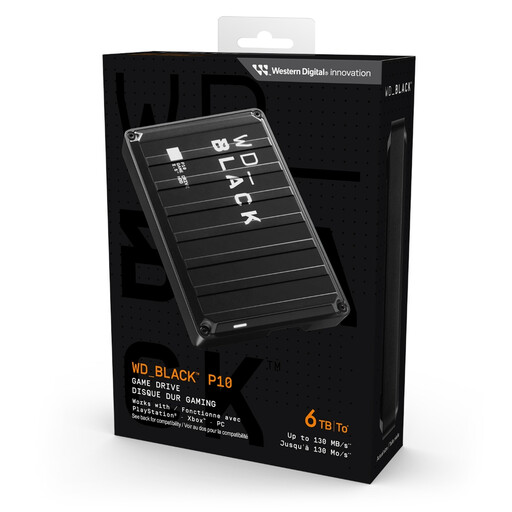
Consider this 6TB external HDD when retaining a large archive takes priority over frequent fast transfers. Its game-storage positioning should not be taken as confirmation of a console capture role; check that role and its format before use.
Yes. PlayStation says a connected USB drive can receive captures copied from the PS5 Media Gallery. This is a different task from formatting a drive as USB extended storage for games and apps.
Not in the same formatted storage role. Xbox Support specifies a USB 3.0, NTFS-formatted drive for external captures and says a drive formatted for Xbox games will not work for captures. If changing a drive's role, copy files you need to keep before reformatting.
PlayStation supports FAT32 or exFAT USB drives for PS5 console backup. Do not assume that a backup drive and a drive formatted as PS5 USB extended storage are interchangeable; choose the setup for the job you intend to do.