Choose storage according to where the archive needs to be used: a portable drive for carrying files, a desktop drive for a stationary archive, or network-attached storage when several household devices need central access. A local-and-cloud combination can provide a separate copy, but whichever route you choose, a drive holding your only copy is not a complete backup. Check device compatibility and how you will restore files before buying.
Who needs external storage?
Households consolidating scattered files
If photos and documents are spread across memory cards and computer folders, an organised archive gives you a place to bring them together. The National Cyber Security Centre distinguishes that archive from a backup: important files also need a copy in a separate safe location.
People moving files between computers
If you frequently carry an archive or work from an external drive, consider its size, connectors and the USB capabilities of each computer. Samsung notes that the advertised maximum speeds of its T7 Shield require compatible host hardware and cables.
Households protecting sensitive records
Documents containing personal information call for a plan covering who can open the files, where recovery information is kept and how copies are restored. Encryption options depend on the devices and operating systems the household uses.
What matters when choosing?
Decide where the working archive will live, then plan a separate recoverable copy. Capacity, portability and shared access determine which storage route is practical.
| Concern | What to check | Who this matters to |
|---|
| Recoverable backup |
Identify the working copy, a separate backup destination and a way to test restoring a folder. |
If my photos or records cannot be replaced, I need a copy I can restore even if the main drive fails. Around 33% of consumers put recoverable backup first. |
| Archive capacity |
Check the archive’s current size, allow room for growth and confirm whether a desktop drive needs mains power. |
When files keep accumulating at home, I need enough space without carrying the archive around. Capacity is the primary concern for around 27% of consumers. |
| Portable use |
Compare the drive’s connector and USB mode with the computer’s ports and the cable you will use. |
If I move large folders between computers, carrying the drive and completing transfers matter more to me than a fixed archive location. Around 20% of consumers chiefly need portable performance. |
| Shared, private access |
Confirm which devices must open the files, whether the chosen encryption works on them and how access will be recovered. |
For household documents, I need the right people to reach the archive without exposing personal files or losing the ability to unlock them. Shared access and privacy come first for around 20% of consumers. |
Mistakes to avoid
-
Treating one large drive as the whole backup plan
If that drive holds the only copy, its loss, failure or accidental erasure leaves nothing independent to restore.
Keep another copy in a separate safe location and try restoring a folder. The National Cyber Security Centre advises regular backups and checking that you know how to restore them; disconnect a local backup drive when it is not needed.
-
Choosing an SSD by its peak speed alone
An advertised maximum may depend on a particular USB connection and cable. Samsung says the T7 Shield needs compatible host hardware and cables to reach its quoted maximum speeds.
Check your computer’s USB capability, the supplied cable and any adapter before relying on a quoted transfer rate.
-
Reformatting before protecting existing files
Changing a drive’s format erases its contents. Apple says encrypting an external device through Disk Utility also requires erasing it first.
Make and check another copy before reformatting or setting up that encryption workflow. Choose a format every intended computer can use.
-
Assuming every device can unlock the same encrypted drive
Encryption tools and access methods vary by operating system and edition. Microsoft limits BitLocker Drive Encryption to supported Windows editions.
Check each household device before choosing an encryption method, and keep recovery information securely away from the drive.
Brands to consider for these storage routes
Seagate
Seagate’s Expansion desktop line is relevant when the archive will stay in one place.
- Seagate describes USB 3.0 connectivity and a supplied power adapter for the desktop line.
- It needs mains power, and Seagate says reformatting is necessary for Time Machine compatibility. Keep a separate backup copy of the archive.
Western Digital
The My Book desktop range is relevant to a stationary photo and document archive.
- Western Digital’s My Book data sheet lists models with capacities up to 26TB.
- Check the exact model’s computer compatibility and backup workflow; capacity alone does not create a second copy.
Samsung
Samsung’s portable SSD range is relevant when files are carried or moved frequently.
- Samsung lists sequential speeds up to 1,050/1,000MB/s for the T7 Shield under its stated connection conditions.
- Those speeds require compatible hardware and cables. Samsung’s resistance claims are model-specific and do not replace a separate backup.
Synology
Synology is relevant when a household wants network-attached storage with planned backup destinations.
- Synology says Hyper Backup can copy NAS data to external devices, another NAS or supported cloud services.
- A NAS adds network setup and ongoing account and backup administration; plan and test restoration separately.
Joybuy portable drive choices
These portable drives suit consumers who need to carry a photo or document archive. Compare their stated capacities and connectors with your devices, and arrange a separate backup for files you cannot replace.
 No image available
Samsung MU-PG4T0B 4 TB, Black
Consider this portable option if a 4 TB archive needs to travel with you. Its name specifies USB Type-C and USB 3.2 Gen 2x2; check your computer’s port, cable and file-system needs before use.
Joybuy
 No image available
Samsung Portable SSD T7 2 TB, Grey
This portable SSD is an option for moving an archive between devices. Its name specifies USB Type-C and USB 3.2 Gen 2; confirm the connection and file format required by each device that must use it.
Joybuy
 No image available
Samsung MU-PG2T0B 2 TB, Black
For an archive you carry regularly, compare this 2 TB option with the space your files occupy now and may need later. Its name specifies USB Type-C and USB 3.2 Gen 2x2; check the computer and cable you intend to use.
Joybuy
 No image available
Samsung MU-PE1T0S 1 TB, Black
This portable SSD may suit an archive that fits within 1 TB, with room for the files you expect to add. Its name specifies USB Type-C and USB 3.2 Gen 2; check host compatibility and keep another copy of important files.
Joybuy
 No image available
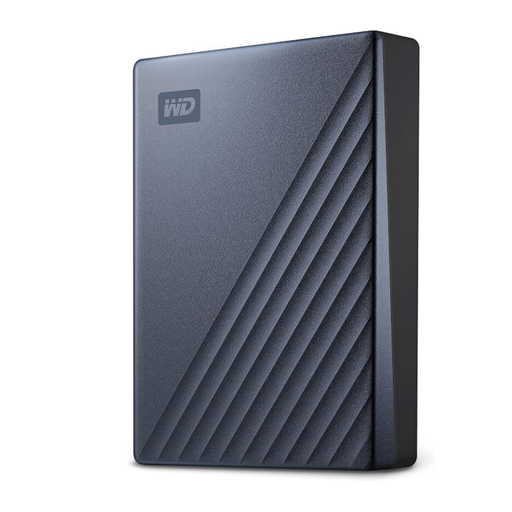
Western Digital My Passport Ultra 5TB, Blue
Consider this portable hard drive if carrying a 5TB archive matters more than choosing an SSD. Confirm the exact Mac and Windows file-system workflow before buying; reformatting erases existing files, so make another copy first.
Joybuy
Common questions
Is one external drive enough for irreplaceable photos?
No, not if it holds the only copy. The National Cyber Security Centre advises keeping important data backed up in a separate safe location and checking that you know how to restore it.
Which format should I check for a drive shared by Mac and Windows?
ExFAT is one format to consider: Apple identifies it as Windows-compatible and specifies it for Windows volumes over 32GB. Check the requirements of both computers and copy existing files elsewhere before formatting, which erases the drive.
Can I use BitLocker to encrypt an external drive?
Microsoft says BitLocker Drive Encryption is available on Windows Pro, Enterprise and Education editions, not through the same interface on Windows Home. Check the edition on the computer you will use and keep the recovery key securely.
How should I protect a cloud account used for backup?
Use a unique password and enable two-step verification. The National Cyber Security Centre recommends two-step verification for important accounts; also make sure you know how to access and restore your backed-up files.
What should I do before disposing of a drive with personal records?
Address the personal data on the drive before selling or disposing of it. The Information Commissioner’s Office warns that external drives can retain accessible information; after dealing with the data, use an appropriate electrical-equipment collection route.


