Households with large libraries
If years of photos and videos are spread across devices or cloud storage, measure the files you can actually export before choosing a capacity. The cloud service’s download method matters as much as the drive size.


Choose a drive only after checking how your photo service exports files and measuring the resulting library. A desktop hard drive suits a large archive kept in one place; a portable hard drive suits a copy you need to carry; and a portable SSD is worth considering for frequent local transfers, provided its capacity and your computer connection fit. Keep the drive as an additional copy, not your only copy.
If years of photos and videos are spread across devices or cloud storage, measure the files you can actually export before choosing a capacity. The cloud service’s download method matters as much as the drive size.
If you regularly transfer new photo or video folders, a compact drive may be easier to use routinely. For a portable SSD, check the computer port and cable as well as the drive: Samsung says the T7’s maximum rated speeds depend on a compatible host, cable and UASP.
If both systems need to read and write the archive, decide on its file system before the main transfer. Also check whether you intend to copy folders manually or use a built-in backup utility, since those workflows can call for different formats.
Check the export route first, then compare drive capacity with the exported files. After that, match the connection and format to the computers that will use the copy.
Consider it when: You carry the copy or repeatedly move large folders between local devices.
Trade-off: Check that the chosen capacity leaves enough room; a fast drive cannot shorten cloud-export preparation or download time.
Consider it when: A large archive will mainly stay at a desk. Seagate lists its Expansion Desktop range in capacities from 4 TB to 30 TB.
Trade-off: A desk-based drive is less convenient to take between computers.
Consider it when: You need to carry a sizeable local copy but frequent high-speed transfers are not the main priority.
Trade-off: Confirm the exact model’s capacity, connection and file-system workflow before relying on it across devices.
| Concern | What to check | Who this matters to |
|---|---|---|
| Capacity and headroom | Measure the exported photos and videos, then allow room for future copies. Even for a USB flash drive, check that the complete export fits comfortably. | If I am gathering years of family files, I need space for the export and later additions. Roughly 36% of consumers would put capacity and headroom first. |
| Export and transfer | Confirm the cloud service’s export method before comparing drive speeds; for local copying, check the computer port and cable. | When I update the archive regularly, I want a transfer routine I can repeat without selecting files one by one. Around 29% of consumers would make that workflow their primary concern. |
| Device compatibility | Identify which computers must use the drive and whether you need manual file copies or a built-in backup utility. Check the connector and format before transferring files. | If my Mac and Windows computers both need the archive, I need a format that suits the way I will use it. Approximately 21% of consumers would prioritise cross-device compatibility. |
| Separate copies | Plan where another copy will remain, when the local drive will be updated and whether a sample file opens afterwards. | I do not want one connected drive to be the only place my photos survive. For about 14% of consumers, keeping a separate, recoverable copy would come first. |
A drive left connected can be affected by an incident involving the computer or other connected storage.
Use it as an additional copy. The National Cyber Security Centre advises keeping at least one backup offline or digitally disconnected when it is not in use.
A photo count alone does not tell you how much space exported originals, videos and later additions will occupy.
Make or inspect an export, check its file types and size, and leave headroom for future backup runs.
Apple warns that erasing and reformatting a storage device deletes its contents.
Choose the format for your computers and backup software before copying the main library. If files are already on the drive, keep another copy before changing its format.
Export preparation and downloading happen before files can be copied locally. Samsung also conditions the T7’s maximum rated speeds on a suitable host, cable and UASP.
Check the service’s export route first, then assess whether the computer connection can make use of a faster drive.
The portable T7 SSD is a compact option to consider for frequent local transfers. Samsung UK lists T7 capacities from 1 TB to 4 TB and USB-C-to-C and USB-C-to-A cables for the cited variant.
Seagate’s Expansion Desktop line offers a desk-based route for a large household archive. Seagate UK lists capacities from 4 TB to 30 TB for that line.
The My Passport Ultra for Mac 5 TB, model WDBPMV0050BSL-WESN, is a portable hard-drive option for a Mac-led archive.
These desktop and portable drives offer different ways to hold an additional local photo-library copy. Measure the export and check your computers’ connection and format requirements before choosing among them.
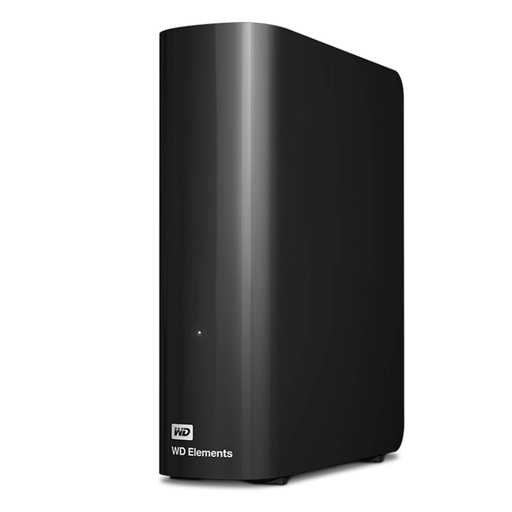 No image available
Consider this desktop drive for a photo archive that will mainly stay in one place. Its stated capacity is 10 TB; compare that with the measured export and planned future copies. If a Mac will use the archive, confirm the required format before transferring files.
 No image available
Consider this portable hard drive for a Mac-led archive that you need to carry. The listed model is WDBPMV0050BSL-WESN with 5 TB capacity. For Windows access without reformatting, the retailer describes a downloadable HFS+ driver; check that this suits your workflow and confirm the delivered variant’s details.
 No image available
Consider this portable SSD if you often copy photo folders between local devices and a 2 TB drive leaves enough room for your library. The product name specifies USB 3.2 Gen 2; Samsung says the T7’s maximum rated speeds depend on a compatible host, cable and UASP, not just the drive.
 No image available
Consider this portable hard drive if you need a carryable copy and the measured export fits within 4 TB with room to grow. The product name specifies USB 3.0. If you will use a Mac, confirm the drive’s format and whether reformatting is needed before copying your library.
 No image available
Consider this portable SSD for an additional local copy if your export fits within its stated 2 TB capacity with headroom. Check the exact connector, computer compatibility and file-system format against your intended transfer routine before buying.
The route depends on the service. Google Photos Help says Google Takeout can create an archive of selected Google data, though changes made while the archive is being created may not be included. Amazon Customer Service’s browser instructions require selecting photos or videos and say entire albums cannot be downloaded. Check the current method for your account before planning a large transfer.
For a disk over 32 GB used with both systems, Apple’s UK Disk Utility guidance specifies ExFAT. Choose the backup workflow first, however: Seagate says exFAT is not compatible with or recommended for Time Machine and Windows File History. Apple also warns that formatting erases the drive, so keep another copy of existing files before changing its format.
Disconnecting at least one backup when it is not being updated reduces the chance that an incident affects every connected copy. The National Cyber Security Centre advises keeping a backup offline or digitally disconnected; after an update, check that representative photos or videos open before storing the drive separately.
Keep any files you still need on another copy, then remove personal data before reuse or recycling. Recycle Your Electricals advises permanently deleting private data from devices being passed on; check your local collection options for the drive.