Frequent solo desk caller
If you stay in one position for work or study calls, camera height, your usual lighting and a comfortable head-and-shoulders frame may matter more than tracking features.


An external USB webcam is worth considering when your laptop camera sits at an awkward angle or its image does not work well in the lighting you normally use. For seated, one-person calls, start with a straightforward 1080p option; consider higher capture resolution or flexible framing when you need to show materials, include another person or move while presenting. Check the camera in your meeting app, and assess your microphone separately if room noise or echo makes you hard to hear.
If you stay in one position for work or study calls, camera height, your usual lighting and a comfortable head-and-shoulders frame may matter more than tracking features.
Showing desk materials or a whiteboard, including another person, or moving as you explain something makes field of view and framing controls worth examining.
Nearby voices, an echo-prone room or a private background can shift your priority towards audio testing, tighter framing and a way to cover the lens between calls.
For regular desk-based calls, decide what most needs improving in your present setup before comparing camera specifications. Capture resolution, the picture sent by a meeting app and microphone performance are separate questions.
| Concern | What to check | Who this matters to |
|---|---|---|
| Image and lighting | Compare the camera preview in your usual lighting, then check capture resolution and your meeting app’s video settings. | If my laptop camera gives an awkward or unclear picture at my desk, improving the image is my main reason to change it. Around 37% of consumers would put image and lighting first. |
| Framing and privacy | Check field of view, whether framing controls need manufacturer software, and whether a physical lens cover is included. | I may need to show a colleague or desk materials, but I do not want the rest of the room in every solo call. Controlling what is in shot comes first for around 27% of consumers. |
| Audio in a shared space | Test the microphone and speaker combination in your call app; consider a headset if nearby noise or echo remains a problem. | When other people or room echo make my voice difficult to follow, a sharper picture will not solve the call. Clear audio is the primary concern for around 36% of consumers. |
A 4K or 1080p capture specification does not guarantee that a meeting transmits at that resolution. Google Meet ties its 1080p sending option to an eligible account, a suitable camera and enough processing power; Zoom also specifies higher bandwidth requirements for 1080p video.
Check the video options in the service you use most, along with your computer and connection, before making capture resolution the deciding feature.
A wider field of view can fit materials or a second person into the shot, but it can also show more of a shared or private room.
Check how the stated field of view looks at your desk. If you switch between solo and wider calls, check whether the camera offers selectable framing and whether it requires manufacturer software.
A noise-reduction feature does not settle how your voice will sound alongside nearby people or external speakers. Google Meet cautions that mismatched microphone and external-speaker devices can cause echo.
Use your usual app’s pre-join test with the exact microphone and speakers you intend to use.
If a separate headset or microphone proves necessary, you will have another device to connect and select for calls.
A connected webcam may still be unavailable in a call if camera permissions or organisation-managed settings prevent the app from using it. Microsoft notes that Windows camera permissions must be enabled for apps that need camera access.
Check the port, operating-system requirements, app permissions and any restrictions on installing camera-control software before relying on a new setup.
Depending on the connection and managed-device settings, an adapter or help from your organisation’s IT team may be needed.
These brand examples illustrate features to compare within particular product lines, not a reason to assume that every model from a brand has the same capabilities.
Its Brio 500 is an example of a Full HD meeting webcam with additional framing and lighting controls.
The PowerConf C200 is a compact webcam option for callers interested in changing how much of the room is visible.
Link 2 and Link 2C offer distinct approaches to framing a presenter rather than a fixed, seated caller alone.
Facecam Neo provides a fixed-view Full HD option with stated connection and system requirements.
These webcams cover routine desk calls as well as setups needing more capture detail or a wider view. Choose by the framing and connection your workspace requires, then test video and audio in your usual meeting app.
 No image available
Consider this model if you need capture detail or remote framing controls for desk demonstrations. Its name specifies 4K capture and remote-controlled 5x digital zoom; check that its connection and your meeting app suit your setup, as capture resolution is not necessarily call resolution.
 No image available
This is a desk-call option if automatic focus is important to you. The product name says 2K, while the accompanying product detail describes Full HD 1080p at 30 frames per second; confirm the capture mode you would use before choosing it on resolution.
 No image available
Its conference-oriented configuration is worth examining if you need to include more than one person, rather than only your face at a desk. The name specifies an adjustable 98° field of view, fixed focus, a four-microphone array and dual speakers; check whether the focus and framing suit your camera distance.
 No image available
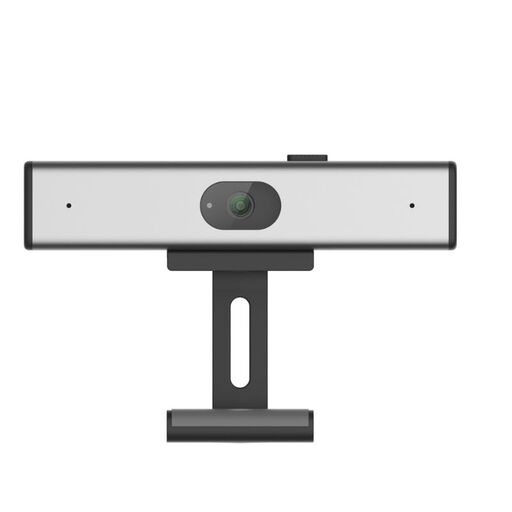
Consider this clip-on model if you want a webcam for a monitor or laptop and are comparing higher capture resolutions. Its name specifies 2K QHD and a noise-reduction microphone; check its connection, framing and compatibility with your computer before deciding.
Google Meet supports external USB cameras on compatible devices, operating systems and browsers. Check the webcam’s requirements against your computer, then confirm that Meet can select it in the call preview.
A webcam’s capture resolution is not necessarily the resolution your meeting service sends. Google Meet’s 1080p sending option depends on an eligible account, a 1080p camera and enough processing power; Zoom also lists higher bandwidth requirements for 1080p calls.
Connect it and select it in your usual app’s pre-join preview, then check both the picture and the microphone-and-speaker combination. If you use Windows and the camera does not appear, Microsoft advises checking camera permissions, including access for the relevant apps.
Not necessarily: test the webcam microphone in the room where you normally call before adding another device. A headset or separate microphone may be useful if nearby noise or echo remains a problem; Google Meet cautions that mismatched microphones and external speakers can cause echo.
Follow your organisation’s approved tools and policies rather than assuming that a webcam purchase settles the privacy question. The UK Information Commissioner’s Office advises organisations to consider whether video conferencing or recording is necessary and whether a less privacy-intrusive method could meet the purpose.