What should you check before choosing?
Start with the way you will obtain the files, then choose storage for the archive’s size, where you will use it and how you will maintain another copy.
Portable external SSD
Choose it when: You regularly carry the archive or transfer it between compatible devices.
Keep in mind: Drive speed claims do not establish the speed of a complete cloud export, and this drive still needs a separate backup copy.
Desktop external hard drive
Choose it when: Your growing collection is managed mainly at a desk and you want to assess higher-capacity models.
Keep in mind: A stationary drive is less convenient to carry, and one drive remains only one copy of the archive.
Network-attached storage
Choose it when: Several people or devices need central network access and you are prepared to manage the system.
Keep in mind: Network-attached storage needs administration and another backup destination; Synology’s guidance describes backing up its systems to separate storage.
| Priority | What to check | Your needs |
|---|
| Export and transfer |
Check the photo service’s supported export method, working space for downloaded and extracted files, and whether the expected photos and videos open after copying. Google Photos Help warns that a Takeout archive may omit changes made between the request and its creation. |
I want to copy a large library in manageable stages without assuming that one browser download will capture every file. |
| Usable capacity |
Compare the extracted archive size with available drive space; allow for future files and a separate backup destination. Seagate’s Expansion Desktop manual notes that formatting and other functions reduce the space available for data. |
My photos and videos need room to grow, not just enough space for today’s collection. |
| Recoverable copies |
Keep another copy on separate storage and try restoring a selection of photos and videos. The National Cyber Security Centre advises regular backups and checking that restoration works. |
If a drive fails or files are deleted, I need a copy I can actually recover. |
| Device compatibility |
Check the file system, ports, cable or adapter, and any external power requirement. Apple lists exFAT as Windows-compatible, but specifies APFS or Mac OS Extended (Journaled) for an externally stored Mac Photos library. |
I need the files to open on the computers I use; direct phone or tablet access matters only if those exact devices support the drive. |
| Location and transfers |
Decide whether the drive will travel or stay at a desk. For a portable SSD, check host and cable compatibility before relying on a manufacturer’s claimed speed; a network device also needs ongoing administration. |
I would rather carry a compact drive for frequent transfers, or leave a larger archive in one place if portability is not important. |
Relevant brand ranges
These manufacturer examples illustrate different storage routes; a brand reference does not establish that a particular model suits your devices or backup plan.
Samsung
Samsung’s portable T7 Shield SSD range is relevant when you need a compact drive for repeated transfers.
- Samsung describes the T7 Shield as offering drop resistance and protection against dust and water; these are manufacturer claims about that range, not a substitute for another copy.
- Check the exact model and host connection before relying on its stated transfer capability.
Crucial
Crucial’s X10 portable SSD range is an example for moving an archive between compatible devices.
- Crucial lists a 4 TB X10 model.
- Crucial says compatibility can depend on device formatting and host capability; check the exact computer or mobile device.
Seagate
Seagate’s Expansion Desktop range is relevant to a large archive kept at a desk.
- Seagate lists Expansion Desktop storage capacities up to 30 TB.
- Check the exact model’s connection and power requirements, and remember that one desktop drive is not a separate backup.
Synology
Synology’s DS224+ and DS124 network-storage devices are relevant when computers or mobile devices need centrally managed storage.
- Synology describes backup tools for workstations, laptops and mobile devices in these systems.
- Plan how you will administer the system and back up its contents to a separate destination.
Joybuy storage options
These portable SSDs, portable hard drives and a desktop hard drive are options for copying a photo archive to directly attached storage. Choose by archive size, where the drive will be used and compatibility with your devices; maintain another recoverable copy whichever drive you use.
 No image available
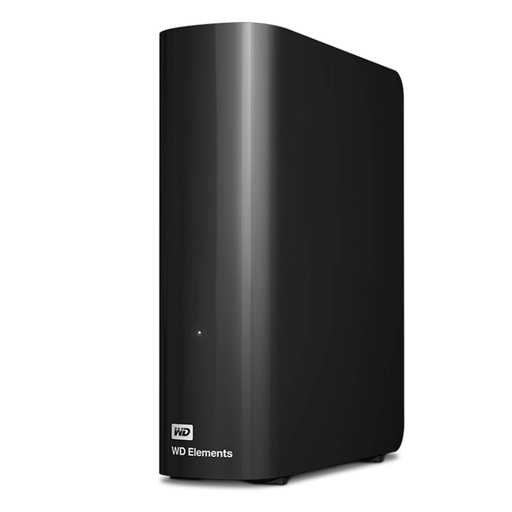
Western Digital Elements Desktop External Hard Drive 10TB
Consider this 10TB desktop drive for an archive kept at a desk. Compare its usable space with your exported files and check its power connection and intended computer’s file-system requirements before copying.
 No image available
Western Digital My Passport Ultra for Mac 5TB, Silver
This 5TB portable hard drive is a Mac-oriented option for a large local copy. If Windows access also matters, confirm the exact format and current compatibility before choosing how to store the files.
 No image available
Samsung Portable SSD T7 2 TB USB Type-C 3.2 Gen 2, Blue
This 2 TB portable SSD suits a transfer-focused setup if its capacity covers the exported archive. Check the computer’s connection and the intended file system; the USB specification alone does not establish the speed of a complete export.
 No image available
Western Digital Elements Port. 4TB Black USB 3.0
Consider this 4TB portable hard drive if you want to carry a sizeable archive between computer-based transfer sessions. Confirm the connector, file format and compatibility with each device you intend to use.
 No image available
SanDisk Portable SSD 2TB
This 2TB portable SSD is an option for carrying a local copy when the exported archive fits with room to grow. Check the exact connection and file-system compatibility for the computer or mobile device that will handle transfers.
Common questions
Can I download a Google Photos library as a local archive?
Yes, Google Takeout can create an archive that includes Google Photos. Google Photos Help warns that changes made between requesting the download and creation of the archive may not be included, so check the resulting files before relying on that copy.
How can I copy an iCloud Photos library to external storage?
On a Mac, Apple says you can choose to download full-resolution originals to the Mac before copying them to suitable storage. If you intend to move the Mac Photos library itself rather than exported files, Apple specifies an APFS or Mac OS Extended (Journaled) external drive.
Can Amazon Photos download a whole album in a browser?
Not as an entire album through the browser workflow described by Amazon Customer Service. Open the album, select the pictures you want and download them; for a large archive, check the completed downloads in stages.
Should a drive shared between Windows and Mac use exFAT?
exFAT is a format to assess for ordinary files used on both systems: Apple lists it as Windows-compatible. It is not the same choice as storing a Mac Photos library externally, for which Apple specifies APFS or Mac OS Extended (Journaled); check every intended device before formatting.
Is one external drive enough to back up a photo archive?
Do not make one external drive your only recoverable copy. The National Cyber Security Centre advises regular backups and checking that you can restore files; keep a separate copy and test it with a selection of photos and videos.


