For a home-based archive, consider an external hard drive with enough capacity for your records; a portable SSD is another option if you move the archive between computers, while a hardware-encrypted device addresses the added risk of carrying sensitive files. Whichever device you choose, keep a separate copy that you can restore, and check the file format against every computer that needs access.
Who is this for?
Households digitising paper records
Scanned statements, correspondence and certificates need an organised, restorable copy separate from the computer holding the working files. The National Cyber Security Centre describes a backup as a copy kept in a separate safe location.
Photo and negative archive keepers
A growing collection of scans needs room for future files, but capacity is not the only check. The drive's file system must also handle the files and work with the computers used to open them.
People carrying sensitive records
If personal documents travel between locations, consider how the device is unlocked and how you would regain access after losing a password or PIN. Keep a separate backup rather than relying on the carried device alone.
What should you check first?
Start with the copies you need to recover, then choose a device that fits the archive's size, privacy needs and computers.
| Priority | What to check | Your needs |
|---|
| Recoverable copies |
Keep a copy separate from the original files; check that you can restore a sample. The National Cyber Security Centre notes that connected backup drives have also been affected in ransomware incidents. |
I need my records even if my computer or local drive becomes inaccessible. A disconnected local copy or a separate off-device copy gives me another recovery path. |
| Access to sensitive files |
Check the exact device's password, fingerprint or PIN options and its recovery procedure. Encryption on one device does not create another copy. |
If I carry financial or household documents, I want to limit access if the device is lost without making the only archive depend on one forgotten credential. |
| Capacity and connection |
Compare the archive's current size with the stated device capacity. Check the computer's port, the required cable and how often you transfer large batches. |
My scans and photos may grow over time; if I move them regularly, the connection matters as well as the space available. |
| File format |
Check which computers must read and write the drive. Microsoft lists a 4 GiB single-file limit for FAT32; Apple identifies ExFAT as a Windows-compatible format. |
I need to open older scans and new files on the intended computers, including any Windows and Mac machines I use. |
What can go wrong?
-
Keeping the only archive on one external drive
If that drive is lost, damaged or inaccessible, the files may be unavailable too. The National Cyber Security Centre defines a backup as a separate copy that can be restored.
Keep another copy in a separate location and periodically restore a small sample to check it.
-
Using the drive's existing format without checking it
Microsoft lists a 4 GiB single-file limit for FAT32, even when the drive has free space. A format that works on one computer may not meet the needs of another.
Identify every computer that must read or write the archive before choosing a format. Copy existing files elsewhere before reformatting a drive.
-
Relying on encryption without a recovery plan
An encrypted device still needs an accessible credential. Its unlocking and recovery options depend on the exact model.
Check those options before setting it up, protect the recovery information and keep an independent copy of the files.
-
Choosing an SSD by its advertised transfer speed alone
A stated speed does not describe every computer connection or archive task; the port and cable also matter.
Check the host port and included cable, then decide whether frequent large transfers are part of your workflow.
Relevant brand references
These examples describe particular storage lines, not every product from each brand or what is currently available to buy.
Western Digital
The My Passport line is relevant to a home-based portable hard-drive archive.
- Western Digital describes scheduled WD Backup software and 256-bit AES hardware encryption with WD Security software for the line.
- Check the exact model's format and operating-system requirements before loading files.
Samsung
Portable SSD models offer another route for an archive that is moved between locations.
- Samsung says the T7 Touch offers fingerprint or password unlocking with AES 256-bit encryption.
- Check the security features of the exact T7 variant rather than assuming that every model has a fingerprint reader.
Kingston
The IronKey Vault Privacy 50 is a compact USB option for a selected set of sensitive files.
- Kingston specifies Type-A and Type-C versions with XTS-AES 256-bit hardware encryption.
- Check capacity, connector and credential procedures against the files and computers you intend to use.
iStorage
The diskAshur M² is a PIN-authenticated portable SSD option for sensitive records.
- iStorage specifies AES-XTS 256-bit hardware encryption and capacities from 240 GB to 2 TB.
- Check whether the capacity and PIN procedures fit the archive, and retain a separate copy.
Joybuy storage options
These portable hard drives and SSDs are options for keeping a local copy of personal records. Choose between them according to archive size, the computers you use and how often you carry the drive; arrange a separate backup as well.
 No image available
Samsung Portable SSD T7 4 TB Grey
A portable SSD to consider when you regularly move an archive. The title specifies 4 TB and USB Type-C 3.2 Gen 2 (3.1 Gen 2); check the file format against your computers and keep another copy.
 No image available
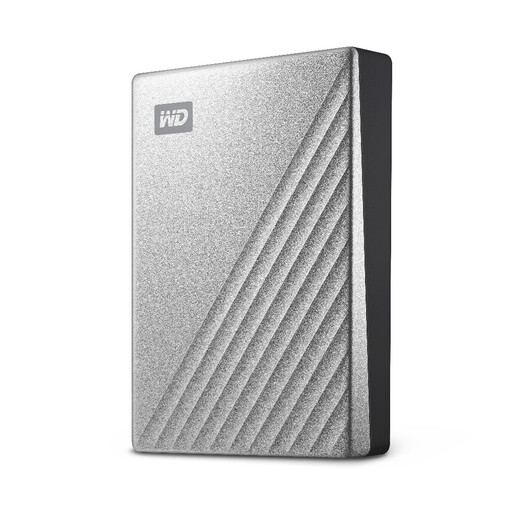
Western Digital My Passport Ultra portable hard drive 4TB Silver
A 4TB portable hard drive to consider for a growing local archive. Check its format and read/write access on each intended computer before copying records, and keep a separate backup.
 No image available
Western Digital My Passport Ultra for Mac portable hard drive 5TB Silver
A 5TB hard drive labelled for Mac use, suitable to consider when a large archive is mainly used with a Mac. Check the format and any Windows access you also need before relying on it.
 No image available
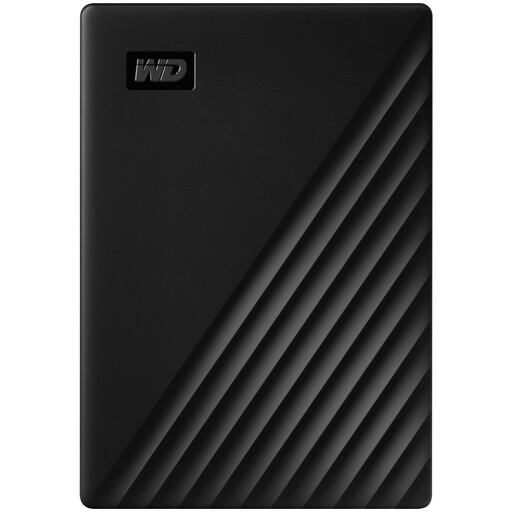
Western Digital My Passport 4TB portable hard drive Black
A 4TB portable hard drive for a local collection of documents and scans. Confirm the format and Mac access if you use both operating systems; one drive should not hold your only copy.
 No image available
Samsung Portable SSD T7 2 TB Grey
A portable SSD to consider if a 2 TB archive fits your current files and expected growth. The title specifies USB Type-C 3.2 Gen 2 (3.1 Gen 2); check the file format before moving records and retain another copy.
Common questions
Is one encrypted external drive enough for sensitive records?
No. Encryption addresses access to files on the device, not the loss of your only copy. Keep a separate backup and test that you can restore files, in line with the National Cyber Security Centre's guidance on recoverable copies.
Should I leave a backup drive connected all the time?
Avoid leaving your only local backup continuously connected. The National Cyber Security Centre has described ransomware incidents affecting both original data and connected USB or network backup drives; disconnecting a completed local backup provides another recovery path.
Which format should I consider for a drive used with Windows and Mac?
ExFAT is a cross-platform option: Apple identifies it as Windows-compatible. Check your exact computers and software before choosing it, and copy files elsewhere before reformatting; Microsoft documents file-system features that differ between exFAT and NTFS.
Why will a large file not copy when the drive has free space?
Check the format as well as the available space. Microsoft lists a 4 GiB maximum size for an individual file on FAT32, so a larger file can fail to copy even when the drive has room overall.


