
24/7 Customer Support

Free returns

Same-day & Next-day Delivery

Quality Guaranteed

Unlock Your Welcome Offers: FREE Delivery | Up to 80% OFF | Free 30-day JoyPlus trial
Download the APP
Dryness after screen use, itchy eyes during pollen season and tired-looking under-eyes can all lead to the same mistake: buying the product with the most impressive-sounding claim rather than the one that matches the problem. Eye care products cover several different categories, including dry eye drops, eye washes, eye sprays and cosmetic serums, but they are not interchangeable.
This guide explains what to check before buying and highlights suitable options for different routines and concerns.
An ophthalmic product is designed for use in or around the eye according to its instructions. A cosmetic eye serum is intended for the skin around the eye and should not be put into the eye itself. Ingredients such as retinal, fragrance, caffeine or botanical extracts may be appropriate in skincare, but that does not make a serum suitable for treating dry, itchy or irritated eyes.
Check the product classification and application instructions before purchasing. If the concern is a gritty or dry sensation, look for a product specifically labelled for ocular use, such as moisturising eye drops or an eye spray for dry eyes.
Witch hazel, chamomile, cornflower and plant extracts appear in some itchy eye drops and tired eye drops. These may appeal to shoppers seeking a gentle-feeling formula, but natural ingredients can still cause sensitivity. Always review the full ingredient list, particularly if you have allergies or react easily around the eyes.
For example, the Optrex Actimist spray contains soya lecithin, while some cosmetic serums contain fragrance or essential oils. Ingredient checking is more useful than relying on descriptions such as “mild” or “clean”.
A convenient bottle is not automatically the right choice. Drops require careful handling to avoid touching the applicator tip against the eye or skin. A spray applied to closed eyelids may be easier for some users, but it has its own directions and should not be used as though it were an eye drop.
Also check the opening period. Some Optrex products supplied here specify use within 90 days of opening, while other products may have different requirements. Write the opening date on the packaging and follow the label rather than keeping an opened bottle indefinitely.
For dry or irritated eyes, prioritise a product clearly labelled for ophthalmic use. Contact lens-friendly eye drops can be practical for lens wearers, but compatibility can vary by lens type and product. The Optrex Moisturising Eye Drops listing states that they can be used with contact lenses; still, read the current packaging and ask a pharmacist or optician if unsure.
An eye wash may be more suitable when dust, pollen or other surface irritants are the main concern. It is a cleansing format, not a replacement for treatment of an underlying eye condition.
Do not select an ingredient simply because it is popular. Match it to the intended use and your sensitivity level.
Look for a format that fits your routine. A compact 10ml bottle suits office drawers, travel bags and commuting. A no-touch spray may be useful when you prefer not to bring a dropper close to the eye. Serums with pumps or controlled applicators can help prevent dispensing more than needed.
Store products as directed, away from excessive heat and direct sunlight. Never share an eye bath or applicator, and discard unused eye-wash solution after use where the instructions require it.
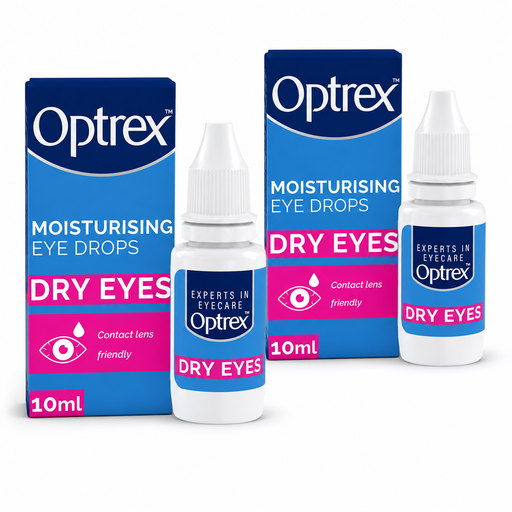
Why This Fits Their Persona: A practical starting point for adults dealing with dryness from screens, heating, air conditioning or pollution, with two 10ml bottles for home and work.
It is presented as an ophthalmic moisturising product rather than a cosmetic serum, and the listing identifies sodium hyaluronate and contact-lens compatibility.
Two-drop application; suitable for dry, irritated eyes; stated 90-day use period after opening.
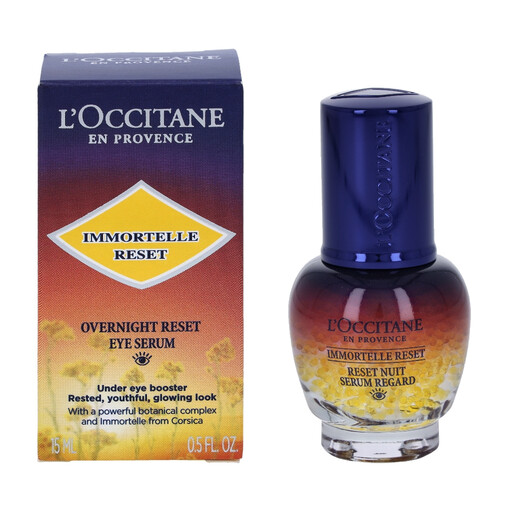
Why This Fits Their Persona: A water-gel cosmetic serum for shoppers focused on visible puffiness, dark circles, fine lines and a more rested-looking eye contour.
Its instructions clearly say to apply around the orbital bone and avoid direct eye contact, keeping skincare use separate from eye-drop use.
Light water-gel texture; includes glycerine, caffeine and botanical extracts; designed for evening use.
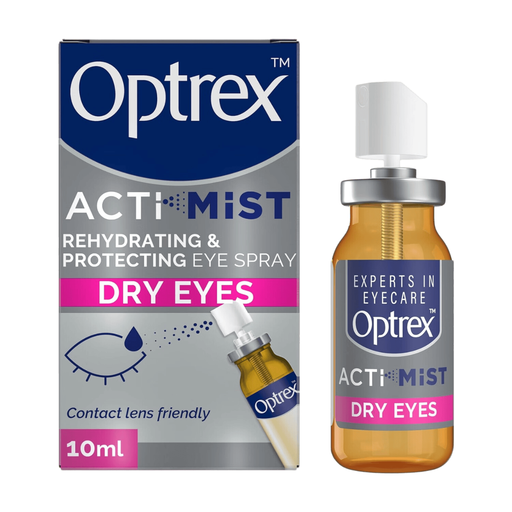
Why This Fits Their Persona: Useful for office workers, commuters and travellers who prefer a compact spray for dry, tired eyes after screen use or exposure to dry indoor air.
The no-touch format is applied to closed eyelids, so it avoids the common mistake of treating an external spray like a conventional dropper.
10ml portable format; external application; contains soya lecithin, vitamin A and vitamin E. Check the label for allergen information.
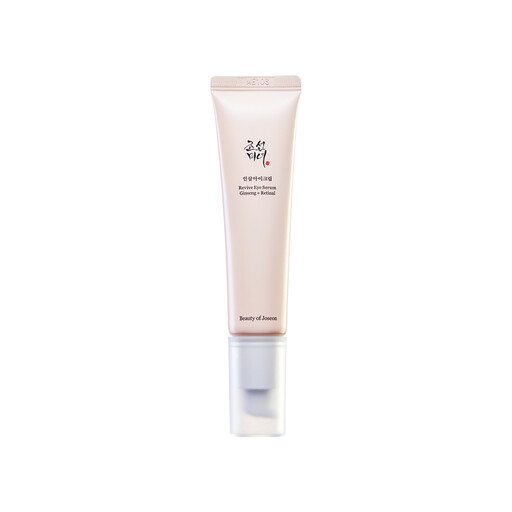
Why This Fits Their Persona: Suitable for skincare shoppers seeking a retinal eye serum for the appearance of fine lines, uneven tone and loss of firmness.
The formula and warnings identify retinal clearly, so shoppers can introduce it gradually rather than assuming every eye serum is suitable for immediate daily use.
Contains ginseng extract, retinal, niacinamide and sodium hyaluronate; lightweight gel texture; daytime sunscreen is advised.
We have compiled a complete, real-time list of products that fully satisfy these strict selection criteria and UK safety regulations.
For screen-related dryness, take regular breaks, blink deliberately and keep the screen at a comfortable distance. Choose dry eye drops or an eye spray for dry eyes according to the product instructions.
For pollen or dust exposure, an eye wash may help rinse external irritants. Do not share the eye bath, and do not return used solution to the bottle.
For dark circles, puffiness or fine lines, use an eye serum for puffiness or a dark circle eye serum on clean skin. Apply a small amount without rubbing. Products containing retinal should be introduced cautiously and paired with daytime sun protection.
Eye drops are instilled directly into the eye, while an eye spray is applied externally, usually onto closed eyelids. They have different application methods and should not be substituted without checking the label.
This depends on the product. Some listed ophthalmic products specify use within 90 days after opening, while cosmetic serums follow their packaging guidance. Record the opening date and never use products past their stated period or expiry date.
Cosmetic eye serums should be applied to the surrounding skin, not the eye, and it is sensible to remove contact lenses if there is any risk of product entering the eye. For lens wearers seeking moisture, choose contact lens-friendly eye drops whose packaging specifically confirms compatibility. Stop use and seek advice from a pharmacist, optician or doctor if pain, vision changes, persistent redness or worsening symptoms occur.