
24/7 Customer Support

Free returns

Same-day & Next-day Delivery

Quality Guaranteed

Unlock Your Welcome Offers: FREE Delivery | Up to 80% OFF | Free 30-day JoyPlus trial
Download the APP
Fabric conditioner can make laundry feel softer, reduce static and add fragrance, but choosing a bottle based only on scent or wash count can lead to disappointing results. UK households also need to consider dosage, fabric compatibility, ingredients and storage.
As the Joybuy Product Recommendation Officer, I filter out vague marketing language and focus on the details that affect everyday use.
A large bottle is not automatically economical. A 5-litre container may offer fewer washes than a smaller concentrated fabric conditioner if the recommended dose is higher. Compare the stated number of washes and, where possible, the dose per load.
For example, products in this category range from compact 20-wash bottles to larger formats offering 85, 129 or even 160 washes. The cost per wash is more useful than the price or volume alone.
Descriptions such as “long-lasting fragrance” or “100 days of freshness” refer to the product’s stated performance and may depend on drying method, storage, fabric type and personal sensitivity to scent. Line-dried laundry, tumble-dried items and clothes stored in wardrobes may not retain fragrance in exactly the same way.
A long-lasting fragrance fabric conditioner can be suitable if you enjoy scented clothing, but a milder option may be more practical for bedding, workwear or households where strong perfume is unwelcome.
Fabric conditioner is not appropriate for every textile. Product labels commonly advise caution with flame-resistant garments, children’s sleepwear and highly fluffy fabrics such as fleece, velour, chenille and thick terry cloth. Conditioning agents can affect the performance or feel of some specialist fibres.
Always check the garment care label and the conditioner’s instructions before adding it to a full load.
Look for the recommended wash count rather than relying on words such as “mega” or “bulk”. A concentrated fabric conditioner usually needs a smaller dose, which can reduce storage space and packaging per wash.
Useful formats include:
Dosage can vary according to load size, water hardness and the manufacturer’s directions. Do not assume that using extra product will make laundry softer; overdosing may leave residue and can increase costs.
People looking for a sensitive skin fabric conditioner should read the ingredient list rather than relying only on front-of-pack wording. Fragrance ingredients, preservatives and cationic surfactants may be relevant to individual sensitivities.
A non-bio fabric conditioner generally refers to a product positioned alongside non-biological laundry care, but “non-bio” does not mean fragrance-free or suitable for every person. If buying fabric conditioner for baby clothes, use the dosage on the label, wash new garments before use and consider a small test load first.
Claims such as hypoallergenic or dermatologically tested should be understood as product descriptions, not medical advice. Anyone with a known allergy should check the full label and follow advice from a qualified healthcare professional.
A plant-based fabric conditioner, vegan fabric conditioner or biodegradable formula may appeal to environmentally conscious shoppers. However, check exactly what the claim covers. “Plant-based” may describe selected conditioning ingredients rather than the whole formula, while packaging claims may exclude caps, sleeves or labels.
Bottle composition is also worth checking. Several products below specify recycled or recyclable packaging, but local recycling rules differ across UK councils. The most practical environmental comparison is often dose per wash, packaging amount and how consistently the product is used.
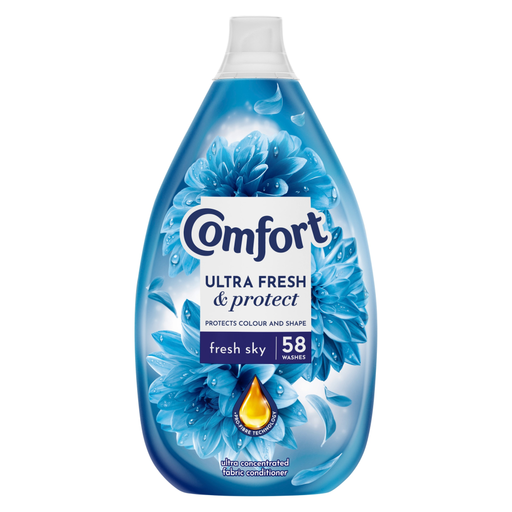
Why This Fits Their Persona: The 58-wash bottle provides a manageable starting size for flats, couples or shoppers comparing fragrances without committing to a bulk container. It is also described as effective in short and cold cycles, which suits routine UK eco washes.
The stated wash count makes value easier to compare than bottle size alone. The label also provides clear cautions for flame-resistant and fluffy fabrics.
58 washes; bottle made from 100% recycled plastic, excluding cap and sleeve; suitable for short and cold cycles.
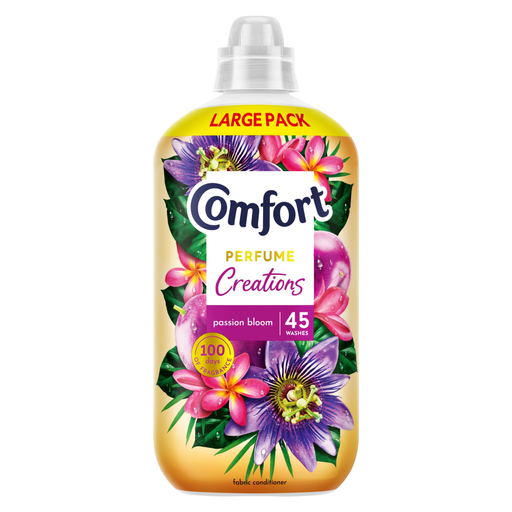
Why This Fits Their Persona: This option is aimed at shoppers who prioritise a distinctive fragrance, with mango, passion flower and frangipani notes. It may suit wardrobes, bedding and everyday clothing where scent is a central part of the purchase.
The fragrance profile is specified rather than described only as “luxurious”. Its stated short- and cold-cycle performance helps avoid buying a conditioner incompatible with quick washes.
45 washes; motion-activated fragrance technology; 100% recycled plastic bottle excluding cap and sleeve.
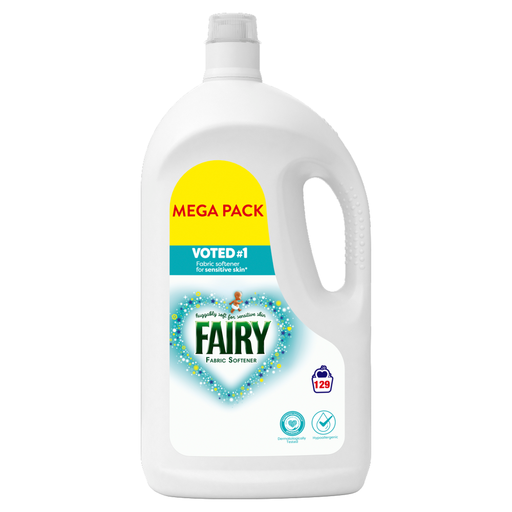
Why This Fits Their Persona: The 129-wash format is suited to large families, frequent laundry and shoppers wanting fewer repurchases. The product description positions it for sensitive skin and baby clothes, subject to checking the label for individual requirements.
The high wash count is clearly stated, making it easier to assess bulk value. Its warnings also identify fabrics and garments where liquid softener should not be used.
Up to 129 washes; sensitive-skin positioning; plant-based conditioning ingredients stated in the product description.
The Lab Co. Signature Laundry Fabric Conditioner is available in a 1-litre format for up to 64 washes, with plant-based, vegan and cruelty-free positioning. Its eucalyptus, orange rind and wild lavender fragrance may appeal to shoppers seeking a botanical scent. The 5-litre version is listed for up to 320 washes and may suit households with adequate storage, although comparing dose and cost per wash remains important.
For a more compact choice, The Lab Co. Refreshing Fabric Conditioner offers up to 40 loads, with lime, peppermint and cucumber fragrance notes and dosage guidance for different load sizes. The description advises a sensitive-skin test, so this is a useful reminder that “natural” or “plant-based” does not automatically mean suitable for everyone.
We have compiled a complete, real-time list of products that fully satisfy these strict selection criteria and UK safety regulations.
In UK retail descriptions, “fabric conditioner”, “fabric softener” and “laundry softener” are commonly used for similar rinse-cycle products. Always follow the specific dosage and fabric instructions on the bottle.
Shelf life varies by product and storage conditions. Keep it upright in a cool, dry place, away from direct sunlight and freezing temperatures, and check the packaging for the manufacturer’s guidance. A bottle’s wash capacity depends on the stated dose, load size and how often you do laundry.
It can be, particularly when you compare price per wash rather than pack price. Concentrated formulas and 85-, 129- or 160-wash formats may reduce repeat shopping, but only if you follow the recommended dosage and have enough storage space.