
24/7 Customer Support

Free returns

Same-day & Next-day Delivery

Quality Guaranteed

Unlock Your Welcome Offers: FREE Delivery | Up to 80% OFF | Free 30-day JoyPlus trial
Download the APP
Finding a laundry routine that leaves clothes soft and fresh without causing itchy, irritated skin can be a challenge. For many UK households, especially those with young children or family members prone to eczema and allergies, the wrong fabric conditioner can turn laundry day into a source of discomfort. The aisles are filled with products promising incredible softness, but navigating the ingredients and marketing claims to find a truly gentle option is often overwhelming.
This guide is designed to help you make an informed choice. We will explore what to look for in a fabric conditioner for sensitive skin, highlight some carefully selected products and answer common questions to give you confidence in your next purchase.
When your priority is protecting delicate skin, a few key factors are more important than scent or price alone. Here’s what to consider when selecting a gentle fabric softener.
Labels like "dermatologically tested" or "hypoallergenic" are your first port of call. A dermatologically tested fabric conditioner has been reviewed for its potential to cause skin reactions under the supervision of a skin specialist. A hypoallergenic fabric conditioner is formulated to minimise the risk of an allergic reaction, typically by omitting common irritants like certain fragrances and dyes. For those managing conditions like eczema, looking for endorsements from recognised bodies like the British Skin Foundation or the Skin Health Alliance can provide extra reassurance.
Fragrances, whether synthetic or natural, are among the most common triggers for skin sensitivity. If you or your family are particularly prone to reactions, an unscented fabric softener is often the safest choice. These products are formulated without any added perfumes. For those who prefer a subtle scent, look for products that use a minimal, mild fragrance specifically designed for sensitive skin. Always be wary of products with strong scents or bright colours, as these often contain unnecessary additives.
The core purpose of a fabric conditioner is to deposit softening agents onto fabric fibres. Modern formulas are increasingly efficient. Ultra-concentrated conditioners offer great value and reduce packaging waste, but it's crucial to use the correct, smaller dose to avoid leaving excess residue on clothes. When choosing a fabric conditioner for babies, a gentle, plant-based formula free from harsh chemicals is always a sound decision.
Based on their formulations and features designed for sensitive skin, here are our recommendations.
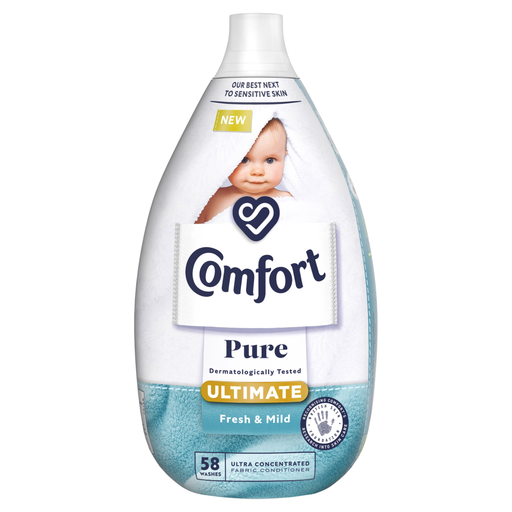
Why It Stands Out: This conditioner strikes a balance between gentle care and a pleasant, fresh feeling. Its formula is recommended by the Skin Health Alliance, making it a trusted choice for the whole family. The ultra-concentrated nature means a small amount goes a long way, delivering softness while being effective even in short, cold wash cycles.
Pros:
Who is it for? Families seeking a reliable, skin-friendly conditioner from a well-known brand that provides a subtle, clean scent without being overpowering.
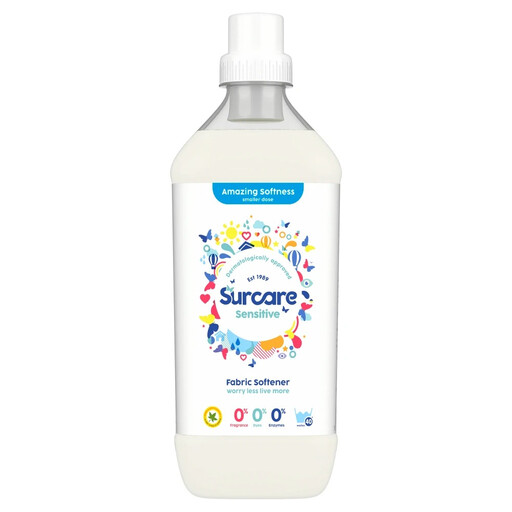
Why It Stands Out: Surcare’s commitment to minimalism makes it a standout option for those with highly reactive skin. The formula is built around what it leaves out: 0% fragrance, 0% dyes and 0% enzymes. This focus on purity ensures clothes are left soft and comfortable without the addition of common potential irritants.
Pros:
Who is it for? Individuals and families managing eczema, allergies or severe skin sensitivity who require a completely neutral and unscented fabric softener.
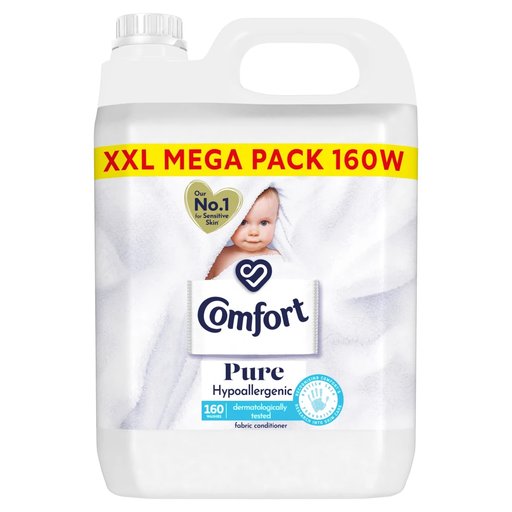
Why It Stands Out: This XXL mega pack offers exceptional value and convenience for large households. It features the same gentle, dermatologically tested formula as the smaller Comfort Pure bottles but in a size that lasts for up to 160 washes. This not only saves money but also significantly reduces packaging waste over time. The formula is also supported by the British Skin Foundation.
Pros:
Who is it for? Large families or budget-conscious shoppers who have already found that the Comfort Pure formula works for their sensitive skin and want to stock up in an economical, eco-friendlier way.
If our top picks aren't quite what you're looking for, or you'd like to browse a wider selection of scents and brands, we have more to see.
Explore our full range of Regular Fabric Softeners
While not strictly necessary, a good quality fabric conditioner for sensitive skin can be very beneficial. It works by smoothing the fibres of your clothes, making them feel softer and less abrasive against the skin. For those with conditions like eczema, reducing friction from clothing can help minimise irritation. The key is choosing the right product that doesn't introduce new irritants.
It is generally not recommended. A baby's skin is significantly more delicate and permeable than an adult's, making it more susceptible to irritation from fragrances, dyes and other chemicals found in standard laundry products. It is always a safer choice to use a specially formulated fabric conditioner for babies that is hypoallergenic and dermatologically tested.
These terms are often used together but mean different things. 'Dermatologically tested' indicates that the product was tested on human skin under the supervision of a dermatologist to check for potential reactions. 'Hypoallergenic' means the product has been formulated to minimise the risk of an allergic reaction, usually by excluding common allergens like fragrances and dyes. A product can be one, the other or both. For maximum peace of mind, look for products that carry both claims.