Small-flat spill responders
People dealing with occasional food, drink or everyday marks on a pouffe suitable for wet cleaning, with little room to store a full-size carpet washer.


For occasional spills on one fabric pouffe that permits wet cleaning, a compact upholstery spot cleaner is the more relevant starting point than a larger-tank machine. Consider greater capacity if you regularly clean other upholstery or pet messes, or a multi-function stain cleaner if dry debris and wet spills also matter. Check the pouffe’s care instructions, test a concealed area and make time for the fabric to dry with adequate airflow.
People dealing with occasional food, drink or everyday marks on a pouffe suitable for wet cleaning, with little room to store a full-size carpet washer.
People who need to establish whether their pouffe’s fabric, dye and filling can tolerate the intended cleaning method before choosing a machine.
People who expect to clean rugs, stairs or other upholstery as well as the pouffe, and need to weigh tank capacity and suitable tools against storage space.
For a pouffe that permits wet cleaning, establish fabric compatibility before comparing machine size or cleaning workload. The three routes below serve different sets of household tasks; none removes the need to check the pouffe itself.
Choose it when: occasional local stains on one pouffe are the main job and storage is tight.
Allow for: a mains socket, filled and emptied tanks, and drying time after extraction.
Choose it when: the pouffe is one of several upholstered surfaces you clean regularly, particularly where fewer tank refills would help.
Allow for: more storage space than a compact model may need. Vax positions its SpotWash Max Duo’s larger tanks for broader cleaning jobs.
Choose it when: dry debris and wet spills matter alongside stain treatment, and you would rather use a spray-based method than fill a washer’s water tank.
Allow for: a different cleaning method and compatible spray refills. Good Housekeeping UK describes these features in its review of the Shark EveryMess.
| Concern | What to check | Who this matters to |
|---|---|---|
| Fabric and colour safety | Check the pouffe’s care instructions and the cleaner’s upholstery suitability; test the intended method on a concealed area. | If I cannot establish whether the fabric can be wet-cleaned without colour transfer, machine features come second. Around 40% of consumers put fabric compatibility first. |
| Storage and drying | Compare stored dimensions and allow space and time for tank care, ventilation and fabric drying. | With limited cupboard space, I need a machine I can put away and a chance to air the pouffe before using it again. For around 30% of consumers, storage and drying are the primary concern. |
| Cleaning workload | Decide whether you will clean only small marks or regularly tackle other upholstery and pet messes; compare tank capacities and supplied tools accordingly. | If several surfaces need regular attention, repeated refilling and the tools for different messes matter more to me. Cleaning workload comes first for around 30% of consumers. |
An upholstery attachment does not establish that a particular pouffe’s fabric, dye or filling can be wet-cleaned. An unsuitable method can leave visible colour transfer or marks.
Check the pouffe’s care instructions before buying a cleaner specifically for it. If wet cleaning is permitted, test the intended method on a concealed area before treating the visible fabric.
A wet-cleaned pouffe still needs time and airflow to dry, while the cleaner needs somewhere to be stored and its tanks emptied. Manchester University NHS Foundation Trust advises using fresh air, fans and vents to help manage indoor damp.
Check the cleaner’s stored dimensions and plan to clean when you can ventilate the room and leave the pouffe unused until dry.
A spray-based stain cleaner and a water-extraction washer use different methods. The solution used with either method must also suit the pouffe’s fabric.
Before choosing a model, check which solution its instructions require and test the intended solution as the pouffe’s care guidance allows.
A spray-based cleaner can also mean keeping compatible refills available for later cleaning sessions.
Vax offers compact SpotWash models for local upholstery cleaning and a larger-tank Max Duo for wider cleaning jobs.
BISSELL is an option for shoppers considering a portable spot cleaner, including its steam-capable SpotClean HydroSteam.
Shark’s EveryMess represents a spray-based, multi-function alternative to a conventional water-tank spot washer.
These portable cleaners are choices for local marks on upholstery, including a fabric pouffe confirmed suitable for the intended wet-cleaning method. Compare how each fits your storage space and likely workload; the Tower model is cordless, while the others are listed here for targeted spot cleaning.
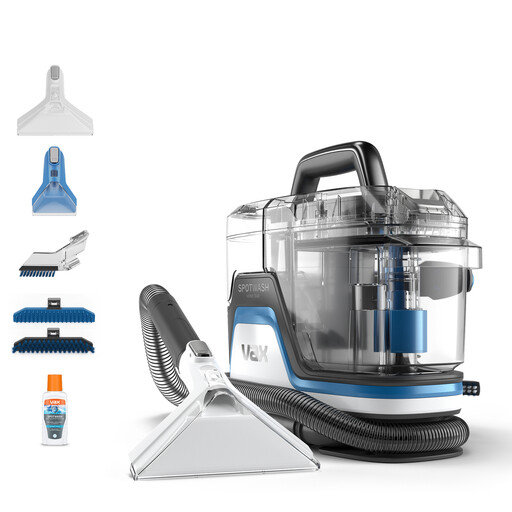 No image available
Consider this upholstery-oriented model for occasional local stains when cupboard space is limited. Check its stored dimensions against your available space, and confirm the pouffe permits wet cleaning before use.
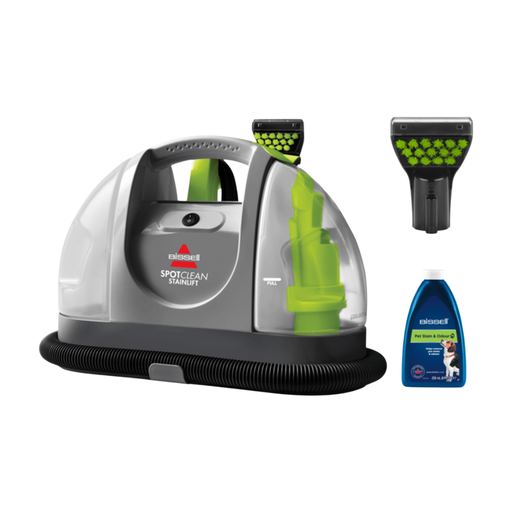 No image available
This portable upholstery-cleaning option suits targeted marks on a pouffe cleared for wet cleaning. Allow ventilation and time for the fabric to dry after extraction.
 No image available
Consider this model if pet-related messes are part of the intended upholstery-cleaning workload. Check cupboard fit and confirm the pouffe’s care instructions permit the planned wet-cleaning method.
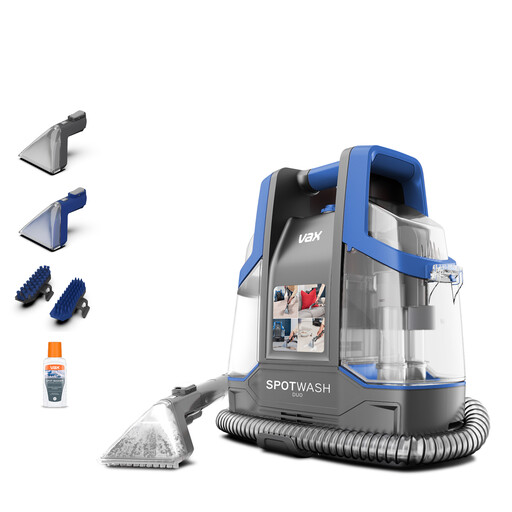 No image available
This portable option is relevant to local upholstery stains on a wet-cleanable pouffe. If tank capacity affects your choice, confirm both clean- and dirty-water capacities for this model, as well as its stored dimensions.
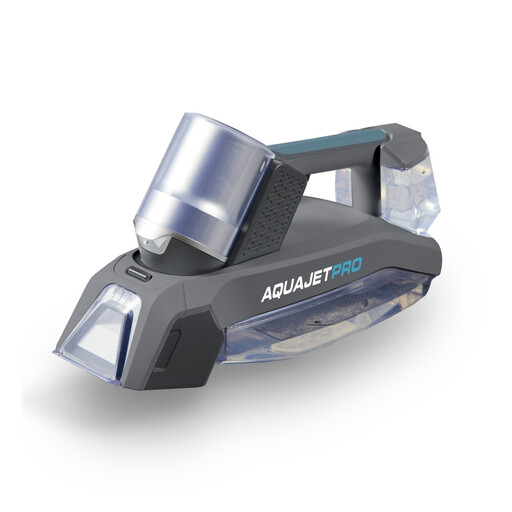 No image available
Consider the cordless design if reaching the pouffe with a mains lead is inconvenient. The product name specifies a 0.3 L clean-water tank, 0.4 L dirty-water tank and 80 W rating; decide whether the clean-water capacity suits your intended area, and confirm the pouffe permits wet cleaning.
Check the pouffe’s care instructions for permission to wet-clean before using a water-extraction spot cleaner. If wet cleaning is permitted, test the intended solution and method on a small concealed area and inspect it for colour removal or bleeding before treating visible fabric; Vax’s upholstery colourfastness guidance likewise calls for a hidden-area check.
Extract cleaning liquid as the machine and fabric instructions allow, then leave the pouffe unused while it dries with adequate airflow. Manchester University NHS Foundation Trust advises fresh air, fans and vents for managing indoor damp; avoid leaving the damp pouffe pressed against a cold wall.
A compact upholstery cleaner is a more relevant starting point for occasional marks on one wet-cleanable pouffe, especially when storage is tight. Consider greater tank capacity if you regularly clean other upholstery or pet messes: Vax positions its larger-tank SpotWash Max Duo for broader jobs and its SpotWash Home Duo for compact storage.