Families dealing with small spills
If drinks, food or mud occasionally land on a water-cleanable pouffe, look for a manageable machine you can bring out for one affected area rather than a full-size carpet washer.


Choose a water-extraction spot cleaner only if the specific pouffe’s care instructions permit water-based cleaning; test an inconspicuous area for colourfastness before treating a visible stain. For occasional family spills, a compact upholstery-capable cleaner is a practical starting point, while repeated cleaning across several soft furnishings makes tank capacity and suitable tools more important. Neither choice makes a delicate or water-sensitive fabric safe to wet-clean.
If drinks, food or mud occasionally land on a water-cleanable pouffe, look for a manageable machine you can bring out for one affected area rather than a full-size carpet washer.
If you also expect to tackle stairs, rugs or car interiors, compare tank capacity and the tools supplied for dirtier jobs. A machine chosen for frequent use still needs to suit each fabric you clean.
Confirm the maker’s care instructions before choosing a wet cleaner. As Michael Jon Designs explains, W and WS upholstery codes permit water-based cleaning, while S and X call for other care methods.
Establish whether the pouffe can be wet-cleaned before comparing tools, capacity or storage. Among suitable machines, the useful distinction is whether you need to handle occasional spots or repeated cleaning across several items.
| Concern | What to check | Who this matters to |
|---|---|---|
| Fabric compatibility | Check the exact pouffe’s care instructions for permission to use water, including any restrictions on its fabric or finish. | If I cannot confirm that my pouffe tolerates water, choosing a stronger machine will not resolve the risk of damage. Around 36% of consumers put fabric compatibility first. |
| Routine spills | Look for an upholstery-capable tool and a machine you can fill, carry and put away conveniently. | When food or drink lands on the family pouffe, I want to deal with a small area without setting up a large machine. Around 29% of consumers prioritise that quick response. |
| Repeated cleaning | Compare tank capacities and the tools supplied for upholstery or messier jobs; follow the instructions to avoid over-wetting. | If I clean several soft furnishings or deal with recurring pet messes, interruptions and handling dirtier clean-ups matter more. Around 21% of consumers make repeated cleaning their primary concern. |
| Storage and upkeep | Check the machine’s footprint, tank access and approved cleaning solution for the exact model. | With limited cupboard space and only occasional use, I need a cleaner I can store and rinse after a spill. Around 14% of consumers put storage and upkeep first. |
A machine’s upholstery claim does not override the pouffe maker’s care instructions. Michael Jon Designs identifies S as solvent-only and X as vacuum or light-brush care, rather than routine wet extraction.
Confirm water-cleaning permission for your particular pouffe before buying or using a spot cleaner. Use the maker-approved care method if the fabric is delicate or water-sensitive.
Too much liquid can leave the fabric and filling damp and increase the chance of marks.
Follow the cleaner’s solution instructions, extract thoroughly and let a test area dry before treating the visible stain. Rug Doctor specifically advises against over-wetting.
A manufacturer’s suction claim does not establish how a particular stain will clean from your pouffe. Fabric compatibility, the tool, the solution and drying conditions also affect the task.
Compare the exact models’ upholstery tools, tanks and storage requirements, and consult model-specific independent tests if you want a performance comparison.
Tanks and tools need attention after use so the machine is ready for the next spill.
Check the approved solution and how to empty and rinse the dirty-water tank and tools on the model you choose.
Keeping compatible cleaning solution on hand is an ongoing supply requirement.
Its SpotWash range includes compact Home and Duo models and the larger SpotWash Max Duo, giving households different formats to consider for upholstery and other suitable surfaces.
The Portable Spot Cleaner is a wheeled option for people moving between suitable upholstery, rugs, stairs and car interiors.
The SpotClean range includes portable models presented for targeted carpet and upholstery cleaning, including the StainLift 2067E and SpotClean Pro 1558E.
These portable spot cleaners are relevant to targeted cleaning on pouffes whose care instructions permit water-based treatment. Compare the exact model and supplied tools against the spills you expect to tackle; test the fabric before cleaning a visible area.
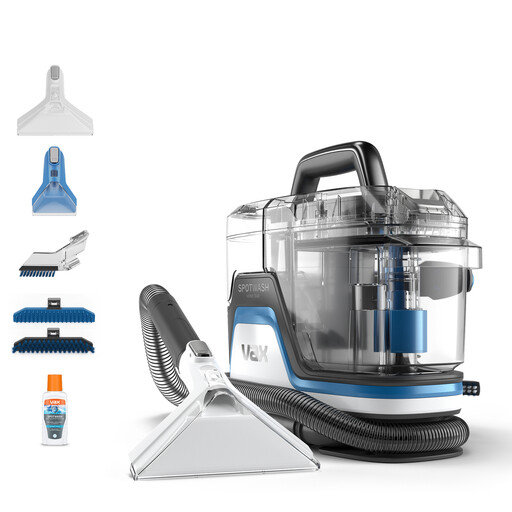 No image available
A compact option to consider for occasional spills on a water-cleanable pouffe. Vax describes the Home Duo for upholstery cleaning; check the tools supplied with this exact model and follow its solution instructions.
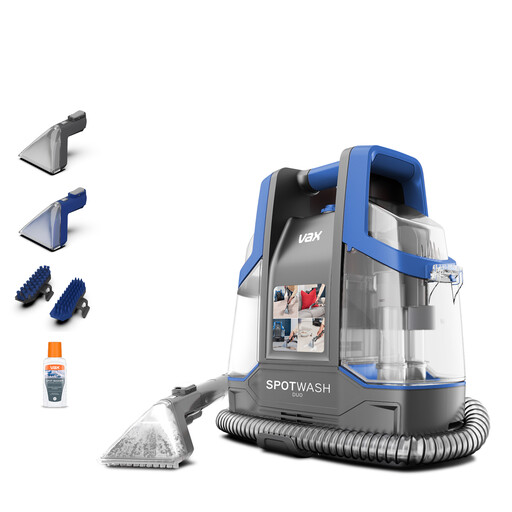 No image available
Consider this model when routine spills and dirtier clean-ups call for separate tools. Vax describes dedicated attachments for those tasks; confirm the supplied kit and use wet extraction only where the pouffe’s care instructions allow it.
 No image available
For a household considering a spot cleaner for pouffe spills alongside pet-related messes, check which attachments come with this Pet-Design variant. Confirm that the particular pouffe permits water-based cleaning before use.
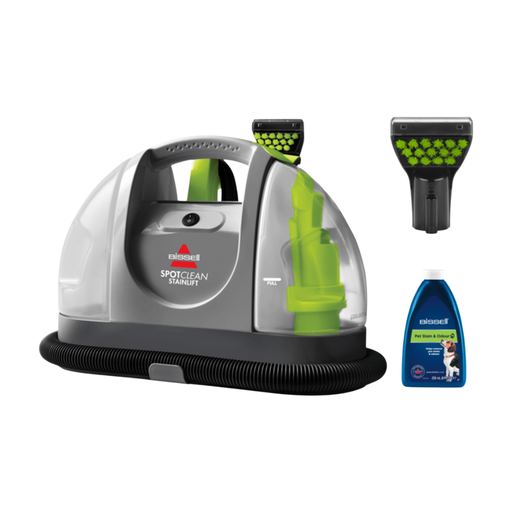 No image available
A portable option for targeted cleaning on upholstery approved for water-based treatment. The Joybuy listing describes separate clean and dirty tanks; check the supplied tools and approved solution before treating the pouffe.
No: check the care instructions for the specific pouffe before using water. Michael Jon Designs explains that W permits water-based cleaning and WS permits water or solvent cleaning, while S is solvent-only and X calls for vacuuming or light brushing. Avoid wet extraction on delicate or water-sensitive fabric.
Yes, if the pouffe permits water-based cleaning, test an inconspicuous area first. Rug Doctor advises checking colourfastness; use the intended solution and method, let the test area dry, then look for colour transfer, rings or a change in texture.
Follow the machine’s solution instructions and extract liquid rather than repeatedly soaking the area. Rug Doctor advises against over-wetting; allow for drying before using the pouffe again, as fabric, filling and ventilation can affect how long it stays damp.
Empty and clean the tanks and tools as directed by the machine’s instructions, and keep the approved cleaning solution available for future spills. Before choosing a model, check how its dirty-water tank and tools are rinsed.
Check your local electrical-waste collection arrangements or an available retailer or manufacturer take-back route rather than putting the machine in general waste. GOV.UK describes the UK rules for waste electrical and electronic equipment as supporting its recovery, reuse and recycling.