Owners of delicate or decorative covers
Fine, raised or textured covers call for particular care. A guard or adjustable setting may help you control the shaver, but test a hidden area before treating a visible panel.


For several smooth cushion covers, look for a fabric shaver with a large shaving head and an easy-empty lint container; for finer covers, prioritise a guard or adjustable setting. Neither feature makes every raised, loose or decorative fabric safe to shave, so check the cover’s care information and test a hidden area first. AA-powered models suit occasional touch-ups, while USB-rechargeable models avoid routine battery replacement during repeated use.
Fine, raised or textured covers call for particular care. A guard or adjustable setting may help you control the shaver, but test a hidden area before treating a visible panel.
If you regularly tackle multiple cushions, throws or other fabric furnishings, compare shaving-head coverage, lint-container access and cordless runtime.
For a few removable covers, weigh the convenience of an AA-powered tool against a rechargeable model that does not need routine battery replacement.
For fabric cushion covers, decide whether protecting a vulnerable textile, tidying several covers or keeping occasional upkeep simple is your main priority. Then compare the features of the exact model rather than assuming a guard or fabric setting guarantees suitability.
| Concern | What to check | Who this matters to |
|---|---|---|
| Protecting the cover | Check for a guard or adjustable setting, then inspect the cover for loose threads and test an inconspicuous area. | If my cover has a loose weave or raised detail, I want to avoid snagging it before worrying about speed; around 42% of consumers put fabric protection first. |
| Tidying several covers | Compare shaving-head coverage and how easily the lint container can be emptied. | When I have several covers to tidy, I want to work without frequent stops to clear lint; covering multiple textiles efficiently comes first for around 33% of consumers. |
| Simple occasional upkeep | Check whether the model uses AA batteries or USB charging, and what is supplied for its first use. | For a few occasional touch-ups, I want a cordless tool that is straightforward to get ready and maintain; roughly 25% of consumers make ease of occasional upkeep their main concern. |
Raised, thin or textured fabric can still catch or be damaged. Russell Hobbs warns specifically about delicate and raised-knit textiles in its fabric-shaver guidance.
Check the cover’s care information and loose threads, then try light strokes on a hidden area before working on the front.
An uneven surface makes it harder to keep the shaving head away from seams, embroidery, buttons and zips.
Where practical, remove the cover and smooth it on a flat surface. Work around trims and stop if fibres catch.
An AA-powered shaver and a rechargeable one involve different upkeep: batteries need replacing, while a rechargeable tool needs time to charge.
For occasional use, check whether batteries are supplied. For repeated sessions, compare the exact model’s stated runtime and charging time.
A product listing alone is not a reason to overlook the seller or the appliance instructions. Electrical Safety First advises buying from a reputable retailer.
Follow the manufacturer’s charging and use instructions, and stop using an appliance that shows signs of damage or an electrical fault.
The AA-powered GC026/80 combines a large blade surface with a height-adjustment cap for delicate fabrics.
The cordless Revive Fabric Shaver 27660 offers USB-C charging for repeated fabric upkeep.
The AA-powered JB1013E0 offers four settings for buyers comparing control across different covers.
Steamery markets its Pilo 2 for clothing and home textiles, including upholstered furnishings.
These Philips fabric shavers offer cordless options for touching up suitable cushion covers. Check each cover’s construction and care information before deciding whether to use a shaver; the two models are distinct variants.
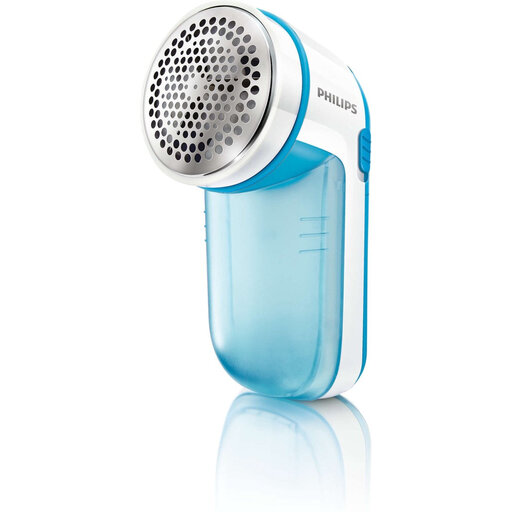 No image available
Consider this model for occasional cordless touch-ups on suitable covers. Check the cover’s care information and test a hidden area, particularly around raised textures and trims.
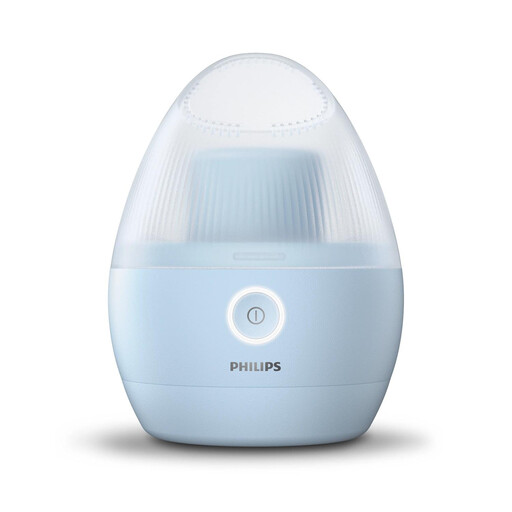 No image available
USB charging may suit repeated cordless touch-ups if you prefer not to replace AA batteries. Test a hidden area of the cover first, use it only on dry fabric and avoid pressing hard.
No: a fabric cover is not automatically suitable for shaving. Russell Hobbs warns that delicate, textured and raised-knit fabrics may be damaged, so inspect the cover and try light strokes on an inconspicuous area before treating the visible surface.
Remove the cover if practical, lay it flat and smooth it before shaving. Philips advises working on a flat, straightened fabric surface; keep the head away from zips, buttons, embroidery and loose threads.
AA power can be straightforward for occasional touch-ups, while USB charging avoids routine battery replacement for repeated use. Check what comes with the exact model and allow for charging time: Russell Hobbs states up to 90 minutes of use and a three-hour charge time for its Revive 27660.
Follow the model’s charging instructions and do not use a damaged appliance. Keep electrical parts dry, and consider Electrical Safety First’s advice to buy from a reputable retailer.