What matters when buying?
For a wardrobe that includes fine knits, decide how you will control contact with the fabric before choosing between quicker coverage and battery-free operation.
Electric fabric shaver
Consider it when: You regularly treat several cardigans or larger pilled areas and want a guarded or height-adjustable option for delicate garments.
Trade-off: It needs batteries or charging, and fine knits still call for light passes and careful cleaning.
Manual multi-edge comb
Consider it when: You want to choose an edge for fine or varied knitwear without relying on electrical power.
Trade-off: Working by hand can take longer, particularly across larger areas.
| Concern |
What to check |
Who this matters to |
| Delicate fibres |
Look for a delicate-fabric guard or adjustable height on an electric model, or a fine-knit edge on a manual tool. Check the cardigan’s care label too. |
If my cashmere or fine-wool cardigan has pills, I want enough control to avoid pressing into the knit. Around 42% of consumers would put delicate-fibre protection first. |
| Repeated care |
Compare head size, how the lint container empties and whether the power source suits regular use. |
When several cardigans need attention, I want to cover pilled areas without frequent interruptions; for around 33% of consumers, ease of repeated care would be the primary concern. |
| Manual control |
Check whether a manual tool includes edges suited to your knit weights and can be used with the garment held taut. |
I would rather work by hand than keep a device charged or supplied with batteries, even if it takes longer. Battery-free control would come first for around 25% of consumers. |
Joybuy fabric shavers for cardigans
These Philips electric shavers are options for removing cardigan pills, including a USB-rechargeable model. For cashmere or merino, check the cardigan’s care label and the instructions for the exact shaver before use.
 No image available
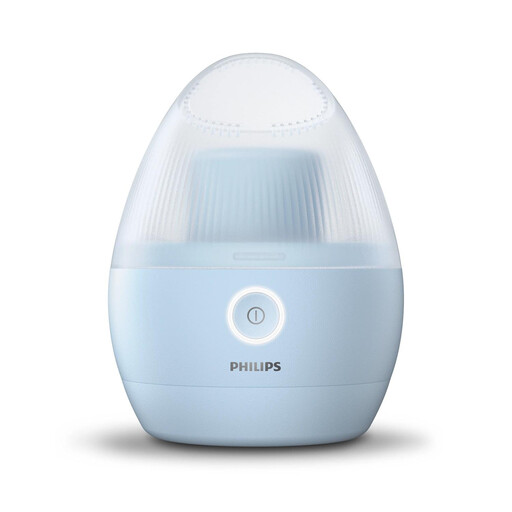
Philips GC026/00 Fabric Shaver, Blue
Consider this model for electric cardigan de-pilling if it suits your preferred power and cleaning routine. Before treating cashmere or merino, check the GC026/00 instructions for the appropriate technique and avoid pressing hard against the fabric.
View on Joybuy
 No image available
Philips 1000 Series GCA2100/20 USB-rechargeable Fabric Shaver, Blue
Consider the USB-rechargeable option if you prefer charging to replacing batteries for cardigan touch-ups. Check the GCA2100/20 instructions before use on cashmere or merino, and keep the device and fabric dry.
View on Joybuy
Common questions
Can I use a fabric shaver on a cashmere cardigan?
You can consider one, but use a technique suited to cashmere rather than pressing the head into the knit. ARKET advises using a cashmere comb or gently hovering a fabric shaver without pressure; check your cardigan’s care label and the tool’s instructions first.
How should I prepare a cardigan for de-pilling?
Lay it flat and straighten the area you plan to treat. Philips advises gliding a fabric shaver smoothly over the garment while avoiding buttons, zips, loose threads and embroidery; for a manual tool, hold the working area taut and choose an edge suited to the knit.
Should I choose AA batteries, USB charging or a manual tool?
Choose by how often you will use the tool and whether you prefer replacing batteries, recharging or working without power. Philips lists two included AA batteries for its GC026/80 and USB charging with up to 90 minutes of stated runtime for its 1000 Series; a manual multi-edge tool avoids both power requirements but takes more work by hand.
How do I clean a fabric shaver?
Empty collected lint and follow the cleaning instructions for your model before handling its cutting head. For the Steamery Pilo, the instructions given by John Lewis & Partners say to switch it off, remove the bin and blade protector, then use the brush to clear fuzz and check around the rotating axis.
What should I do with an electric fabric shaver at end of life?
Check your local electrical-recycling or retailer take-back arrangements. GOV.UK explains that the UK waste electrical and electronic equipment framework aims to reduce electrical waste sent to landfill or incineration; your council can tell you which collection route is available locally.


