Precision-focused front-section stylers
If you mainly work on a fringe, short layers or small pieces around your face, plate size and control near the roots are likely to matter more than covering a large section at once.


Choose a mini or extra-slim straightener if your main task is controlling a fringe or short pieces near the roots; its narrow plates work on less hair per pass. If you also want outward flicks or loose waves, consider a rounded or curved model, checking that its plate size remains manageable for your shortest sections. Decide separately whether you need selectable heat, and plan where the tool will cool safely after use.
If you mainly work on a fringe, short layers or small pieces around your face, plate size and control near the roots are likely to matter more than covering a large section at once.
If you want front pieces to bend away from your face or form loose waves, consider the body and plate shape as well as how the tool straightens.
If you style in a bedroom, consider where the hot tool will rest and cool. For a mains-operated model used in the UK, Electrical Safety First advises checking for a UK three-pin plug and fuse.
Start with the length of your shortest front pieces and whether you want to smooth or shape them; consider heat controls as a separate choice.
| Concern | What to check | Who this matters to |
|---|---|---|
| Short-section precision | Check the stated plate width and whether the model is intended for fringes or short hair. | When a fringe sits close to my face, I want to isolate a small piece without catching the hair around it. Around 46% of consumers put front-section precision first. |
| Heat control | Compare the stated temperature range and number of selectable settings; check the instructions for use. | If I touch up my front layers regularly, I want to choose a setting rather than rely on one fixed temperature. For around 36% of consumers, selectable heat is the main concern. |
| Flicks and waves | Check the exact model's plate edges or body shape and whether its width suits your shortest pieces. | I want my face-framing pieces to curve outward, not just lie straight. Shaping those bends is the priority for around 18% of consumers. |
A general-purpose plate may be harder to position on tiny sections than a dedicated mini or extra-slim design.
Match the stated plate width and short-hair positioning to the shortest section you plan to style.
A maximum setting tells you neither which setting suits your routine nor how controllable the tool will feel on front sections.
Choose between fixed and selectable heat deliberately, and follow the manufacturer's instructions rather than defaulting to the highest setting.
Electrical Safety First advises checking that a mains-operated straightener used in the UK has a UK three-pin plug and fuse. Electrical faults can present a serious risk.
Check the seller, manufacturer details and current recall information. Do not use a tool with a damaged cable, cracks, sparking or an unusual smell.
Automatic shut-off is an additional safeguard; the plates can still be hot after styling.
Unplug a mains-operated tool after use and let it cool on a heat-resistant surface before storing it out of children's reach.
ghd offers the 15 mm Mini for short hair and fringes alongside broader styling models.
Remington describes its PRO-Ceramic Extra Slim S5515 as a short-hair precision straightener.
Cloud Nine offers variable-temperature models, including the Contouring Original Iron with curved one-inch plates.
BaByliss offers adjustable-heat straighteners such as the Smooth Pro 235.
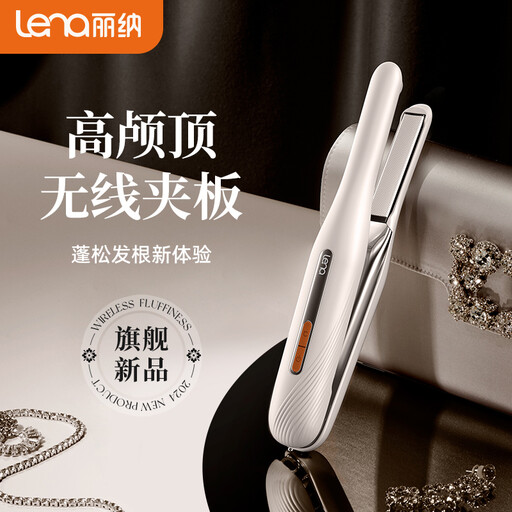
This cordless option has stated narrow, curved plates for consumers who want to work on small face-framing pieces and shape a bend.
 No image available
The stated 12 mm curved plates make this a choice to consider for small front sections when you want to shape as well as smooth them.
The product name states a weight of 150 g. If selectable heat matters to you, check the available settings before buying; also check its shut-off and cooling instructions for bedroom use.
Not necessarily: a mini or extra-slim plate is most relevant when a fringe, very short layers or work near the roots drives your choice. If you also style larger sections into bends or waves, compare rounded or curved models against the length of your shortest pieces.
Some models are designed for shaping as well as straightening; Cloud Nine, for example, describes curved plates on its Contouring Original Iron. The section size and your technique still matter, so check that the plate width is manageable for the front pieces you style.
For a mains-operated model, check for a UK three-pin plug and fuse, as Electrical Safety First advises. Keep the tool away from water and wet hands, and arrange a heat-resistant place for it to cool after you unplug it.
No. Automatic shut-off is an additional safeguard, not a replacement for unplugging a mains-operated straightener and allowing it to cool safely before storage.