
24/7 Customer Support

Free returns

Same-day & Next-day Delivery

Quality Guaranteed

Unlock Your Welcome Offers: FREE Delivery | Up to 80% OFF | Free 30-day JoyPlus trial
Download the APP
Combining your daily moisturiser and sun protection into one step seems like the ultimate skincare shortcut. Yet, the search for the right face moisturiser with SPF is often filled with disappointment. You might find a formula that feels great but offers questionable protection, or a high-SPF cream that leaves a greasy film and clogs your pores.
As the Joybuy Product Recommendation Officer, my role is to help you navigate these choices. Before you spend your money, let's look at the common pitfalls that can lead to a bad purchase and what really matters when selecting a daily SPF moisturiser.
To find a product that works for you, it's crucial to look past the marketing claims and focus on a few core parameters.
True daily protection means shielding your skin from both types of harmful UV rays.
Always choose a product labelled "broad-spectrum" to ensure you are getting a comprehensive daily SPF for face.
The SPF number indicates the level of protection against UVB rays. While no sunscreen blocks 100% of rays, the differences are significant:
The base formula is just as important as the SPF. Look for ingredients and textures that align with your skin's needs:
Based on these practical criteria, here are a few options tailored to different needs and lifestyles.
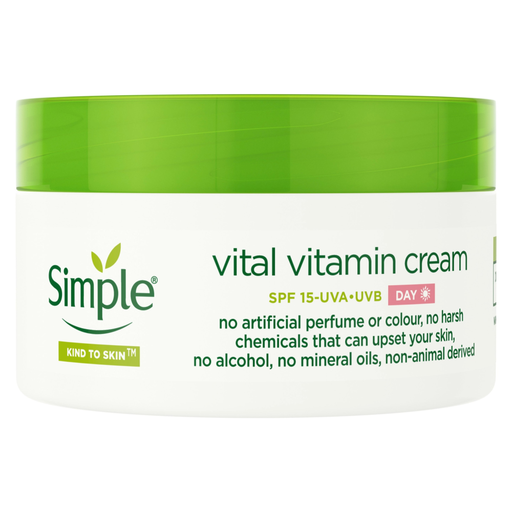
Why This Fits Their Persona: This is an excellent starting point for someone who wants to build a daily habit of sun protection without a high cost. It's perfect for incidental exposure during a typical UK workday and provides a reliable, gentle base for makeup.
It sidesteps the "one-size-fits-all" hydration trap by being specifically formulated for sensitive skin, free from harsh chemicals and perfumes that can cause irritation.
Its lightweight, non-greasy texture absorbs quickly, making it a comfortable daily choice. It contains Pro-Vitamin B5 and Vitamin E for gentle nourishment.
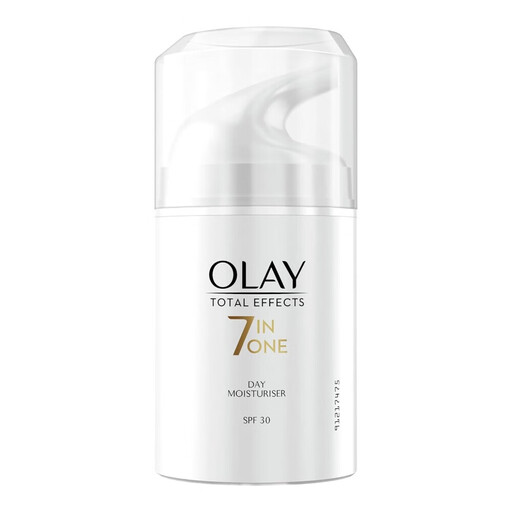
Why This Fits Their Persona: For those who want their daily moisturiser to work harder, this product combines a solid SPF 30 with ingredients that target multiple signs of ageing. It’s an efficient, all-in-one morning step for a preventative skincare routine.
It avoids the "partial protection" pitfall by offering broad-spectrum SPF 30, a significant step up from SPF 15. The non-greasy formula also counters the heavy-finish trap, absorbing well into the skin.
This is a 7-in-1 moisturiser supercharged with antioxidant vitamins like Niacinamide (B3), C and E, which help to even skin tone and enhance surface renewal.
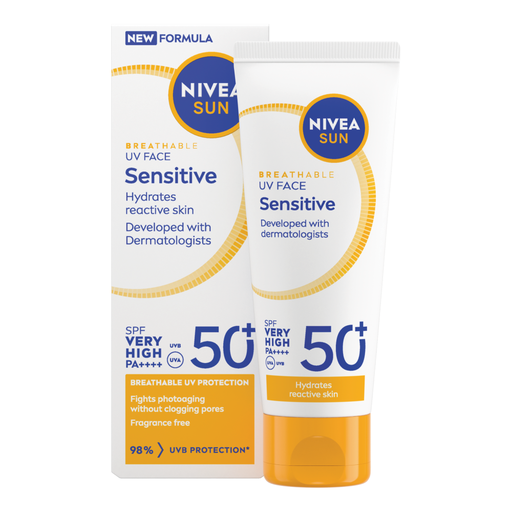
Why This Fits Their Persona: This is for the person who needs high-level protection without compromise. Whether you have naturally reactive skin, are prone to sun allergies, or simply spend a lot of time outdoors, this formula prioritises both safety and comfort.
It directly tackles all three pitfalls: it offers high SPF 50+ broad-spectrum protection, has a lightweight and 0% greasy formula and is specifically developed with dermatologists to soothe and shield sensitive skin.
The formula is non-comedogenic and designed to be breathable, helping to prevent sun-induced irritations. It's a vegan formula that leaves an invisible finish, ideal for wearing alone or under makeup.
We have compiled a complete, real-time list of products that fully satisfy these strict selection criteria and UK safety regulations.
For typical daily activities like commuting and working indoors, a broad-spectrum moisturiser with SPF 30 or higher, applied correctly, is generally sufficient. However, if you plan to be outdoors for a prolonged period (e.g., at the park, on holiday or gardening), it is advisable to reapply protection every two hours. In those cases, a dedicated sunscreen might be more practical for reapplication.
This is where many people fall short. To achieve the SPF level stated on the bottle, you need to apply a generous amount. A common guideline for the face and neck is about half a teaspoon. If you apply only a thin layer, you may be getting significantly less protection than you think.
You can, but it's not ideal. Sunscreen ingredients serve no purpose at night and, for some sensitive skin types, could be unnecessarily occlusive. Your skin's repair processes are most active while you sleep, so it's better to use a dedicated night cream formulated with restorative ingredients rather than protective ones.