
24/7 全天候客户支持

免费退货

当日/次日达

品质保障

开启新人专享福利: 全场免邮 | 低至 2 折 | 免费试用 30 天 JoyPlus 会员
下载 Joybuy
Choosing a face sunscreen SPF 50 is not simply a matter of picking the highest number on the bottle. The texture, UVA rating, application amount and compatibility with your skin can determine whether you use it consistently enough to receive the labelled protection.
For UK shoppers, a facial sunscreen SPF50+ should fit comfortably into everyday routines, whether you are commuting, walking the dog, working outdoors or applying make-up. Below, the Joybuy Product Recommendation Officer filters the practical differences between lightweight fluids, sensitive skin formulas, anti-dark-spot options and tinted products.
SPF primarily indicates protection against UVB, the radiation associated with sunburn. It does not, by itself, describe UVA protection. UVA contributes to photoageing and pigmentation, so look for clear UVA information, such as the UVA circle used on UK and European products, or a stated broad-spectrum claim supported by the packaging.
A product marked SPF50 or SPF50+ still needs generous, even application and regular reapplication. No sunscreen provides 100% protection, and sunscreen should be combined with shade, clothing, a hat and sunglasses.
A thick, greasy cream may be suitable for some dry skin types but difficult to wear beneath make-up or on oily skin. Conversely, a very fast-drying lightweight sunscreen fluid may contain alcohol denat. or mattifying powders that feel uncomfortable on reactive or dehydrated skin.
The ingredient list matters more than phrases such as “invisible” or “breathable”. Check whether the formula contains fragrance, alcohol, oils, silicones, humectants or mineral filters according to your personal preferences and skin tolerance.
Niacinamide, vitamin C derivatives, hyaluronic acid and dark-spot ingredients can add useful skincare features, but they do not remove the need to apply enough product. Claims such as “brightening” or “anti-ageing sunscreen” should be understood as supportive cosmetic positioning rather than a guaranteed treatment result.
For daily face sun protection, SPF50 or SPF50+ is a practical choice for people who want high labelled UVB protection. Check the packaging for UVA marking and follow the product’s instructions. The PA++++ notation seen on some products is an additional UVA-rating system commonly used in Asian markets; it should not be treated as a substitute for checking the UK product label.
Apply generously to the face, neck and other exposed areas. Many facial products suggest approximately two finger lengths for the face and neck, but always follow the directions printed on your product.
For oily or blemish-prone skin, look for terms such as non-comedogenic, non-greasy, matte or dry-touch. These descriptions indicate the intended formula characteristics, but individual reactions can still vary.
For dry or sensitive skin, consider fragrance-free options, moisturising ingredients such as glycerin or hyaluronic acid, and formulas specifically labelled for sensitive skin. Patch testing a new product can help identify irritation before applying it widely.
An invisible or sheer finish can be useful for daily wear and sunscreen under make-up. Tinted face sunscreen may provide a warmer or more even-looking finish, although shade suitability varies. Tinted products can also transfer to clothing, so allow the formula to settle and check the shade in natural light.
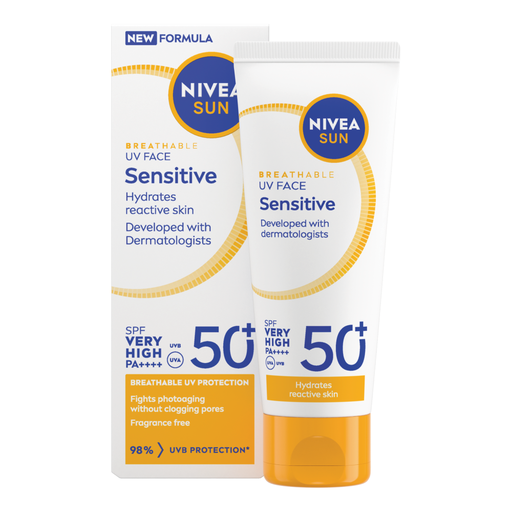
Why This Fits Their Persona: A straightforward daily option for shoppers seeking SPF50+, an invisible finish and a formula designed for sensitive or dry skin without a heavy feel.
The product description identifies it as non-comedogenic and non-greasy, helping address the common problem of abandoning a sunscreen because it feels too oily.
SPF50+, PA++++, 40ml tube, panthenol and glycerin in the listed formula, plus a finish intended for layering under make-up.
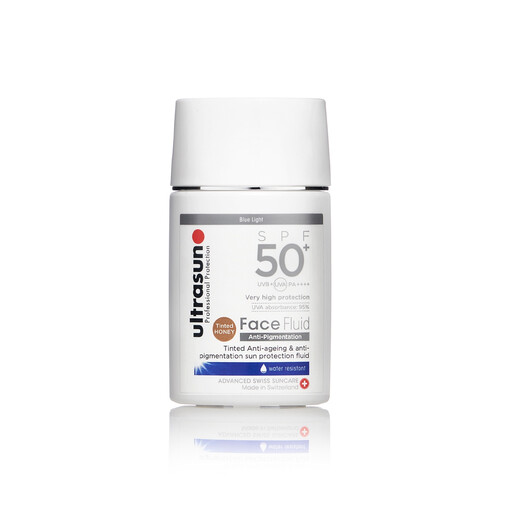
Why This Fits Their Persona: Suits shoppers who want a high-protection tinted sunscreen that can also act as a light primer for everyday errands and office wear.
The adaptive tint offers an alternative to a stark white cast, while the product directions make the required application amount clear.
SPF50+, stated UVA/UVB coverage, adaptive tint, non-comedogenic positioning and ingredients including glycerin and ectoin.
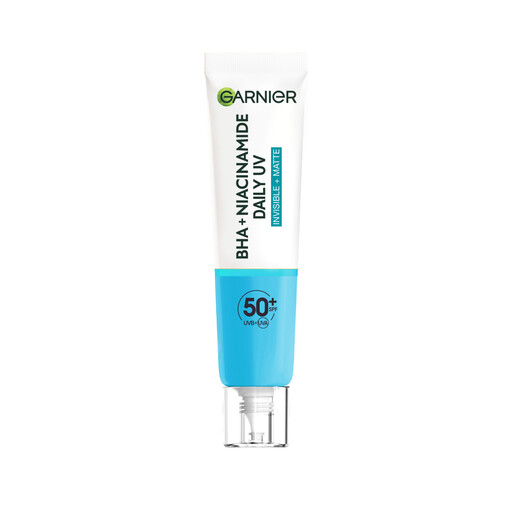
Why This Fits Their Persona: The lightweight daily fluid is aimed at shoppers who prefer a dry-touch, matte finish rather than a dewy or rich facial sunscreen.
Its fragrance-free, non-comedogenic and matte formula descriptions directly address concerns about shine, stickiness and pore congestion.
SPF50+, UVA, UVB and long-UVA protection stated in the product details, with niacinamide, salicylic acid and zinc PCA listed.
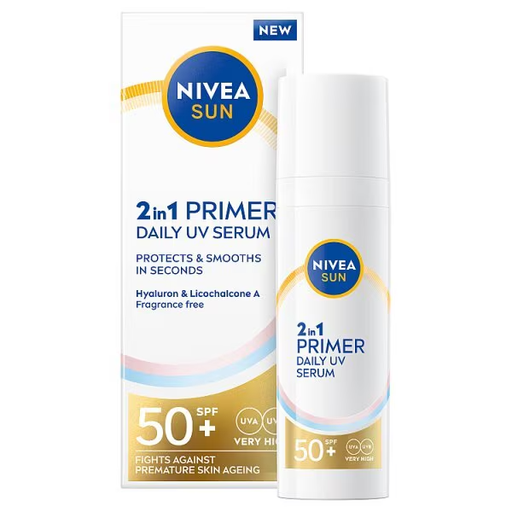
Why This Fits Their Persona: A compact choice for people who want to combine their daily SPF step with a smoother base before foundation or other make-up.
The product is specifically described as a 2-in-1 sunscreen and primer, reducing the need to layer a separate priming product.
SPF50+, UVA/UVB protection, fragrance-free positioning, hyaluronic acid in the ingredient list and a 30ml portable format.
We have compiled a complete, real-time list of products that fully satisfy these strict selection criteria and UK safety regulations.
Check the packaging for the current ingredients, expiry information and storage guidance. Stop use if irritation occurs and rinse thoroughly if the product enters the eyes.
It can be used daily when the product is suitable for your skin and applied as directed. UV exposure occurs beyond hot summer days, so daily face sun protection may be useful during commutes and outdoor activities. Sunscreen should not encourage prolonged exposure; use shade and protective clothing as well.
It depends on application frequency and the amount used. A 40ml tube may last several weeks with one facial application per day, but it will be used more quickly when covering the neck or reapplying outdoors. Under-using a product to make it last longer reduces the protection received.
Yes, many lightweight fluids and primer-style products are designed for sunscreen under make-up. Apply the full sunscreen amount first, let it settle, then use make-up without rubbing excessively. A tinted face sunscreen can provide an even-looking finish, but it should not be applied too sparingly simply to avoid altering your make-up shade.