
24/7 Customer Support

Free returns

Same-day & Next-day Delivery

Quality Guaranteed

Unlock Your Welcome Offers: FREE Delivery | Up to 80% OFF | Free 30-day JoyPlus trial
Download the APP
Choosing facial sunscreen SPF50 should be straightforward, but product pages often blur important differences. A glowing finish, “anti-ageing” wording or a moisturising texture may sound appealing, yet these features do not replace reliable UVA and UVB protection.
For UK shoppers, the practical choice depends on how much sun exposure you expect, your skin type, whether you wear make-up and how often you can reapply. The following guide highlights common buying traps, explains the specifications that matter and matches several products to different routines.
SPF mainly communicates protection against UVB, the rays associated with sunburn. It does not provide the full picture of UVA protection, which is linked with tanning and longer-term photoageing. Look for a clearly stated UVA rating, such as the UVA circle or PA rating, alongside SPF50 or SPF50+.
A product labelled only as a day moisturiser with SPF may not provide the same level of protection as a dedicated broad-spectrum sunscreen. For example, OLAY Total Effects 7-in-1 Day Moisturiser contains SPF15, so it may suit a lower-exposure routine but does not match the SPF50+ requirement for stronger daily protection.
Even a high-rated face sun cream cannot provide its labelled protection if only a small amount is used. Apply generously and evenly to the face, ears, neck and other exposed areas. A practical guide is approximately two finger-lengths of product for the face and neck, although packaging instructions should take priority.
Reapply after sweating, swimming or towel drying, and during prolonged outdoor exposure. Sunscreen should support, not replace, shade, clothing and a hat.
A lightweight face sunscreen may feel comfortable on oily skin but contain alcohol or fragrance that some reactive users prefer to avoid. Conversely, a rich moisturising sunscreen can be useful for dry skin but may feel too dewy under foundation.
Always check the current ingredient list on the packaging. If you have sensitive or allergy-prone skin, patch testing and professional advice may be sensible, particularly when trying a formula containing fragrance, alcohol or multiple active skincare ingredients.
For regular outdoor commuting, holidays and family activities, look for SPF50 or SPF50+ and clearly stated UVA protection. SPF50+ indicates a very high UVB protection category, but protection still depends on correct application and reapplication.
PA ratings are commonly used on Asian products, while UK and European products may show a UVA circle. PA++++ indicates a high UVA category, but shoppers should still follow the full directions for use.
Choose according to your routine:
If you cycle, exercise outdoors or take children swimming, check whether the product is water resistant and how long that claim applies. Water resistance does not mean permanent protection. Reapply after swimming, sweating or towelling, even when a product feels as though it remains on the skin.
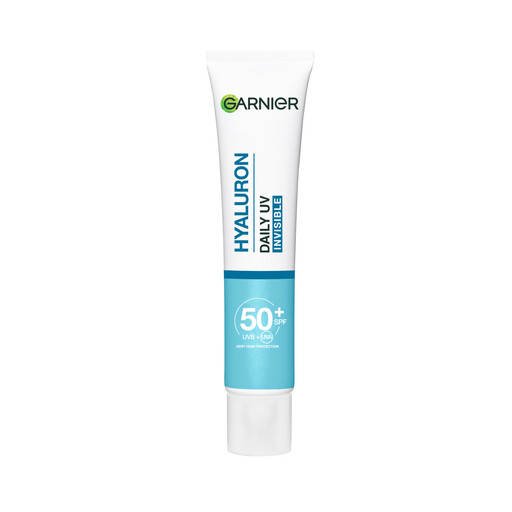
Why This Fits Their Persona: A practical everyday option for shoppers starting a consistent facial sunscreen routine, including office commuters and make-up users.
It combines SPF50+ with stated protection against UVB, UVA and long-UVA rays, rather than relying on a low-SPF moisturiser alone.
Contains hyaluronic acid, glycerin and ceramide NP; the listed finish is non-greasy and non-sticky.
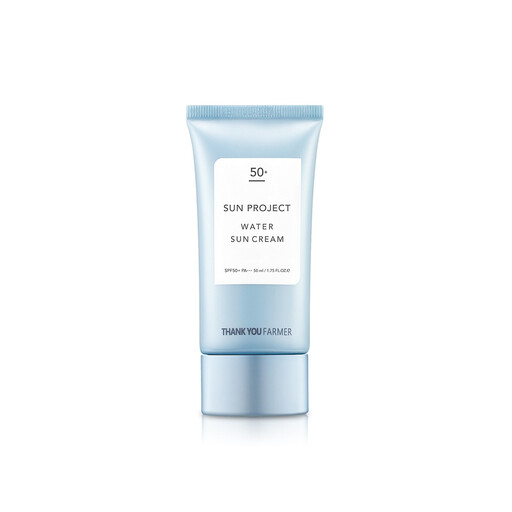
Why This Fits Their Persona: A match for dry or dehydrated-skin users who prefer a radiant finish and a sunscreen that can replace a separate morning cream.
Its listed SPF50+ and PA+++ ratings make both UVB and UVA performance easier to assess than vague “daily protection” wording.
Includes bamboo water, centella asiatica, sodium hyaluronate and botanical oils; the product description specifies a dewy, non-sticky finish.
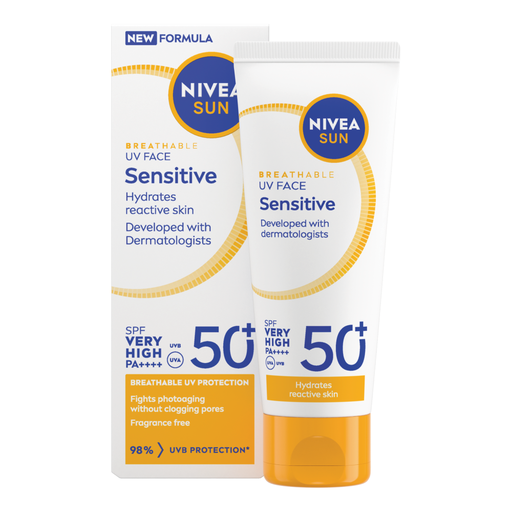
Why This Fits Their Persona: Suitable for shoppers prioritising a lightweight, non-comedogenic facial formula that can be worn beneath make-up.
The description specifies SPF50+, PA++++, a non-comedogenic formula and an invisible finish, addressing common concerns about heavy or visible face sun cream.
The listed formula includes glycerin, panthenol and liquorice root extract; the product is described as lightweight and non-greasy.
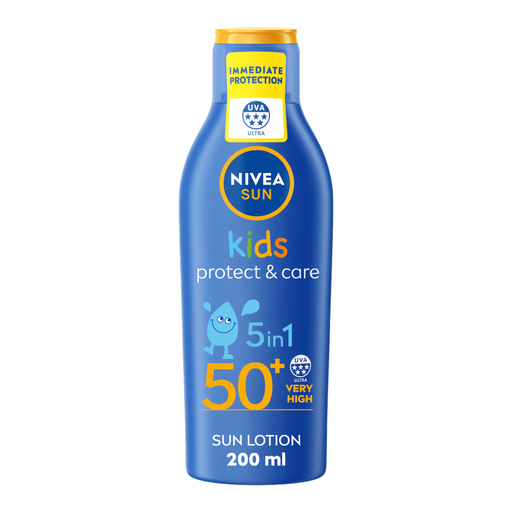
Why This Fits Their Persona: Designed for family days, holidays and active children aged three and above, where frequent application and a larger format are useful.
It is labelled SPF50+ and extra water resistant, helping address the practical demands of swimming and outdoor play, while still requiring reapplication.
The 200ml lotion includes panthenol and vitamins E and C; the listing states suitability for children aged three and above.
We have compiled a complete, real-time list of products that fully satisfy these strict selection criteria and UK safety regulations.
SPF50 is useful when you spend extended periods outdoors, travel abroad, have very fair or photosensitive skin, or want high daily protection against UVB. UV exposure can still occur during UK spring and summer, even when the weather feels cool. Use sunscreen alongside shade, clothing and sunglasses.
Yes. Lightweight fluids and invisible formulas are generally easier to layer under foundation. Apply the sunscreen as the final skincare step, allow it to settle and avoid reducing the amount simply to make make-up sit more smoothly. If pilling occurs, try using fewer skincare layers or allow each layer more time to absorb.