
24/7 Customer Support

Free returns

Same-day & Next-day Delivery

Quality Guaranteed

Unlock Your Welcome Offers: FREE Delivery | Up to 80% OFF | Free 30-day JoyPlus trial
Download the APP
Facial tissues are a small household purchase, but the wrong pack can create avoidable waste. Thin sheets may tear during use, scented paper can be unsuitable for some users, and an attractive box may contain fewer tissues than expected. UK households also need to consider storage, portability and responsible disposal, particularly during cold and flu season or busy family routines.
As the Joybuy Product Recommendation Officer, I use a straightforward approach: check the specification rather than relying on packaging language. The following guide explains the key differences between soft facial tissues, boxed tissues, pocket tissues and bulk facial tissues, then matches selected products to practical household needs.
A tissue can feel soft when dry but still tear easily when wiping moisture or cleaning a small spill. Ply count, sheet size and material provide more useful information than phrases such as “luxurious” or “premium”. A 3-ply tissue generally has more layers than a 2-ply option, but the finished feel and strength still depend on the paper construction.
A large box or multipack does not automatically provide better value. Compare the total number of sheets, number of packs and sheet dimensions. For example, a family pack with 24 smaller packs may be more convenient for distributing around the home, while a single mega box may reduce packaging per sheet.
Floral, cologne and balsam tissues are designed for particular preferences, but they are not suitable for everyone. If you are shopping for tissues for sensitive skin, check whether the product contains fragrance, lotion, balsam or added botanical ingredients. Fragrance-free paper may be a simpler option for nurseries, offices and households where several people share one pack.
2-ply tissues can be suitable for light daily wiping and general household use. 3-ply tissues offer an additional layer and may feel more substantial for frequent use, nose blowing or small clean-ups. Some pocket tissues use 4-ply construction to provide a compact but thicker format.
Sheet dimensions also affect convenience. A larger sheet can offer more coverage, while a smaller sheet may be easier to carry. Always check the stated size where available, particularly if you intend to use tissues for damp wiping or light household tasks.
Common materials include virgin wood pulp, bamboo pulp, cotton and plant-based cellulose. These materials have different textures and environmental considerations. If sustainability is important, look for recognised information such as FSC-certified or FSC Mix paper, rather than relying only on terms such as “natural” or “green”.
An FSC certification relates to sourcing standards for forest-based materials. It does not mean that every part of the packaging is recyclable or that the product has no environmental impact, so check the packaging instructions and your local council’s recycling guidance.
Balsam tissues may contain ingredients such as aloe vera, vitamin E or other emollient components. These can appeal to people who prefer a lotion-style feel, but users with known sensitivities should read the ingredient information carefully. Fragranced facial tissues, including floral or cologne varieties, may not suit fragrance-sensitive households.
Used facial tissues should be placed in a household waste bin unless the packaging specifically confirms another disposal route. Do not flush facial tissues, as they are not designed in the same way as toilet tissue and may contribute to blockages.
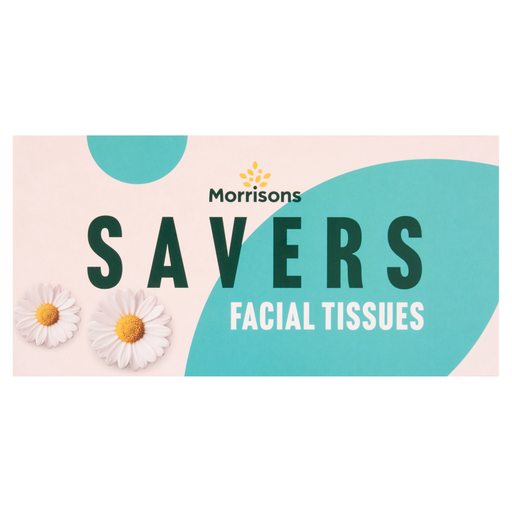
Why This Fits Their Persona: A 180-sheet, two-pack format suits students, first-time renters and smaller UK households that want a practical supply for everyday use.
The stated sheet count makes it easier to compare value than judging the size of the box alone. It is also listed as fragrance-free.
Two-ply paper, FSC-certified material and a rectangular box suitable for home, office or car storage.
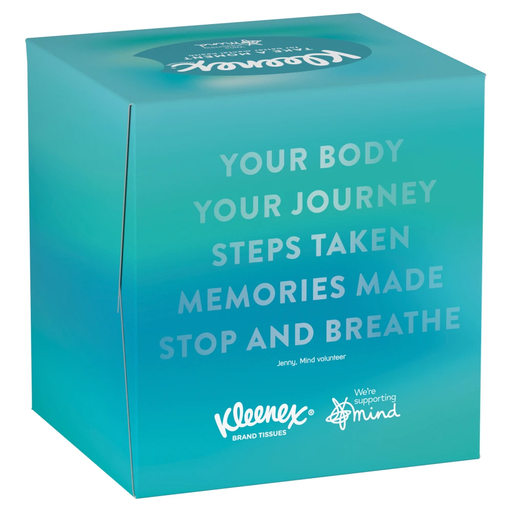
Why This Fits Their Persona: The cube format works well in a guest room, home office or living space where presentation matters alongside everyday convenience.
The listing specifies a 48-sheet, 3-ply cube, allowing the decorative design to be assessed alongside practical details.
Three-ply construction and FSC-certified paper; the product listing also states that a donation is made for every pack sold.
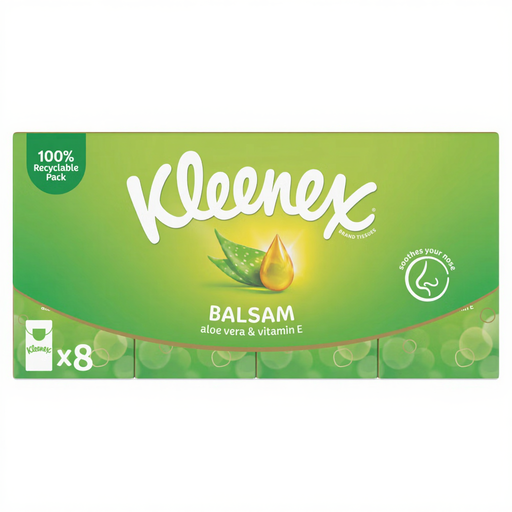
Why This Fits Their Persona: Eight compact pocket packs are easy to divide between a handbag, coat pocket, work bag and car, making them practical for UK commutes and school runs.
The pack format is clearly stated, while the 3-ply construction provides more information than a softness claim alone. Check the balsam ingredients if you have sensitivities.
Portable pocket format and three-ply tissues with a balsam formulation for users who prefer that texture.
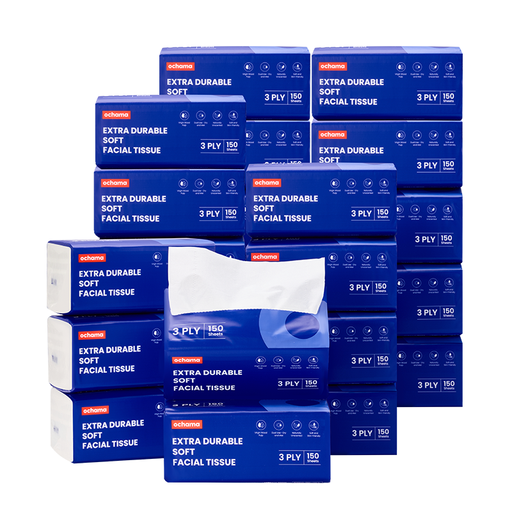
Why This Fits Their Persona: Families, shared houses and offices can benefit from a high sheet count that supports long-term household storage.
The stated total of 3,600 sheets and 24 packs makes bulk value easier to calculate. Store packs in a dry cupboard to prevent moisture damage.
Three-ply virgin wood pulp, 150 sheets per pack and FSC-certified material.
We have compiled a complete, real-time list of products that fully satisfy these strict selection criteria and UK safety regulations.
Usually, boxed tissues provide more sheets per unit and are practical for fixed locations such as bedrooms, kitchens and offices. Pocket tissues trade some capacity for portability. Compare the price per sheet, not simply the price per box or pack.
The shelf life varies by product and should be checked on the packaging. Store unopened tissues in a cool, dry place, away from humidity and direct sunlight. Damp storage can affect softness, strength and cleanliness.
Look for products described as fragrance-free, without added lotions or unnecessary ingredients, and check the full product information. Balsam tissues may suit some users but contain additional components. If irritation occurs, stop using the product and follow the label guidance.