
24/7 Customer Support

Free returns

Same-day & Next-day Delivery

Quality Guaranteed

Unlock Your Welcome Offers: FREE Delivery | Up to 80% OFF | Free 30-day JoyPlus trial
Download the APP
Facial tissues are a household essential, but choosing the right pack is not always straightforward. A low price may hide a small sheet count, while a “premium” label may refer only to packaging or added fragrance. For UK households, the practical choice depends on how the tissues will be used: daily wiping, cold-season nose care, baby care, make-up removal, commuting or general cleaning.
This guide explains the main buying pitfalls, the specifications worth checking and our top recommendations for different household needs.
A multi-pack can look economical while containing fewer sheets per box. Always check the total sheet count, number of packs and sheet size. For example, 2000 sheets across 20 packs gives a different cost-per-sheet calculation from a four-pack containing 180 sheets per box.
For regular household use, bulk facial tissues can reduce how often you need to reorder. However, large quantities need suitable dry storage, particularly in kitchens, bathrooms or utility rooms where moisture can affect paper quality.
Ply count describes the number of tissue layers, not the complete user experience. 3-ply facial tissues can offer a practical balance between softness and strength, while 4-ply options may feel thicker but occupy more storage space.
Sheet size, embossing, material and whether the tissue includes lotion or balsam also affect how it feels in use. A compact pocket tissue may be convenient but smaller than a standard boxed tissue.
Terms such as “soft”, “cotton”, “aloe vera” and “sensitive skin” should be checked against the ingredients and construction details. Fragrance, lotion and balsam may be useful preferences for some users, but they are not suitable for everyone. If you are prone to discomfort from scented products, consider fragrance-free facial tissues and check the packaging carefully.
For babies or frequent wiping, look for clearly stated material information and avoid making medical assumptions based on marketing language. Stop using any tissue that causes irritation and seek appropriate advice if skin concerns persist.
Traditional tissues are commonly made from wood pulp, while alternatives include cotton facial tissues, bamboo pulp and plant-based cellulose or viscose fibres.
Some products list certifications such as FSC, OEKO-TEX STANDARD 100, ISEGA or HALAL. These certifications relate to specific sourcing, testing or production criteria, so check what the individual mark covers rather than treating it as a general performance guarantee.
Ply is useful for comparing thickness, but it should be considered alongside dimensions. A 200 × 200 mm disposable face towel offers more coverage than a small travel tissue, making it more practical for wet cleansing or wiping hands.
If you intend to use tissues with water, select products specifically described as wet and dry face towels or dry-and-wet dual-use. Standard paper facial tissues are generally designed for dry use and may break apart when wet.
Choose the format around your routine:
Used tissues and face towels should go into a general waste bin unless the packaging specifically states otherwise. Do not flush them down the toilet, as they may contribute to blockages.
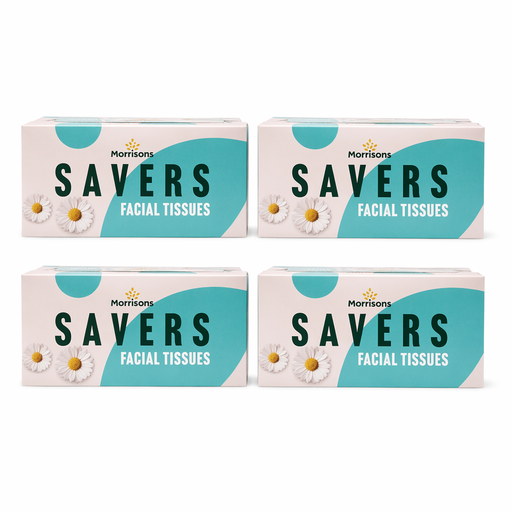
Why This Fits Their Persona: A straightforward option for UK shoppers who want standard boxed tissues for everyday household use without added fragrance.
The listing specifies 180 sheets per pack, 2-ply construction and no added fragrance, making the pack contents easier to compare.
Four compact boxes; FSC-certified paper is listed; suitable for home, office or car storage.
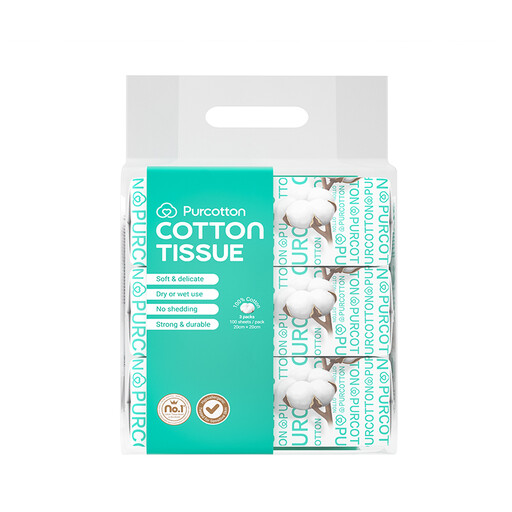
Why This Fits Their Persona: Suitable for shoppers seeking cotton facial tissues that can be used dry or moistened with water at home or while travelling.
The material is stated as 100% natural cotton, with dry-and-wet use clearly specified rather than implied by soft-touch wording.
300 sheets across three packs; listed as free from fragrance, alcohol, brighteners and softeners.
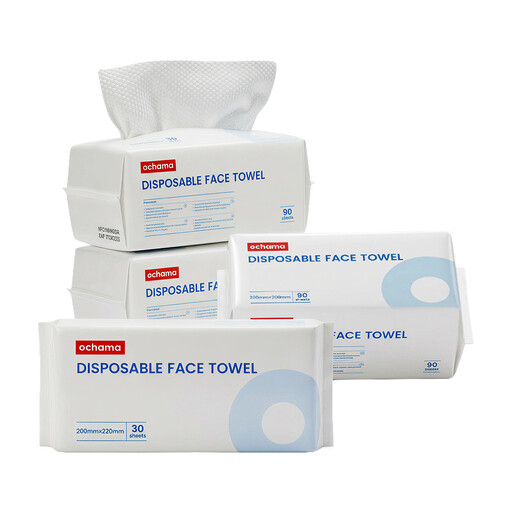
Why This Fits Their Persona: A practical choice for frequent cleansing, make-up removal, hand drying and general wiping where a larger wet-and-dry sheet is useful.
The product is explicitly designed for wet or dry use and states a 200 × 200 mm sheet size, avoiding confusion with small facial tissues.
300 sheets in three packs; pearl-textured viscose/lyocell blended fibres; single-use format requires no laundering.
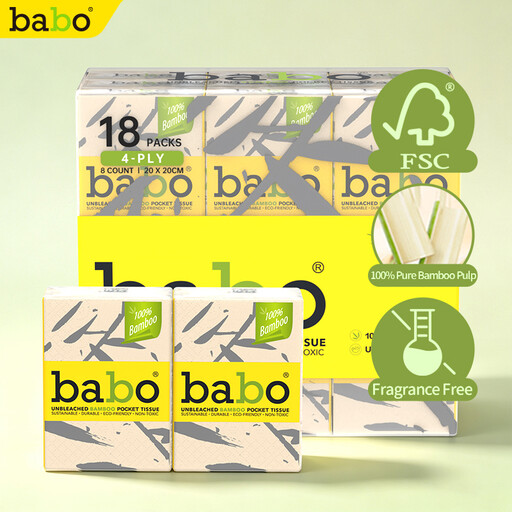
Why This Fits Their Persona: The mini packs suit commuters, school bags, outdoor activities and anyone who prefers several small travel tissues rather than one larger pack.
The listing gives the 4-ply format, 200 × 200 mm size, eight sheets per mini pack and 18 packs per bundle.
Unbleached and fluorescent-free construction is specified; the product is described as wet-strong and lint-free.
We have compiled a complete, real-time list of products that fully satisfy these strict selection criteria and UK safety regulations.
Calculate the approximate cost per sheet before ordering, then consider whether every sheet needs to be a premium lotion or cotton format. Many households use standard tissues for quick everyday tasks and reserve wet-and-dry face towels for cleansing or make-up removal.
Store unopened packs in a cool, dry cupboard. Keep pocket packs sealed inside a bag or drawer, and keep products away from direct sunlight and moisture. For baby tissues, check the stated ingredients, avoid flushing them and keep packaging out of reach of young children.
They can be a practical middle option when you want more layering than 2-ply without automatically choosing a thicker 4-ply tissue. Compare the sheet size, material, texture and total price as well as the ply count.
They can be useful for travel, post-gym cleansing, make-up removal or situations where you prefer a single-use item. They create more waste than a washable cloth, so dispose of them in a bin and check whether the material has any specific recycling guidance.
Follow the product label, but keep tissues sealed and dry to preserve their condition. Avoid storing them in damp bathrooms or beside sinks. If a pack becomes wet, damaged or develops an unusual smell, replace it rather than using it on the face.