
24/7 Customer Support

Free returns

Same-day & Next-day Delivery

Quality Guaranteed

Unlock Your Welcome Offers: FREE Delivery | Up to 80% OFF | Free 30-day JoyPlus trial
Download the APP
Finding a facial sunscreen that feels comfortable every day can be harder than checking the SPF number. Some products leave a visible cast, pill beneath foundation or feel greasy by lunchtime. Others are marketed as moisturisers with sun protection, but their lower SPF may not suit extended outdoor exposure.
The practical approach is to look beyond promotional wording and compare the protection rating, UVA coverage, finish, formula type and suitability for your skin.
SPF mainly indicates protection against UVB, the radiation associated with sunburn. For daily facial sun protection, also check for UVA protection, ideally shown by the UK UVA circle or another clearly stated UVA rating. Broad-spectrum UVA and UVB protection is important because UVA contributes to long-term skin changes, including uneven tone and visible signs of ageing.
An SPF15 or SPF20 hydrating day cream may be convenient for low-exposure days, but it is not equivalent to an SPF50 face sunscreen for commuting, holidays or prolonged outdoor activity.
A heavy or sticky formula may discourage generous application. Similarly, some mineral face sunscreen formulas can leave a chalky residue, while certain fluid formulas may contain alcohol or fragrance that does not suit every person with sensitive skin.
A non-greasy sunscreen with a finish you can tolerate is usually a more practical choice than a higher-rated product that remains unused in a bathroom cabinet.
Ingredients such as niacinamide, hyaluronic acid, vitamin C derivatives and botanical extracts can support a pleasant skincare routine, but they do not replace the stated SPF and UVA rating. Claims about anti-ageing or brightening should be treated as additional features rather than guarantees of a medical or cosmetic result.
For regular outdoor exposure, look for SPF50 or SPF50+ and clearly stated UVA protection. Apply enough product to cover the face, ears and neck. Using a small amount to avoid shine can significantly reduce the protection indicated on the packaging.
Reapply after swimming, sweating or towelling, and during lengthy outdoor periods. Water resistance, where stated, does not mean that reapplication is unnecessary.
A mineral face sunscreen generally uses zinc oxide or titanium dioxide to help protect the skin. It may appeal to shoppers who prefer a physical filter, although finish and spreadability vary between formulas.
Other sunscreens use organic UV filters, or a combination of filter types. Compare the full ingredient list if you are sensitive to fragrance, alcohol denat., essential oils or particular preservatives. A patch test is sensible when trying a new formula, especially if you have reactive skin.
If you want sunscreen under make-up, allow moisturiser and serum to settle first. Apply sunscreen as the final morning skincare step, then wait briefly before foundation. Look for descriptions such as invisible finish, lightweight fluid, non-chalky or non-comedogenic sunscreen, but remember that skin can react differently to the same formula.
Those with dry skin may prefer glycerin, panthenol, squalane or hyaluronic acid. Oily or acne-prone shoppers may favour a fluid, gel or oil-free texture. Fragrance-free options can be worth considering for sensitive skin.
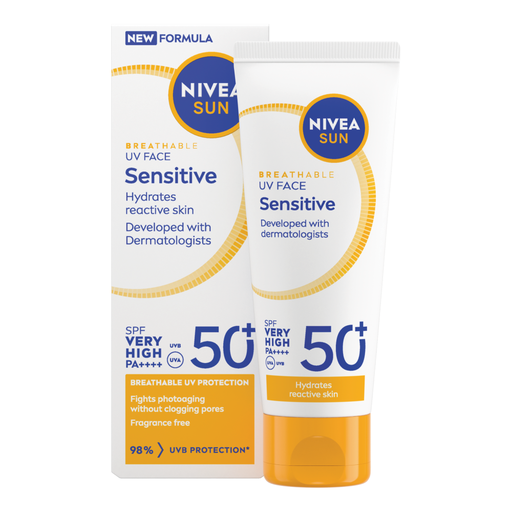
Why This Fits Their Persona: A compact SPF50+ facial option for everyday commuting, errands and make-up routines when you want a familiar cream texture.
Its listed SPF50+, PA++++ rating and invisible finish avoid relying on a low-SPF day moisturiser for stronger daily coverage.
Lightweight, non-comedogenic formula; contains glycerin and panthenol.
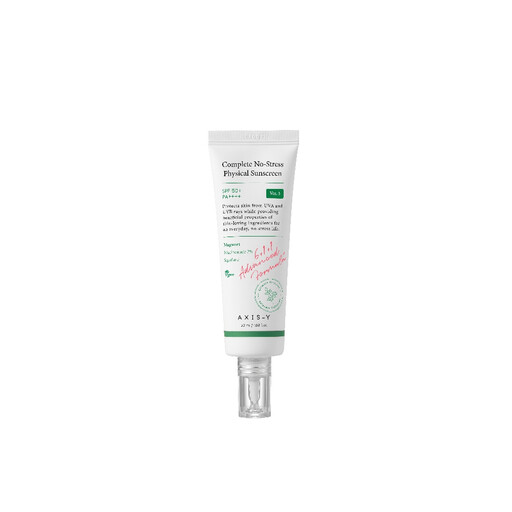
Why This Fits Their Persona: Suitable for shoppers seeking a fragrance-free, vegan-friendly mineral formula that can sit beneath daily make-up.
The zinc oxide formula is described as non-chalky, addressing the white-residue problem associated with some mineral sunscreens.
Zinc oxide SPF50 PA++++; includes niacinamide, squalane and sodium hyaluronate.
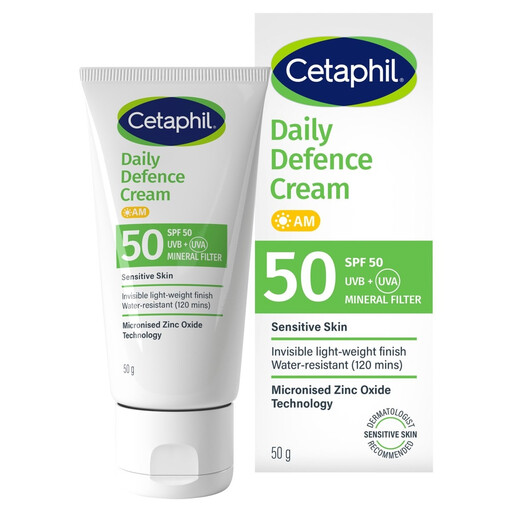
Why This Fits Their Persona: A practical choice for people spending more time outdoors who want a mineral SPF50 cream with stated water resistance.
The product information states 120 minutes of water resistance, while also directing users to reapply after perspiring, swimming or towelling.
Micronised zinc oxide; fragrance-free and designed not to clog pores.
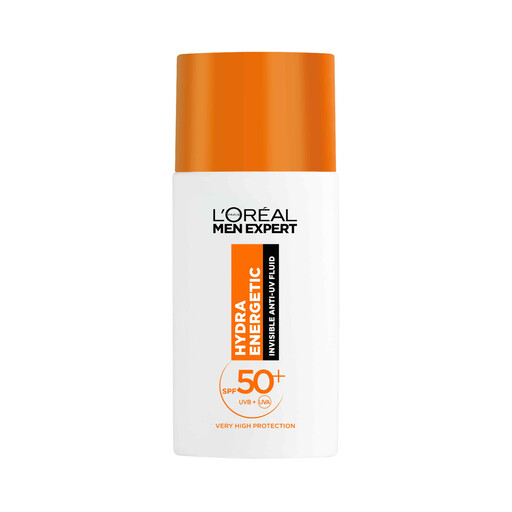
Why This Fits Their Persona: The fluid format suits office commuters and anyone who prefers a low-profile sunscreen that layers beneath clothing or make-up.
Its stated invisible finish avoids the white-cast issue, while the directions specify shaking before application to distribute the fluid.
SPF50+ fluid texture; contains glycerin, sodium hyaluronate and an ascorbyl glucoside vitamin C derivative.
If irritation, rash, persistent stinging or swelling develops, stop using the product and seek suitable medical advice. Do not apply sunscreen to broken or inflamed skin unless advised by a healthcare professional.
We have compiled a complete, real-time list of products that fully satisfy these strict selection criteria and UK safety regulations.
Yes, SPF50 or SPF50+ can be used daily when you want a higher level of protection, particularly during brighter weather, outdoor work, commuting or travel. Choose a texture you can apply generously and reapply when needed.
Some formulas include humectants and emollients and may work as a combined moisturiser and sunscreen. However, dry skin may still need a separate moisturiser underneath. A hydrating day cream with SPF should still be checked for its SPF and UVA rating rather than assumed to offer high protection.
Follow the period-after-opening symbol and storage instructions on the packaging. Heat, direct sunlight and contamination can affect product quality. Keep the cap closed, store it in a cool, dry place and replace it according to the label or if its colour, smell or texture changes.