Hosts with a Fairtrade requirement
Choose a chai with a product-specific Fairtrade claim, then check the current pack’s FAIRTRADE Mark. The Fairtrade Foundation distinguishes that mark from other sourcing claims.


For a book club that specifically wants Fairtrade chai, Clipper Organic & Fairtrade Indian Chai is a clear starting point: Clipper labels that product Fairtrade and lists 20 bags. Sainsbury’s Taste the Difference Chai lists 20 servings, but its product description does not itself establish a Fairtrade claim; check the current pack for the FAIRTRADE Mark before choosing it for a Fairtrade-only gathering.
Choose a chai with a product-specific Fairtrade claim, then check the current pack’s FAIRTRADE Mark. The Fairtrade Foundation distinguishes that mark from other sourcing claims.
Compare the blend and its brewing instructions before deciding how to serve it. A black-tea chai and a herbal chai are different choices, even when both are labelled chai.
Clipper lists 20 bags for its Organic & Fairtrade Indian Chai, while Sainsbury’s lists 20 servings for Taste the Difference Chai. Allow for second cups when deciding how many packs to buy.
Settle the certification requirement first, then use the pack count, ingredients and brewing directions to plan what you will serve.
| Priority | What to check | Your needs |
|---|---|---|
| Fairtrade claim | Look for a claim about the specific chai and check the current pack’s mark. According to the Fairtrade Foundation, the classic black-background FAIRTRADE Mark means that ingredients capable of Fairtrade certification are Fairtrade-certified. | If Fairtrade is essential for our book club, I need more than a general ethical-sourcing statement. |
| Servings | Compare the stated bag or serving count with expected attendance. Clipper lists 20 bags for its Indian Chai; Sainsbury’s lists 20 servings for Taste the Difference Chai. | With a group close to 20, I would allow for guests who want another cup. |
| Blend | Read the ingredients rather than assuming all chai tastes alike. Clipper lists cinnamon, orange peel, cloves and fennel alongside black tea; Sainsbury’s lists ginger, cassia, cardamom and black pepper alongside black tea. | I want to choose a spice combination the group is likely to enjoy, rather than relying on the word “chai” alone. |
| Serving method | Check the directions on the chosen pack, particularly if you plan to add milk or prepare several cups together. Twinings directs drinkers to brew its Classic Chai in freshly boiled water for 2–3 minutes. | If guests prefer different additions, I would make it easy for them to finish their own cups. |
Fair for Life certification, Rainforest Alliance certification and Ethical Tea Partnership involvement do not, by themselves, establish a FAIRTRADE Mark claim for a particular chai.
If Fairtrade is a firm requirement, check the claim for the specific product and inspect its current pack.
A 20-bag or 20-serving pack covers 20 people only if each has one serving.
Count guests and allow for likely refills before deciding how many packs to buy.
A group near 20 may need another pack if guests want second cups.
Clipper’s Indian Chai lists orange peel and fennel, while Sainsbury’s Taste the Difference Chai lists ginger, cassia, cardamom and black pepper. Preparation directions can differ too.
Read the ingredients and follow the directions for the blend you choose; let guests add milk separately if preferences differ.
The current pack is the relevant place to check the certification mark, ingredients and allergen information for the chai you will serve.
Read its label again before serving, especially when guests have dietary restrictions.
These distinctions concern the named chai products or sourcing statements, not every tea a brand makes.
Clipper describes its Organic Indian Chai as Fairtrade and lists a 20-bag pack.
Sainsbury’s says all its by Sainsbury’s black tea is Fairtrade; its Taste the Difference Chai lists 20 servings and black tea among its ingredients.
Pukka says its teas are Fair for Life certified. Its Original Chai lists cardamom, liquorice, ginger and cinnamon.
Tesco lists 50 bags for its Finest Chai and identifies the black tea in that blend as Rainforest Alliance Certified.
Twinings Classic Chai comes in 20 envelopes and lists black tea, cloves and cardamom.
teapigs describes sourcing from Rainforest Alliance and Ethical Tea Partnership certified tea estates.
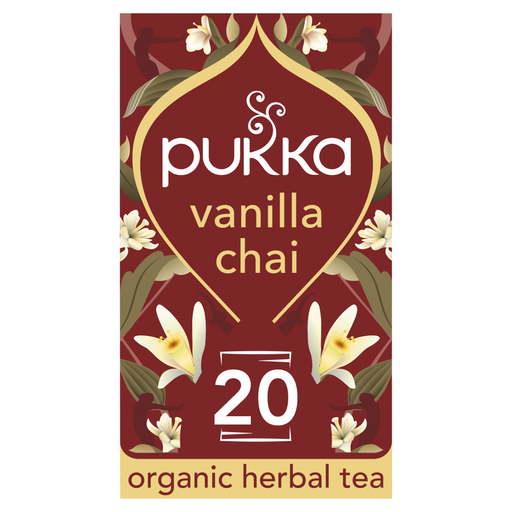
This herbal chai is an option for a book club that does not require black-tea chai. If Fairtrade certification is essential, check the current pack’s FAIRTRADE Mark before choosing it.
 No image available
The 20 individual sachets help with one-cup-per-guest planning. This is herbal chai rather than black-tea chai; check the current pack for the FAIRTRADE Mark if that certification is required for your gathering.
No. Fair for Life, Rainforest Alliance and Ethical Tea Partnership claims are distinct from a FAIRTRADE Mark claim. For a Fairtrade-specific purchase, check the mark and any ingredient-specific wording on the current pack; the Fairtrade Foundation explains that its classic black-background mark covers ingredients capable of Fairtrade certification.
Allow one bag or stated serving per guest, plus any likely refills. Clipper Organic & Fairtrade Indian Chai lists 20 bags and Sainsbury’s Taste the Difference Chai lists 20 servings, so one of those packs leaves no refill allowance for 20 guests.
Yes, if it suits the blend and your guests’ preferences. Follow the chosen pack’s brewing directions and offer milk separately when people want different cups; Twinings directs drinkers to brew Classic Chai in water for 2–3 minutes.
Read the ingredients and allergen information on the current pack before serving. Check each product you plan to use, including any milk or plant-based alternative offered alongside the chai.