Who might choose each chai?
The deciding question is whether you require the FAIRTRADE Mark, accept a different certification scheme, or are choosing primarily for how the chai will be served.
Shoppers looking for Fairtrade-labelled chai
Clipper Tea Shop describes its Organic Indian Chai as Organic & Fairtrade. It is a black-tea blend with cinnamon, orange peel, cloves and fennel, so check that those ingredients suit the breakfast drink you have in mind.
Shoppers open to Fair for Life
Pukka says all its teas are certified to the Fair for Life standard. That may meet a preference for a documented ethical-trade scheme, but it is not the FAIRTRADE Mark; check the current pack if a particular label is a condition of purchase.
People serving chai with milk
Twinings leaves milk to the drinker’s preference for Classic Chai, while Teapigs describes its black chai as suitable with plenty of milk. Check the individual product’s certification separately if that also matters to you.
What should you check before buying?
Start with the certification you require, then check the tea base, ingredients and serving directions on the exact chai you plan to buy.
Fairtrade-labelled black chai
Choose when: The chai itself needs explicit Fairtrade wording; Clipper Tea Shop describes its Organic Indian Chai as Organic & Fairtrade.
Bear in mind: Its black-tea blend includes orange peel and fennel alongside cinnamon and cloves.
Fair for Life chai
Choose when: Pukka’s stated Fair for Life certification meets your requirement and you want one of its chai blends.
Bear in mind: Fair for Life is not the FAIRTRADE Mark, and Pukka’s Vanilla Chai ingredient description includes liquorice.
Black chai for serving with milk
Choose when: Milk-serving guidance is the main consideration; Twinings Classic Chai and Teapigs Chai both address serving with milk.
Bear in mind: Those product descriptions do not establish a FAIRTRADE Mark for either specific chai, so check the pack if certification is required.
| Priority |
What to check |
Your needs |
| Product certification |
Look for Fairtrade wording or a certification mark on the exact chai. Clipper Tea Shop calls its Indian Chai Organic & Fairtrade; Pukka describes Fair for Life certification for its teas. |
I want the tea I serve at breakfast to carry the particular certification I have chosen, rather than relying on the brand’s other products. |
| Meaning of the mark |
The Fairtrade Foundation says the classic FAIRTRADE Mark covers all ingredients that can be Fairtrade certified. Its Fairtrade Sourced Ingredient Mark identifies a named Fairtrade-sourced ingredient instead. |
If a Fairtrade claim is central to my choice, I need to know whether it applies to the certifiable ingredients or to one named ingredient. |
| Serving with milk |
Read the maker’s serving directions. Twinings suggests infusing Classic Chai for 2–3 minutes and leaves milk optional; Teapigs describes its chai as suitable with plenty of milk. |
I’m preparing chai alongside a continental breakfast and want to know how the particular blend is intended to be served. |
| Tea base and ingredients |
Check for black tea or a herbal designation, then read the full ingredient list. Clipper’s blend includes orange peel and fennel; Pukka’s Vanilla Chai description includes liquorice. |
A herbal tea base, liquorice or a particular mix of spices could change which chai I choose. |
Relevant brand references
These product descriptions help distinguish certification and serving styles; they do not mean that every chai from a brand has the same ingredients or label.
Clipper
Clipper Tea Shop describes its Organic Indian Chai Black Tea as Organic & Fairtrade.
- The 20-bag product description names black tea, cinnamon, orange peel, cloves and fennel seed.
- It is a black-tea blend; its orange peel and fennel are worth noting if you have a particular spice profile in mind.
Pukka
Pukka says all its teas are certified to the Fair for Life standard, which is distinct from the FAIRTRADE Mark.
- Pukka describes Original Chai as suitable with or without milk and sells Vanilla Chai as an organic herbal blend.
- The published descriptions of both chais include liquorice; check the current ingredients and certification wording for the pack you choose.
Twinings
Twinings describes Classic Chai as a spiced black tea and leaves the addition of milk to the drinker.
- Its product description lists ginger, cinnamon, cardamom and cloves, with a suggested infusion time of 2–3 minutes.
- Twinings’ separate Organic & Fairtrade collection does not establish that Classic Chai itself carries that certification.
Teapigs
Teapigs describes its chai as an Assam black-tea blend that can be served with plenty of milk.
- The published ingredient list includes cinnamon, ginger, cardamom pods and vanilla.
- Check the individual chai pack if a FAIRTRADE Mark is required; the chai description does not establish one.
Joybuy chai options
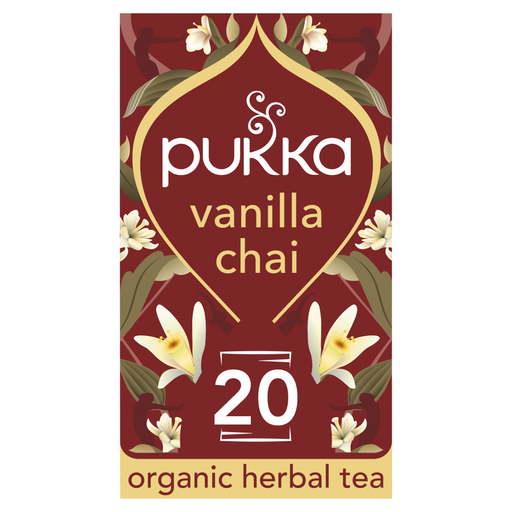
This herbal Pukka chai is an option for a continental-breakfast drink without a black-tea base. Its stated Fair for Life route is different from a product carrying the FAIRTRADE Mark.
 No image available
Pukka Vanilla Chai 20 Herbal Tea Sachets 40g
This herbal chai offers a spiced breakfast drink without a black-tea base. Pukka Herbs UK describes Vanilla Chai with vanilla, cinnamon, ginger, cardamom, fennel and liquorice. Pukka says its teas are Fair for Life certified; if that label is essential, check the wording on the current pack.
Joybuy
Frequently asked questions
How can I tell whether a chai is Fairtrade?
Check the individual chai pack for an explicit claim and the relevant mark. The Fairtrade Foundation says its classic FAIRTRADE Mark covers all ingredients that can be Fairtrade certified, while the Fairtrade Sourced Ingredient Mark identifies a named Fairtrade-sourced ingredient. A brand’s other certified teas do not establish the status of the chai in your hand.
Is Pukka’s Fair for Life certification the FAIRTRADE Mark?
No. Pukka says its teas carry Fair for Life certification, which is a different label from the FAIRTRADE Mark. If your buying requirement names one of those schemes, check the wording on the particular pack rather than treating the labels as interchangeable.
Which chai can I serve with milk at breakfast?
Twinings leaves milk optional for Classic Chai, and Teapigs describes its black chai as suitable with plenty of milk. Pukka also describes Original Chai as suitable with or without milk. Choose using the particular blend’s ingredients and serving directions, and check its certification separately if that matters.
Does herbal chai mean caffeine-free?
Not by itself. Pukka Vanilla Chai is described as herbal, while Clipper Indian Chai, Twinings Classic Chai and Teapigs Chai are black-tea products; Teapigs explicitly says its chai contains caffeine. If avoiding caffeine is essential, check the current product label for a clear statement rather than relying only on the word ‘herbal’.
Which ingredients should I check before choosing a chai?
Read the full ingredient list on the current pack, particularly for ingredients you avoid. Pukka’s Vanilla Chai description includes liquorice, and Clipper’s Indian Chai includes orange peel and fennel seed. The word ‘chai’ alone does not tell you which spices a blend contains.


