Who is choosing the chai?
The useful starting point is what you intend to tell guests about the tea, and what they will need to prepare and identify it for themselves.
Hosts making an ethical-sourcing claim
If your welcome tray says “Fairtrade chai”, check that the exact product carries that claim. Clipper Tea Shop identifies its Organic Indian Chai as Fairtrade; Pukka Herbs UK describes its teas under the distinct Fair for Life scheme.
Hosts serving mixed groups
Portioned bags or sachets let guests make individual cups without measuring loose tea. Keep the brewing instructions and ingredient list accessible so each guest can decide whether the blend suits them.
Hosts providing food information
If tea is moved into a refill container, retain its original packaging for guests checking ingredients. If you prepare or repack food for guests, ask your local authority which food-business requirements apply to your setup.
What should you check before buying?
Decide what certification wording you need first, then compare the tea format, ingredients and preparation instructions for the way guests will use the cottage kitchen.
| Priority | What to check | Your needs |
|---|
| Certification |
Read the claim on the exact chai pack. Clipper Tea Shop identifies Organic Indian Chai as Fairtrade; Pukka Herbs UK describes Fair for Life certification, and Tesco Groceries identifies Rainforest Alliance certification for the black tea in Tesco Finest Chai. These are different claims. |
I need the wording on the guest information to match the product. If I plan to say “Fairtrade chai”, a different certification label will not support that wording. |
| Preparation |
Check whether cups are individually portioned and follow the product’s brewing instructions. Twinings specifies 2–3 minutes for Classic Chai; Teapigs specifies at least 3 minutes for its chai. |
Guests should be able to make a cup with the kitchen equipment provided, without needing to measure loose tea or guess how long to brew it. |
| Ingredients |
Check the current ingredient list for black tea, spices and additions such as liquorice. Keep the original pack available: the reviewed Clipper, Pukka Original, Twinings Classic, Teapigs and Tesco Finest chai products contain black tea. |
I want guests to be able to check the blend for themselves, particularly if they avoid caffeine or particular ingredients. I would label any separate caffeine-free option according to its own pack. |
| Pack format |
Match the pack to how tea will be offered: Clipper’s reviewed Indian Chai has 20 bags, Twinings Classic Chai has 20 envelopes, and Tesco Finest Chai has 50 bags. Check that the chosen format works with your storage and replenishment arrangements. |
For occasional welcome-tray cups, individually portioned tea is straightforward to leave out; for more frequent use, I would check whether a larger pack suits the cottage. |
Which brand products are relevant?
These references concern the named chai products and their stated characteristics, not a certification claim for every tea made by each brand.
Clipper
Clipper Tea Shop identifies its Organic Indian Chai 20-bag product as Organic and Fairtrade, making it relevant when the guest offer specifically calls for Fairtrade chai.
- The Fairtrade wording applies to the named chai product.
- It is a black-tea blend; check its listed spices against the flavour you want to offer.
Pukka
Pukka Herbs UK says its teas are Fair for Life certified. Tesco Groceries describes 90% of the ingredients in its Pukka Original Chai listing as certified to that scheme.
- Original Chai provides a clearly named, different ethical-trade route.
- Fair for Life is not a Fairtrade claim. Original Chai contains black tea and liquorice; check the exact pack offered to guests.
Twinings
Twinings Classic Chai is offered in 20 envelopes, with a stated infusion time of 2–3 minutes.
- The envelopes and brewing instruction suit individually prepared cups.
- The reviewed Classic Chai information does not establish a product-level Fairtrade claim.
Teapigs
Teapigs describes its chai as containing caffeine and instructs drinkers to brew it for at least 3 minutes.
- The preparation instruction gives guests a clear starting point for a cup.
- Its reviewed chai information does not establish Fairtrade certification for that product.
Tesco Finest
Tesco Groceries lists Tesco Finest Chai as a 50-bag pack and identifies its black tea as Rainforest Alliance certified.
- The 50-bag format may suit a cottage that uses more individual servings.
- The stated Rainforest Alliance claim does not establish that this chai is Fairtrade certified.
Joybuy chai option
This herbal chai-style option offers individually portioned sachets for guests. Check the exact pack before making any ethical-certification or caffeine claim about it.
 No image available
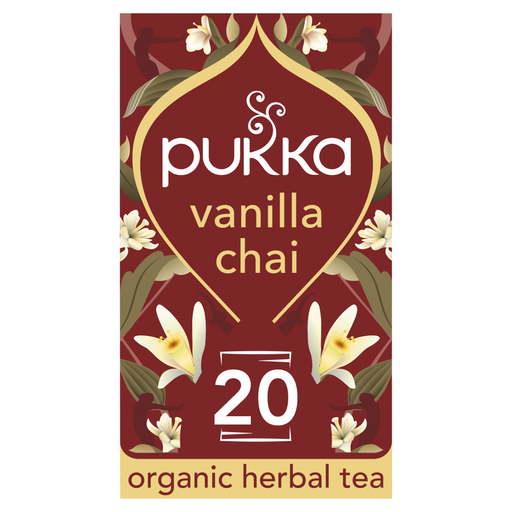
Pukka Vanilla Chai 20 Herbal Tea Sachets 40g
The 20 sachets suit individually prepared guest cups. The product description gives a 5–7-minute steeping time; keep the current pack available so guests can check its ingredients and any certification wording for this Vanilla Chai product.
View on Joybuy
Questions about chai for guests
Can I call any ethically sourced chai “Fairtrade”?
No. Use that wording for a chai with a Fairtrade claim on the exact product. Clipper Tea Shop identifies its Organic Indian Chai as Fairtrade, while Pukka Original Chai is described under Fair for Life and Tesco Finest Chai identifies Rainforest Alliance certification for its black tea.
What makes chai straightforward for cottage guests to prepare?
Individually portioned bags, envelopes or sachets avoid the need to measure loose tea; leave the pack and its brewing instructions accessible. Clipper’s reviewed Fairtrade chai has 20 bags, while Twinings specifies a 2–3-minute infusion for Classic Chai.
Are these black-tea chai products caffeine-free?
No. The reviewed Clipper, Pukka Original, Twinings Classic, Teapigs and Tesco Finest chai products contain black tea, and Teapigs explicitly states that its chai contains caffeine. Check the exact label before offering a different product as a caffeine-free alternative.
How can guests check what is in the tea?
Keep the original retail pack available so guests can read its current ingredient and precautionary statements, even if sachets are displayed separately. If you prepare or repack food for guests, ask your local authority which requirements apply to your particular arrangement.


