Shoppers seeking the Fairtrade mark
If Fairtrade certification is your deciding condition, look for a claim on the exact chai. Clipper Tea Shop explicitly identifies its Organic Indian Chai Black Tea as Fairtrade.


Choose Clipper Organic & Fairtrade Indian Chai if the exact chai must carry a Fairtrade claim: Clipper Tea Shop identifies its 20-bag product as Organic & Fairtrade. If a different fair-trade scheme meets your needs, Pukka identifies its teas as Fair for Life certified; that is not the Fairtrade mark. After checking the label, compare the ingredients and preparation directions for the winter drink you want to make.
If Fairtrade certification is your deciding condition, look for a claim on the exact chai. Clipper Tea Shop explicitly identifies its Organic Indian Chai Black Tea as Fairtrade.
If you do not require the Fairtrade mark, Pukka’s Fair for Life certification offers a different label to consider. Check the scheme and ingredient coverage stated for the particular blend.
If you plan to add milk, compare the blend and brewing directions as well as its certification. Twinings gives a brewing time for Classic Chai, while Teapigs describes its chai as suitable with plenty of milk.
Check the claim on the exact product first, then choose its ingredients and preparation method.
| Priority | What to check | Your needs |
|---|---|---|
| Trade certification | Look for a Fairtrade claim on the exact chai if that mark matters to you. Read Fair for Life and Rainforest Alliance wording as distinct claims, including which ingredients it covers. | I want to know which certification applies to the chai I am buying, rather than rely on a general ethical-sourcing description. |
| Blend and flavour | Read the tea base and full spice list. Clipper lists orange peel and fennel; Teapigs lists Assam black tea and vanilla, according to their product pages. | For a winter drink, I would choose the listed spices I enjoy instead of assuming every chai blend tastes alike. |
| Milk and brewing | Check whether the product gives directions for milk and how long to infuse it. Twinings specifies 2–3 minutes for Classic Chai; Teapigs describes its chai as suitable with plenty of milk. | If I usually add milk, I want preparation directions that fit the drink I plan to make. |
| Ingredients to avoid | Check the current pack for black tea, liquorice, flavourings and any ingredients relevant to you. Do not assume that a chai or herbal blend has the same ingredients as another. | I need to recognise ingredients that matter to me before choosing a blend. |
Clipper’s chai has an explicit Fairtrade claim, Pukka describes Fair for Life certification, and Tesco identifies Rainforest Alliance certification for the black tea in its Finest Chai. These are different claims.
If the Fairtrade mark is essential, check for it on the exact product’s current pack or listing.
Spice lists differ: Clipper includes orange peel and fennel, Pukka Original Chai lists liquorice, and Teapigs lists vanilla. A familiar name does not tell you how to prepare every blend.
Compare the full ingredients and brewing directions, particularly if you intend to add milk.
Some of the listed chais contain black tea, and Pukka Original Chai lists liquorice. Collingwood Health Group notes that black liquorice can interact with some medicines, herbs and supplements; that guidance does not establish the effect of a cup of chai.
Read the current pack and ask a pharmacist or clinician if an ingredient raises a question about a medicine you take.
These are references for comparing specific chai products and labels, not claims about every product from each brand.
Clipper Tea Shop identifies its Organic Indian Chai Black Tea, in a 20-bag format, as Organic & Fairtrade.
Pukka identifies its teas as Fair for Life certified. Its Original Chai is a separate blend from the Vanilla Chai shown in the Joybuy products below.
Twinings Classic Chai is offered in a 20-envelope format with a stated 2–3 minute infusion time.
Teapigs lists Assam black tea, cinnamon, ginger, cardamom pods and vanilla for its chai tea.
Tesco Finest Chai is listed as a 50-bag black-tea blend with ginger, cinnamon, cardamom, clove, black pepper and anise.
These options cover a Pukka herbal chai sachet and a Drink Me Chai latte product. Check the current pack for the certification you require; neither should be treated as the Clipper or Pukka Original Chai product discussed above.
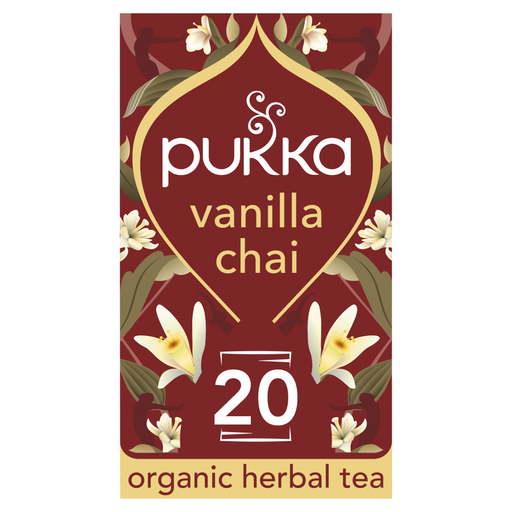 Image unavailable
Consider this sachet format if you want a herbal chai for a winter drink. Check the current pack for its ingredients, including liquorice if relevant to you, and for any certification claim on this exact Vanilla Chai product.
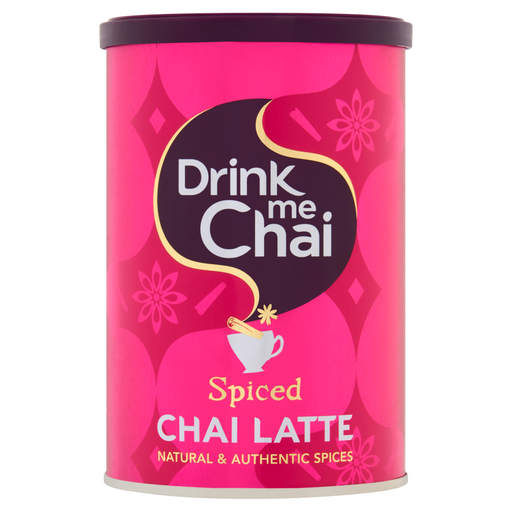 Image unavailable
Consider this latte-style chai if that is how you prefer your winter drink. Check the pack’s mixing directions, milk ingredients and product-specific certification before buying.
Look for a Fairtrade claim or mark on the exact product’s current pack or listing. Clipper Tea Shop explicitly calls its Organic Indian Chai Black Tea Fairtrade; Pukka instead describes Fair for Life certification, which is a different scheme.
No. Clipper’s chai is described as both organic and Fairtrade, but those are separate claims. Pukka Original Chai is described as organic and associated with Fair for Life certification, so check each label individually.
Check the preparation advice for the exact blend. Teapigs describes its chai as suitable with plenty of milk, while Twinings gives a 2–3 minute infusion time for Classic Chai. Compare their ingredients as well as how you intend to serve them.
Yes: check the current pack for black tea and liquorice rather than assuming all chais share a recipe. Pukka Original Chai lists liquorice, and Collingwood Health Group advises seeking professional advice about possible interactions between black liquorice and medicines or supplements; it does not establish the effect of a cup of chai.