Hosts putting Fairtrade first
If you want to describe a party item as Fairtrade, check the claim on that specific product. Fairtrade International’s mark guidance distinguishes approved product marks from claims about particular sourced ingredients.


For an afternoon tea party, describe chewing gum as Fairtrade only when the specific product has an applicable FAIRTRADE Mark or a clear Fairtrade sourced-ingredient claim. If you cannot confirm that claim on the gum, offer it separately and identify a labelled Fairtrade chocolate as the Fairtrade choice; the chocolate’s claim does not extend to the gum.
If you want to describe a party item as Fairtrade, check the claim on that specific product. Fairtrade International’s mark guidance distinguishes approved product marks from claims about particular sourced ingredients.
Gum can be an optional item after tea and cakes without carrying the table’s Fairtrade claim. Identify the Fairtrade-labelled food separately so guests know which item the claim applies to.
Keep packets available when offering gum or chocolate. Guests can then check current ingredients, allergen information and sweetener advisories for themselves.
Decide which item needs to carry the Fairtrade claim, then check the individual packs you plan to offer.
| Priority | What to check | Your needs |
|---|---|---|
| Fairtrade claim | Look for the applicable FAIRTRADE Mark or an explicit Fairtrade sourced-ingredient claim on the specific item. Check any accompanying ingredient information to understand what the claim covers, in line with Fairtrade International’s mark guidance. | I want to tell guests exactly which food has a Fairtrade claim, rather than relying on a brand’s broader sustainability wording. |
| After-tea gum | Check the flavour, whether the pack says sugar-free and how the pieces are packaged. Keep gum separate from any Fairtrade-labelled food unless the gum has its own applicable claim. | A few guests may want gum after refreshments, but it does not need to be the item that meets my Fairtrade priority. |
| Ingredients and advisories | Read the current ingredient and allergen information on each pack. Check sweetener advisories too: Holland & Barrett’s True Gum listing, for example, warns that excessive consumption may produce a laxative effect. | I need guests to be able to check what is in the gum or chocolate before choosing a piece. |
These describe different attributes. Neither establishes that the particular gum carries a Fairtrade claim.
Check for the applicable mark or a specific sourced-ingredient statement before calling the gum Fairtrade.
A Fairtrade claim on chocolate applies to the chocolate, not to gum served beside it.
Identify the labelled chocolate as the Fairtrade item and describe the gum using only claims you can check on its own pack.
Guests may need the ingredient and allergen information from the original gum or chocolate packaging.
Keep the packets close to the serving dishes so guests can check the current labels.
Sugar-free does not describe every ingredient or advisory. Holland & Barrett’s True Gum listing warns about a possible laxative effect from excessive consumption.
Offer small portions and leave the packet available for guests to read.
These examples illustrate different pack claims to check; a brand name alone does not establish the Fairtrade status of a particular item.
Tesco Groceries lists Extra and Wrigley’s Extra sugar-free chewing gum in its UK range.
Holland & Barrett describes its mint gum as plastic-free, vegan and sugar-free.
A chocolate option for hosts who want a separately identified Fairtrade item on the afternoon-tea table.
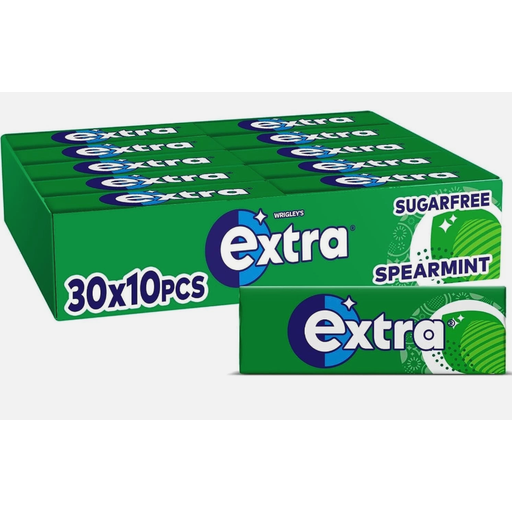
This sugar-free gum is an option to serve separately after refreshments. Check its delivered pack before making any Fairtrade claim about it; a separately labelled Fairtrade item can carry that emphasis on the tea table.
 No image available
For offering gum after tea while keeping it distinct from any Fairtrade-labelled refreshments.
The listed format is 30 packs of 10 pieces. Keep the delivered packaging so guests can check ingredients and sweetener advisories, and check it for an applicable Fairtrade claim before describing the gum as Fairtrade.
No. Those claims concern different attributes. Fairtrade International’s mark guidance describes approved marks and sourced-ingredient claims, so check what appears on the specific gum pack before calling it Fairtrade.
Offer the gum without describing it as Fairtrade, and identify another appropriately labelled item as the Fairtrade choice. For example, Tesco Groceries describes Tony’s Chocolonely milk chocolate as Fairtrade; check the particular pack you serve.
Yes, as an optional item for guests who prefer sugar-free gum. Check the pack’s ingredients and sweetener advisories, and do not treat “sugar-free” as a Fairtrade claim.
Keep the current packaging available so guests can read the ingredients, allergen information and any sweetener warnings. Do not assume that a Fairtrade, vegan or sugar-free claim answers a guest’s ingredient question.
No. Check each product’s current ingredients and advisories. Holland & Barrett’s True Gum listing, for instance, says it contains sweeteners and warns that excessive consumption may produce a laxative effect.