Families baking chocolate recipes together
If children are helping measure powder, fold in chips or decorate a finished bake, the recipe’s ingredient format is the starting point. Chopping or melting a bar calls for adult supervision.


Start with the recipe: choose a cooking chocolate bar when it calls for solid chocolate, cacao or cocoa powder when it calls for a dry ingredient, and chips when you want pieces to fold into a bake. Check the precise Fairtrade claim on the pack, then read its current ingredient, allergen and sugar information before baking with children. Ordinary mints are not a substitute for these chocolate ingredients unless the recipe calls for them.
If children are helping measure powder, fold in chips or decorate a finished bake, the recipe’s ingredient format is the starting point. Chopping or melting a bar calls for adult supervision.
If the sourcing claim matters to your choice, check whether the pack carries the classic FAIRTRADE Mark, a Fairtrade Sourced Ingredient mark or mass-balance wording. These do not describe identical ingredient coverage.
Where a child has a food allergy, the current pack’s ingredients and precautionary warnings matter more than the colour of the chocolate. Sugar information and the amount used in the recipe are separate considerations from ethical sourcing.
Match the ingredient to the recipe before comparing sourcing claims and pack labels. A mint flavour or a Fairtrade-related cocoa statement does not make an ingredient interchangeable with the chocolate specified in a bake.
| Priority | What to check | Your needs |
|---|---|---|
| Recipe format | Check whether the recipe specifies solid chocolate, cocoa or cacao powder, or chips. A bar may need chopping or melting; powder is a dry ingredient; chips provide pieces to fold through batter. | I’m making brownies, a cake or cookies with children and need an ingredient in the form the recipe actually calls for. |
| Fairtrade claim | The Fairtrade Foundation distinguishes the classic FAIRTRADE Mark from the Fairtrade Sourced Ingredient mark, which identifies a particular sourced ingredient. Mass-balance wording permits certified and non-certified material to mix during processing while corresponding quantities are bought on Fairtrade terms. | I want to know which ingredients the sourcing claim covers, rather than assuming every cocoa-related statement means the same thing. |
| Allergens | Read the current ingredients and any may-contain statement for the exact pack. The Food Standards Agency says allergens present in prepacked food must be emphasised in its ingredients list; precautionary warnings need attention too. | If a child has an allergy, I need to assess the product and the other recipe ingredients before serving the bake. |
| Sugar and quantity | Read sugars per 100g alongside the recipe quantity and planned serving size. Compare labels only for the question they answer: a powder’s sugar figure does not make it a direct replacement for a bar. | I’d like to keep the amount of chocolate in the finished bake in perspective without treating a Fairtrade mark as a nutrition claim. |
The Fairtrade Foundation describes distinct marks for different ingredient claims. It also explains that mass balance does not promise physical separation of certified material in an individual pack.
Look at the exact mark and accompanying wording on the pack, including which ingredients are named.
A solid chocolate bar and a dry powder contribute different ingredients to a recipe. Swapping one for the other can change its sweetness and texture.
Follow a recipe written for powder, or use a recipe-tested substitution, rather than relying on the two ingredients’ sugars-per-100g figures.
The product examples carry different ingredient and may-contain information, including warnings concerning milk, nuts or peanuts. Dark colour and cocoa percentage do not resolve an allergen question.
Check the current label of every ingredient used in the bake and follow the household’s allergy-management requirements.
A Fairtrade-related claim concerns sourcing, not how much sugar is in the finished bake. NHS guidance for young children advises reducing sugary foods and drinks and offering them with meals rather than as snacks.
Use the ingredient label and recipe quantities to plan portions; consider the finished bake separately from its sourcing credentials.
These examples illustrate different baking formats and sourcing wording; a brand name alone does not establish the claim or allergen information of another product in its range.
Tesco describes its Organic Cooking Chocolate 150g as a 70% cocoa bar intended for cooking.
Tesco describes Naturya Fairtrade Cacao Powder 250g as a dry ingredient for baking, including brownies and muffins.
Sainsbury’s describes Food Thoughts 70% Dark Chocolate Chips 100g as chips made with cocoa sourced from Fairtrade partners.
These options comprise one cocoa powder and two dark chocolate bars. The powder belongs in recipes written for cocoa; check the chosen recipe before using either bar in a bake that calls for solid dark chocolate. Read each current pack for its precise sourcing claim and allergens.
 No image available
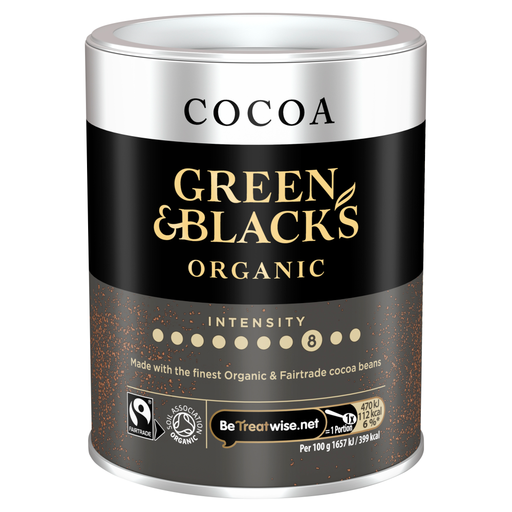
Consider this cocoa for a recipe that calls for powder, not as a direct substitute for melted chocolate. The product description claims Fairtrade cocoa; check the current pack for the exact mark, claim scope and allergen statement.
 No image available
This solid dark chocolate is an option to assess for a recipe specifying a 70% bar; check that the particular recipe suits it. Its description states that Fairtrade cocoa, sugar and vanilla are handled on a mass-balance basis, which does not promise physical separation in the bar. Check the current pack for allergens, including its may-contain warnings for nuts and milk.
 No image available
Check this bar against a recipe calling for dark chocolate with 85% cocoa content; its suitability for that bake should not be assumed from the percentage alone. Its description uses Fairtrade mass-balance wording for cocoa, sugar and vanilla. Read the current pack for allergens, including its may-contain warnings for nuts and milk.
Use mints only if the recipe calls for them. A recipe specifying cooking chocolate, cocoa powder or chocolate chips needs its stated ingredient format; mint confectionery should not be treated as an equivalent merely because it is a sweet ingredient.
No. The Fairtrade Foundation explains that mass balance allows certified and non-certified material to mix during processing, while requiring corresponding quantities of the relevant ingredient to be bought on Fairtrade terms. Read the pack to see which ingredients its claim names.
Not as a straightforward weight-for-weight swap. Powder and solid chocolate contribute different components to a recipe, so use a brownie recipe written for cacao or cocoa powder, or a recipe-tested substitution.
Read the current ingredient and precautionary allergen information for every product used. The Food Standards Agency says allergens present in prepacked foods must be emphasised in the ingredients list; the chocolate and cacao examples discussed here also have product-specific may-contain warnings.
No. A Fairtrade claim addresses sourcing, not the sugar content of a recipe. Check the ingredient’s sugars-per-100g label and the quantity used; do not assume that a powder and a chocolate bar can be swapped simply because their labels differ.