Fairtrade-first snack shoppers
If certification is your first filter, inspect the mark and ingredient wording on the particular bar. A familiar brand name or a general sustainability claim does not tell you which ingredients carry a Fairtrade claim.


Check the Fairtrade claim on the exact bar before choosing its flavour or size: the Fairtrade Foundation says the classic Fairtrade Mark covers all ingredients that can be certified, while the Fairtrade Sourced Ingredient mark identifies one named ingredient. For an afternoon snack, compare the pack weight with how you plan to portion it, then check the current ingredients and allergen statements. Fairtrade certification does not determine whether a bar is suitable for school food provision.
If certification is your first filter, inspect the mark and ingredient wording on the particular bar. A familiar brand name or a general sustainability claim does not tell you which ingredients carry a Fairtrade claim.
Milk, dark and vegan-labelled bars can have different ingredients and precautionary allergen statements. Check the current pack for the exact variety you intend to eat.
For school catering or a tuck shop, check the rules for the relevant UK nation and school before purchasing. Fairtrade certification addresses sourcing, not school-food requirements; the Department for Education identifies a separate legal framework for state-funded schools in England.
Start with the certification wording, then choose a chocolate type and pack size that fit the occasion. Treat dietary suitability and any school-food use as separate checks.
| Priority | What to check | Your needs |
|---|---|---|
| Fairtrade scope | Read the mark and wording on the exact bar. The Fairtrade Foundation says the classic mark covers all certifiable ingredients; the Fairtrade Sourced Ingredient mark names the ingredient sourced as Fairtrade. | I want to know whether the claim covers every certifiable ingredient or a particular ingredient, such as cocoa. |
| Pack size and flavour | Compare the stated weight and chocolate type. Retail listings show a 90g Divine dark bar and 100g Co-op Fairtrade bars, while Tony’s lists a 180g milk bar. Weight alone does not establish nutritional suitability. | A smaller bar may fit my planned snack; if I want to share or split it across occasions, a 180g bar gives me a different format to consider. |
| Ingredients and allergens | Read the current ingredients, dietary statement and may-contain warnings. Waitrose lists its 90g Divine dark bar as vegan but warns that it may contain milk, cereals containing gluten and nuts. | I need the exact variety’s label to fit my ingredient preferences or allergy requirements; a Fairtrade or vegan claim cannot answer those questions for me. |
| School-food use | Confirm the UK nation, school setting and applicable rules before procurement. England’s 2014 school-food regulations define chocolate as confectionery; Department for Education school-food guidance and England’s HFSS retail-promotion guidance address different settings. | If I am buying for a school rather than my own afternoon snack, I need a separate check of the relevant school-food requirements. |
The Fairtrade Foundation distinguishes the classic Fairtrade Mark from a Fairtrade Sourced Ingredient mark, which identifies one named ingredient. Two bars can therefore communicate different certification scopes.
Read the exact mark and adjacent ingredient wording rather than relying on a brand-level claim.
Fairtrade certification does not describe a bar’s allergens. For example, Waitrose lists a Divine dark bar as vegan while also warning that it may contain milk, cereals containing gluten and nuts.
Check the current wrapper’s ingredients and precautionary statements for the exact bar.
The listed Fairtrade options include 90g and 100g bars as well as 180g bars. Those weights describe different pack formats, not suitable serving sizes.
Compare the pack weight with whether you intend to have one snack, share the bar or keep some for another occasion.
The Department for Education’s school-food guidance concerns state-funded schools in England. Department of Health and Social Care guidance addresses promotion and placement of certain high-fat, sugar or salt foods by businesses operating in and selling to England. Neither is a UK-wide rule for every setting.
For school purchasing, check the applicable nation’s school-food requirements and the school’s catering policy; assess a retail-promotion question under the rules for that setting.
These examples describe particular product lines and listings, not a claim that every bar from each brand has the same certification or ingredients.
Waitrose lists a 90g Divine Fairtrade 70% dark chocolate bar with ginger and orange.
Tony’s lists a 180g milk chocolate bar with Fairtrade cocoa and sugar.
Co-op lists Irresistible Fairtrade chocolate bars in 100g formats.
Waitrose lists a 100g Fairtrade milk chocolate bar with hazelnut, caramelised cashew and pistachio nuts.
These dark and milk chocolate bars offer 90g and 180g formats for an afternoon snack. Their product information describes Fairtrade ingredients, but check each current wrapper’s mark and wording before comparing the scope of its claim.
 No image available
A 90g dark chocolate bar to consider if you prefer a smaller pack for an afternoon snack. Check the wrapper’s Fairtrade mark and mass-balance wording, along with its warnings for almonds, hazelnuts, milk and nuts.
 No image available
A 180g milk chocolate bar if you want to share or portion a larger pack. Check the current Fairtrade wording and allergen label: this variety is listed as containing milk and soya and may contain gluten-containing cereals, eggs, nuts and peanuts.
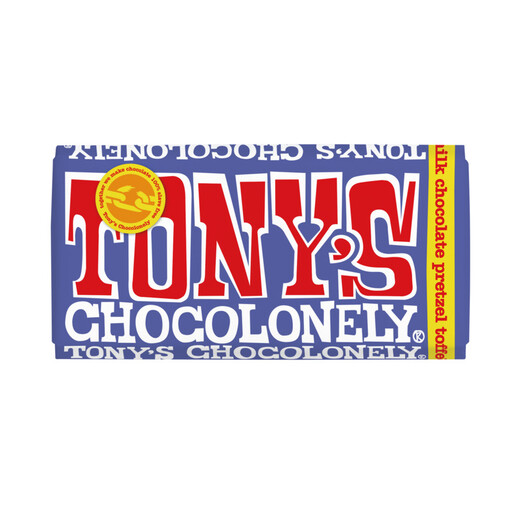 No image available
This 180g bar combines milk chocolate with pretzel and toffee for a larger pack to portion or share. Check its current Fairtrade wording; the product information lists milk, soybeans and wheat and warns that it may contain eggs, nuts and peanuts.
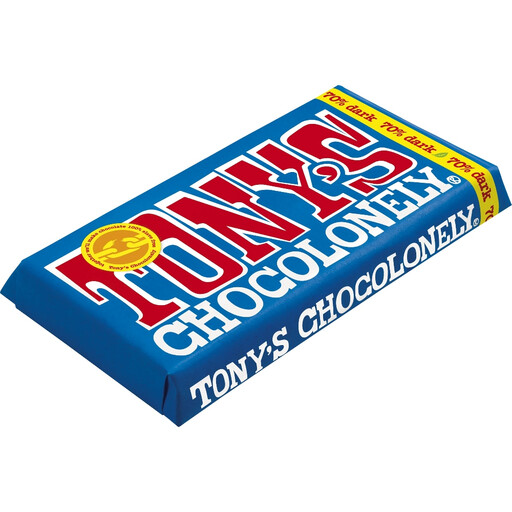 No image available
A 180g dark chocolate option if you plan to share or divide the bar across occasions. Check the wrapper’s Fairtrade wording and allergen statement: the product information lists soya and warns that it may contain cereals containing gluten, eggs, milk, nuts and peanuts.
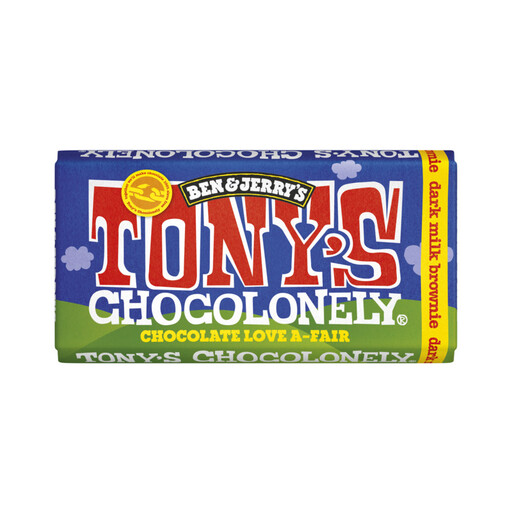 No image available
This 180g dark milk chocolate bar is a larger format to portion or share. Its Fairtrade statement concerns cocoa; check the wrapper before assuming a broader ingredient claim. The product information lists milk, soya and wheat and warns that it may contain eggs, nuts and peanuts.
Read the mark and accompanying wording on the exact bar. The Fairtrade Foundation says the classic Fairtrade Mark means all ingredients that can be certified are Fairtrade-certified; a Fairtrade Sourced Ingredient mark instead names the particular ingredient sourced as Fairtrade. A general sustainability claim is not a substitute for either check.
No. Fairtrade describes sourcing, not dietary or allergen suitability. Waitrose lists a Divine dark bar as suitable for vegans but warns that it may contain milk, cereals containing gluten and nuts, so check the current pack of whichever bar you choose.
Do not use Fairtrade certification as a school-food approval. England’s 2014 school-food regulations define chocolate as confectionery, and Department for Education guidance identifies the legal framework for food provided in state-funded schools in England. Check the current requirements for the school and its catering policy before procurement; England’s framework should not be assumed to apply across the UK.
No. Department of Health and Social Care guidance describes restrictions on the promotion and placement of certain high-fat, sugar or salt foods in retail stores and their online equivalents for businesses operating in and selling to England. School-food requirements address a separate setting, and a bar’s Fairtrade claim does not determine either question.