Choose a chocolate bar with a Fairtrade claim you can check on the current pack, then match its format to the sale. A sealed small bar keeps the manufacturer’s ingredient information with each item; chocolate used in homemade bakes calls for ingredient and allergen information for the finished food. Confirm the school’s event policy before ordering.
Who is buying the chocolate?
The practical choice depends on whether volunteers will hand over sealed bars or use chocolate to make something else.
PTA and parent volunteers selling sealed treats
A small, sealed bar lets each buyer inspect the manufacturer’s ingredients and allergen information. Check the exact flavour and pack rather than assuming that one bar’s declaration applies across a range.
Organisers making cakes or traybakes
Choose chocolate that suits the recipe, and record the ingredients of the finished bake, not just those of its chocolate bar. If the finished food is packed before sale, check which labelling requirements apply to the way the stall operates.
Organisers with a specific Fairtrade aim
Decide what the stall will claim before choosing a bar. The Fairtrade Foundation says the classic black-background FAIRTRADE Mark covers all ingredients that can be Fairtrade-certified; an ingredient-specific claim needs correspondingly narrower wording.
What should you check before buying?
Start with the claim you intend to make, then check the bar’s format and the information buyers will have at the point of sale.
| Priority |
What to check |
Your needs |
| Fairtrade wording |
Look at the current pack’s mark and named ingredients. The Fairtrade Foundation says the classic FAIRTRADE Mark covers all ingredients capable of Fairtrade certification; an ingredient-specific statement has a narrower scope. |
I want the stall sign to describe exactly what the bar claims, rather than treating a general cocoa-sourcing programme as a Fairtrade mark. |
| Sale format |
Check whether each buyer will receive a labelled, sealed bar or a portion of a homemade bake. Compare the pack size and chocolate type with the planned use, without treating cocoa percentage as a Fairtrade measure. |
For a straightforward treat stall, I would prefer an individually wrapped bar. If I am baking, I need chocolate that fits the recipe and a way to track the finished item’s ingredients. |
| Ingredients and allergens |
Read the declaration for the exact variant, including precautionary statements. For food produced by a food business and prepacked for direct sale in England, Wales or Northern Ireland, the Food Standards Agency specifies the food name and a full ingredients list. |
Buyers need information about the item they are actually purchasing. If bars go into a traybake, the original wrapper cannot stand in for the finished bake’s ingredient information. |
What can go wrong at a bake sale?
-
Calling every ethical cocoa claim Fairtrade
A brand sustainability programme, a claim about specified Fairtrade ingredients and the classic FAIRTRADE Mark do not say the same thing. The Fairtrade Foundation defines the classic mark as covering all ingredients that can be Fairtrade-certified.
Use the wording on the current pack for stall signs. If the claim names only cocoa or other particular ingredients, name those ingredients rather than broadening the claim.
-
Assuming every flavour has the same allergen information
Ingredients and precautionary statements can differ between variants. A declaration checked for one milk-chocolate bar should not be reused for a caramel or pretzel bar.
Check each exact pack when buying, and keep the relevant ingredient information available at the sale. Do not describe a bar or bake as free from an allergen without support from its current labelling.
-
Treating a large dark bar as a ready-to-sell small bar
A 100g 85% dark bar such as Co-op Irresistible Fairtrade Dark Chocolate is a different format from Tony’s Chocolonely’s 50g milk-chocolate small bar. The larger bar does not provide a separately wrapped item for each buyer.
Choose the format for the actual stall: sealed small bars for individual handover, or a larger bar when its flavour and size suit a recipe or planned dark-chocolate selection.
-
Assuming school-meal rules settle a fundraiser decision
The Requirements for School Food Regulations 2014 define chocolate as confectionery in England, but that definition alone does not establish the arrangements for a particular bake sale.
Ask the school to confirm its policy for the event, including what may be sold and how ingredient and allergen information should be handled, before ordering.
Which brand references are useful?
These examples illustrate different product claims and formats; the details still need checking for the exact bar you intend to sell or use.
Tony’s Chocolonely
Tony’s Chocolonely describes its 50g Milk Chocolate Small Bar as containing Fairtrade cocoa and sugar, with a stated 76% Fairtrade total under mass balance. It offers a concrete example of an ingredient-specific claim on a small bar.
- The 50g sealed format can be handed over as one labelled item.
- The 50g milk bar contains milk and soya; check its current pack for all ingredients and precautionary allergen statements. Its stated percentage should not be rewritten as a claim that every ingredient is Fairtrade-certified.
Divine Chocolate
Divine describes itself as farmer co-owned and says it pays Fairtrade prices and premiums for every possible ingredient. Its dark-chocolate range gives organisers options to consider for recipes or a dark-chocolate stall selection.
- A 70% dark bar can be considered where that cocoa percentage suits the recipe or intended buyers.
- Check the exact bar’s flavour, Fairtrade wording, ingredients and allergens rather than applying a brand-wide description to every variant.
Co-op
Co-op lists its Irresistible Fairtrade Dark Chocolate 85% 100g as a Fairtrade bar. This is a reference for organisers considering a higher-cocoa recipe ingredient or dark-chocolate option.
- The named product has a clear Fairtrade designation and a stated 85% cocoa content.
- It is a 100g bar rather than a small individually portioned treat. Check the physical pack and availability before planning the stall around it.
Joybuy chocolate bar options
These larger bars are options to consider for recipes, sharing or a planned dark-chocolate selection. They are not substitutes for an individually wrapped small bar when every buyer needs a sealed, separately labelled item. Check the current pack’s Fairtrade wording and allergen information before using either on a stall sign.
 No image available
Green & Black’s Dark Chocolate 85% 90g
Consider this 90g, 85% cocoa bar when a darker chocolate suits the recipe or expected buyers. Check the current pack for its precise Fairtrade statement and any milk or nut precautionary wording before describing or using it at the sale.
View on Joybuy
 No image available
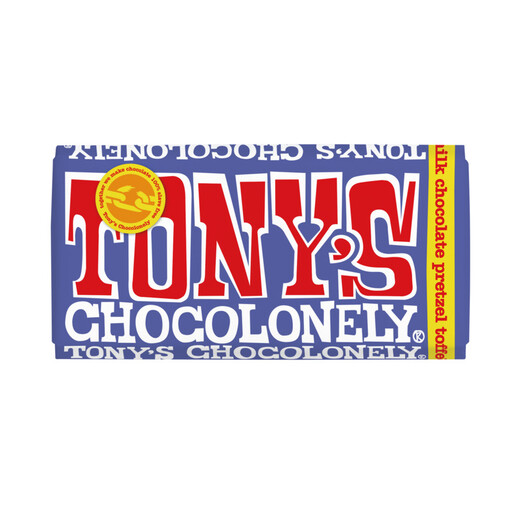
Tony’s Chocolonely Milk Chocolate, Pretzel & Toffee 180g
This 180g flavoured bar is a format to consider for sharing or a recipe, rather than as a separately wrapped treat for each buyer. Check the exact pack’s Fairtrade claim and its milk, soya, wheat and precautionary allergen information before use.
View on Joybuy
 No image available
Tony’s Chocolonely Fairtrade Milk Chocolate Caramel Sea Salt 180g
This 180g caramel sea salt bar may fit a recipe or sharing plan. Read the current pack to establish the scope of its Fairtrade claim and to record the ingredients and allergen statements for anything made with it.
View on Joybuy
 No image available
Divine Chocolate 70% Dark Chocolate with Raspberries 90g
Consider this 90g, 70% cocoa raspberry bar if its flavour suits a recipe or dark-chocolate selection. Do not describe this variant as vegan or free from milk on the basis of the listing: its milk information conflicts. Check the current pack, along with its Fairtrade wording and other allergen statements, before buying for the sale.
View on Joybuy
 No image available
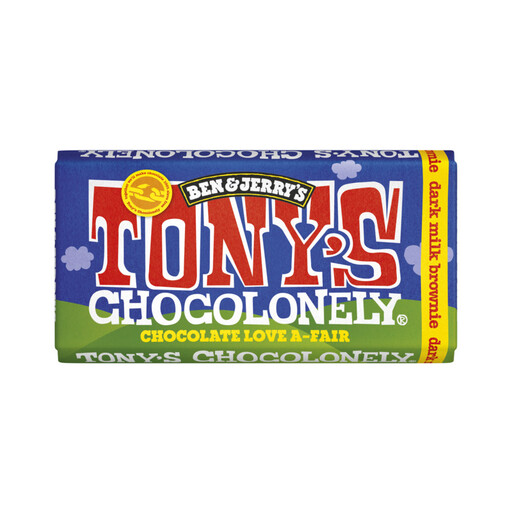
Tony’s Chocolonely Ben & Jerry’s Dark Milk Chocolate Fudge Brownie 180g
This 180g fudge brownie bar is a sharing or recipe option, not a separately wrapped small treat. Check the pack before describing its Fairtrade claim: a claim about cocoa does not establish the status of its other ingredients. Check milk, soya, wheat and precautionary allergen wording for the exact bar.
View on Joybuy
Frequently asked questions
How do I check a chocolate bar’s Fairtrade claim?
Read the current pack’s mark and accompanying wording. The Fairtrade Foundation says the classic black-background FAIRTRADE Mark means all ingredients capable of Fairtrade certification are certified; an ingredient-specific mark or statement identifies a narrower claim. Do not use a general sustainability statement as a substitute for either.
Is a sealed bar simpler to sell than a homemade chocolate bake?
A sealed bar keeps its manufacturer’s ingredient and allergen information with the item, while a homemade bake needs information about the finished food. The Food Standards Agency says that food businesses producing food prepacked for direct sale in England, Wales or Northern Ireland must label it with the food name and a full ingredients list. Check whether that description fits the stall’s arrangements and follow the school’s procedure.
Can I say every ingredient in Tony’s 50g milk bar is Fairtrade-certified?
Use the narrower statement Tony’s Chocolonely makes for that bar: Fairtrade cocoa and sugar, totalling 76% under mass balance. Check the current pack before putting that wording on a stall sign; the stated percentage is not a basis for claiming that every ingredient is Fairtrade-certified.


