Bakers making cake or ganache
If your recipe calls for melted dark chocolate, a plain bar lets you follow its stated cocoa percentage without adding wafer or fillings. A cooking bar gives you an option explicitly described for that use.


For a cake or ganache recipe that calls for melted dark chocolate, start with a plain Fairtrade bar whose cocoa percentage matches the recipe; a bar expressly sold as cooking chocolate is a straightforward option. Choose a flavoured or filled bar only when its additions belong in the recipe, and check the current wrapper for the Fairtrade claim, ingredients and allergens before baking.
If your recipe calls for melted dark chocolate, a plain bar lets you follow its stated cocoa percentage without adding wafer or fillings. A cooking bar gives you an option explicitly described for that use.
The mark and nearby wording matter if you want to know which ingredients the claim covers. The Fairtrade Foundation distinguishes its standard Fairtrade Mark from ingredient-specific Fairtrade claims.
Check the purchased wrapper’s ingredients and precautionary allergen statement. Milk, nuts and cereals containing gluten are among the details that differ across the bars discussed here.
Start with what the recipe asks you to melt, then check whether the bar’s Fairtrade wording and allergen information meet your requirements.
| Priority | What to check | Your needs |
|---|---|---|
| Fairtrade claim | Look at the mark on the current pack and read which ingredients it covers. The Fairtrade Foundation says its standard Mark covers all ingredients that can be Fairtrade certified; an ingredient-specific claim needs to be read on its own terms. Check any mass-balance wording too. | I want to know whether the claim applies to all certifiable ingredients or to a named ingredient such as cocoa. |
| Recipe fit | Check whether the recipe calls for plain melted chocolate or deliberately includes pieces, fruit, wafer or caramel. Waitrose & Partners describes Green & Black’s 70% cooking bar as cooking chocolate and says its own 72% dark bar can be used in baking. | For a smooth ganache or cake batter, I would choose plain chocolate rather than add the texture and ingredients of a snack bar. |
| Cocoa percentage | Compare the percentage on the bar with the recipe’s specification. The cited plain and cooking dark bars are labelled 70% or 72%; Co-op also lists an 85% Fairtrade dark bar. Do not assume these make an identical substitution. | If a recipe specifies a cocoa percentage, I want the bar I buy to match it rather than change the chocolate without considering the result. |
| Pack size | Compare the recipe quantity with the stated bar weight. The separately listed Green & Black’s cooking bar is 150g, Divine’s plain 70% bar is 90g, and Waitrose’s 72% bar is 180g. | I want enough of the specified chocolate for the sponge, icing or ganache without confusing differently sized bars from the same brand. |
| Allergens | Read the purchased pack’s ingredients, highlighted allergens and may-contain statement. Do not use a vegan description in place of an allergy check. | When I am baking for someone with an allergy, I need to check the particular bar going into the cake. |
A claim about Fairtrade cocoa does not, by itself, describe the status of every other ingredient. Fairtrade mark types and mass-balance wording answer different questions about scope and sourcing.
Read the mark and adjacent wording on the bar you buy. If a named ingredient or mass balance is mentioned, decide whether that stated scope meets your reason for choosing Fairtrade.
KitKat UK describes its 4 Finger Milk bar as chocolate with a crispy wafer. That addition makes it a different ingredient from the plain dark chocolate specified in many cake and ganache recipes.
Use a plain bar when the recipe calls for plain melted chocolate. Save a wafer or filled bar for a recipe that deliberately calls for its pieces or texture.
Ingredient declarations and precautionary warnings vary between products and can change. A dark or vegan-labelled bar should not be assumed suitable for someone with a milk or nut allergy.
Read the current physical wrapper before baking for someone with an allergy, including its ingredients and may-contain statement.
Those percentages describe different cocoa contents, so the substitution may change the intended chocolate flavour of the cake.
Follow the percentage in the recipe where possible. Choose an 85% bar when that is what the recipe specifies or the stronger dark-chocolate flavour is intentional.
These references concern the particular bars and product lines described, not every chocolate bar sold under each name.
Waitrose & Partners lists a 150g Organic Cooking Dark Chocolate bar labelled Fairtrade and 70% cocoa.
Divine lists a plain 90g 70% Dark Chocolate bar with Fairtrade cocoa mass, sugar, cocoa butter and vanilla.
Waitrose & Partners lists its 180g Belgian Dark Chocolate 72% bar as an option for baking.
Co-op lists an Irresistible Fairtrade Dark Chocolate 85% bar in a 100g size.
KitKat UK describes its 4 Finger Milk bar as milk chocolate with a crispy wafer.
These bars cover three different cake-baking choices: plain 70% dark chocolate, raspberry-flavoured 70% dark chocolate, and milk chocolate with caramel and sea salt. Choose by the recipe’s intended ingredients rather than treating them as interchangeable melting chocolate.
 No image available
This plain dark bar is a choice for a recipe calling for 70% chocolate; it is the 90g bar, not the brand’s separately listed 150g cooking bar. Check the current wrapper’s Fairtrade and mass-balance wording, along with its warning about possible nuts and milk.
 No image available
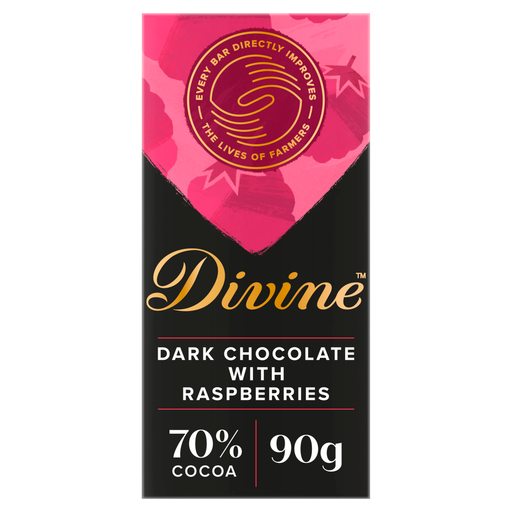
Choose this raspberry bar when raspberry is an intended part of the cake, rather than substituting it for plain 70% chocolate without considering the flavour. Check the current wrapper’s Fairtrade wording and allergen declaration, particularly for milk; do not rely on a vegan-friendly description for an allergy decision.
 No image available
This milk chocolate bar fits a recipe that deliberately calls for caramel and sea salt pieces, not one specifying plain melted dark chocolate for a smooth ganache. Check the current wrapper’s Fairtrade wording, ingredients and allergen warnings, including milk and soya.
According to the Fairtrade Foundation, its standard Fairtrade Mark indicates that all ingredients that can be Fairtrade certified are certified. A Fairtrade Sourced Ingredient mark identifies the ingredient covered, such as cocoa; read the wording on the particular pack rather than assuming it applies to every ingredient.
Yes, if the bar’s cocoa percentage and ingredients suit the recipe. Waitrose & Partners explicitly suggests baking with its 72% Belgian Dark Chocolate, while its listing for Green & Black’s separate 70% cooking bar provides an option expressly sold for cooking.
Use a snack bar when the recipe deliberately calls for its additions, not as an automatic replacement for plain chocolate. KitKat UK describes its 4 Finger Milk bar as containing wafer, which changes what goes into the batter or ganache.
Read the current pack’s ingredients, highlighted allergens and may-contain statement before using it. Do not assume that a dark or vegan-labelled bar is suitable for a milk or nut allergy; check the specific bar and the person’s requirements.
Not necessarily. Under the mass-balance model described in the Fairtrade guidance used for these products, certified and non-certified ingredients can be mixed during processing while a matching quantity is bought on Fairtrade terms. Read the pack’s wording if physical separation matters to your choice.